A Legacy of Grace: The Silent Echo of Valor Between the Veteran and the Rising Sun
CHAPTER 1: THE WEIGHT OF THE HANGAR
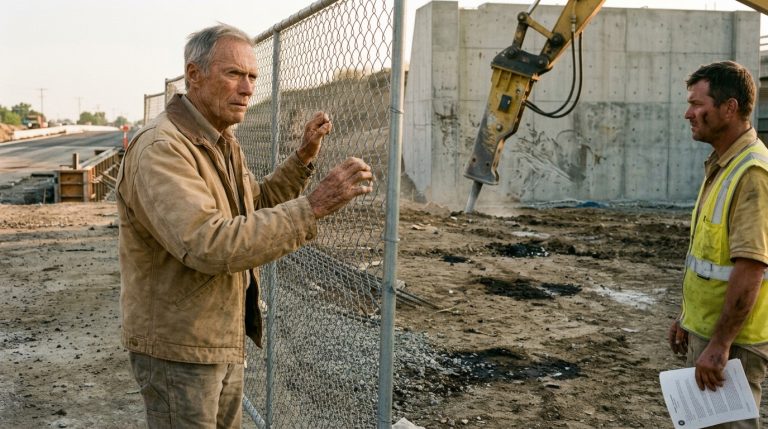
The sun was a white-hot coin pressed against the horizon, turning the flight line into a shimmering mirage of heat and exhaust. Roger Bentley stood, his boots rooted to the concrete, his hand resting on the cooling rubber of the Thunderbolt’s nose gear. The aircraft felt alive. It held the ghost-vibration of a thousand sorties, a deep, resonant hum that only he could hear.
“Go on then. Start her up.”
The voice was slick, oiled with the kind of condescending amusement that only youth—blind, bulletproof youth—could muster. Captain Davis gestured with a dismissive flick of his wrist. He was all sharp angles and starched perfection, a stark contrast to the worn, cracked leather of Roger’s jacket.
“Show us how it’s done, old-timer.”
Roger didn’t turn. His eyes were fixed on the nose, just below the canopy, where the paint was weathered to a pale, ghostly grey. He was looking at the seven-barreled maw of the GAU-8, the iron heart of the beast. To anyone else, it was a static display, a museum piece tethered to the tarmac. To Roger, it was the only thing that had ever truly listened to him.
“This is a restricted area,” Davis barked, his smirk widening as a few nearby airmen shifted uncomfortably. “And that is a very expensive, very dangerous piece of government property. You don’t just walk up and touch the legacy.”
Roger felt the familiar pull—the internal pressure of a man who had walked through hell and returned to find the world had forgotten the path. He felt the weight of the scorpion patch on his sleeve, the fabric thin and fraying, a fragile contract of blood and survival.
“The auxiliary power unit needs a ground check,” Roger said, his voice a low, gravelly rasp that seemed to belong to the wind rather than the man. “You don’t just turn a key. The pressure… it has to be stable.”
“We’ve got a real expert here,” Davis laughed, stepping into Roger’s personal space. The captain’s shadow fell over the old man, cold and clinical. “Look, sir. I’m going to ask you to step away. My patience is wearing thin.”
Roger’s hand dropped from the tire. The silence that followed wasn’t empty; it was heavy with the echo of screaming engines and the smell of ozone. He looked at the captain, not with anger, but with a profound, terrifying pity. Davis was so focused on the barrier he had built between himself and the rest of the world that he couldn’t see the giant standing in the shadow of the steel.
“I am not a civilian,” Roger whispered.
Davis laughed again, a sharp, metallic sound. “Right. And I’m the Chief of Staff. You have ten seconds to show me your pass, or I’m having security escort you off this base in handcuffs.”
Roger reached into his jacket, moving with a slowness that felt like an eternity. As his hand emerged, something shifted in the air—a sudden drop in pressure, a stillness so absolute that even the distant roar of the base seemed to die away. Davis’s smug expression flickered, then shattered. For a heartbeat, the world felt like it was tilting on its axis, and the shadow of the A-10 seemed to stretch, reaching out to claim the space between them.
The airman nearest them, a young man named Garcia, took a step back, his face draining of color as he noticed the specific, faded stitching on Roger’s shoulder. The reality of who was standing on the tarmac suddenly snapped into focus, a truth so sharp it cut through the afternoon haze.
CHAPTER 2: THE UNSEEN SIGNAL
The silence on the tarmac stretched, thin and brittle, like ice underfoot. Captain Davis stood frozen, his hand hovering near his hip. The defiance in Roger’s eyes—not a challenge, but a steady, unblinking mirror—seemed to drain the oxygen from the immediate area. Davis’s chest heaved once, a shallow, jagged motion. He was an officer who lived for the chain of command, yet he found himself standing before an enigma that defied all protocols.
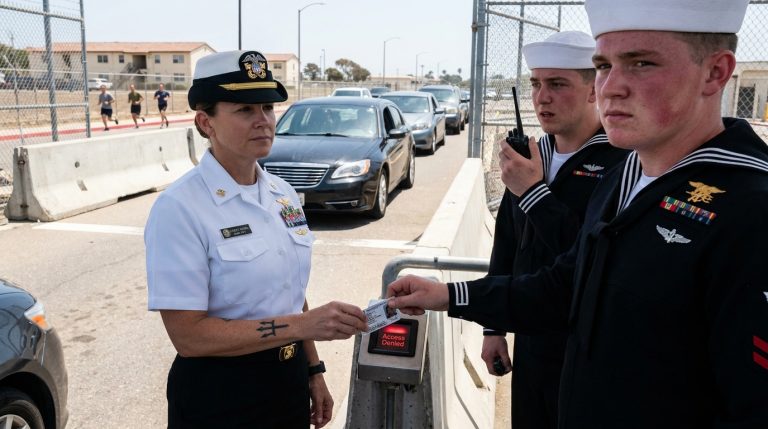
“I’m waiting,” Davis said, his voice regaining its sharp edge, though it lacked its earlier, polished conviction. He gestured again, more broadly this time, drawing the attention of the growing perimeter of personnel. “Security. Move.”
A few feet away, Senior Airman Garcia stood as if rooted to the concrete. He saw the way the sunlight caught the frayed edges of the scorpion patch, the threadbare fabric telling a story of grit that no formal citation could replicate. The smell of the flight line—hot rubber, refined jet fuel, and the metallic tang of sun-baked machinery—faded for Garcia, replaced by a sudden, haunting memory of a lecture he’d attended during basic training. The heroes are not always the ones with the brightest medals, the instructor had said. They are the ones who bear the silent cost.
He looked at the captain, then at the old man, and felt the distinct, physical prickle of static electricity—a phantom sensation that made the fine hairs on his arms rise. He knew he couldn’t stop Davis by shouting. To challenge an officer openly was a career-ending move. But to stand by and watch a legend be treated like a vagrant was an moral failure he couldn’t stomach.
Garcia didn’t run. He didn’t make a scene. He turned, his movements precise and disciplined, walking toward the shadows of the maintenance hangar with a speed that suggested a sudden, urgent task. Once shielded by the bulk of a decommissioned transport, he pulled his phone. His fingers, calloused from years of wrenching on hydraulic lines, danced across the glass with a fluidity born of panic. He didn’t call the front desk. He didn’t call the Provost Marshal. He dialed a number he’d seen only once, on a confidential list of “Base Heritage Keepers.”
“Chief Wallace,” the voice on the other end was clipped, efficient, and immediately alert.
“Chief, this is Airman Garcia, 355th AMXS,” he whispered, his back pressed against the corrugated metal of the hangar. His heart was a drum against his ribs. “There’s a situation out by the static line. Hangar side. Captain Davis is harassing a civilian—a veteran. The guy is wearing the Scorpion patch. Tail 618.”
There was a pause, a terrifyingly long silence on the line. Garcia could hear the rustle of papers, the low, rhythmic ticking of a clock, and then, a sharp intake of breath.
“Does he have a name, Airman?” The Chief’s voice had dropped, losing its professional detachment, replaced by a resonant, dangerous gravity.
“No, sir. Davis won’t let us near him. He’s calling for security. He wants a mandatory psych evaluation.”
“Stay put,” Wallace commanded. “Do not engage. Do not let that captain pull the veteran away. I am already in the vehicle. The Colonel is with me.”
The line went dead, leaving Garcia in the oppressive silence of the hangar’s shadow. He stepped out just enough to see the tarmac. The standoff hadn’t changed, but the energy had. Davis was pacing now, a predator who realized his prey hadn’t moved and was starting to wonder why. The captain’s frustration was leaking into the air, a sour, jagged tension that made the onlookers shuffle their feet and look at the ground.
Roger Bentley stood still as a monument. He wasn’t looking at Davis. He was staring at the GAU-8, his fingers tracing the curve of the cooling barrel. In his mind, the desert sun vanished, replaced by the biting, crystalline cold of high-altitude flight. He could feel the familiar vibration of the cannons firing—a bone-jarring rattle that felt like the earth itself tearing open.
Any air support in the area? This is Ranger 6 actual. We are pinned down.
The radio, the screaming, the smell of acrid, burnt propellant—it wasn’t a memory anymore. It was an intrusion. It was the “Psychological Phantom” that had guided his every move for thirty years. He felt the phantom jolt of a missile impact against the wing, the internal, rhythmic dance on the rudder pedals to stabilize a bird that was already screaming its death rattle.
He didn’t need to look at Davis to know the man was failing. He saw it in the captain’s body language: the way he adjusted his collar, the way he checked his watch, the way he looked for validation from his own subordinates. Davis wasn’t fighting a man; he was fighting a mirror. And for the first time, Roger realized that his presence here wasn’t a mistake. He had come to visit the machine, yes, but he had also come to see if the spirit of the wing had survived the march of time.
He took a slow, deliberate breath, drawing in the scent of hot concrete and ozone. He would not move until help arrived. He would let the young man in the starched uniform unravel himself, stitch by stitch. The cost of leadership was measured in the silence one kept when challenged, and Roger had mastered that silence in the dark valleys of a war that most people on this base had only ever seen in the grain of a digital archive.
“Last warning, sir,” Davis snapped, stepping within inches of Roger, his face flushed with the exertion of his own ego. “Move, or I will have you forcibly removed.”
Roger looked up, his faded, sky-colored eyes locking onto the captain’s. The stillness in his gaze was so absolute, so devoid of fear, that Davis instinctively stepped back, an unintentional flinch that didn’t go unnoticed by the crowd.
“I am where I belong, Captain,” Roger said softly.
And in the distance, a sound began to grow—a low, mechanical rumble that was neither the whine of a jet engine nor the idling of a truck. It was the approach of a command vehicle, tearing across the tarmac with an urgency that ignored every regulation the base had ever written.
CHAPTER 3: THE ARRIVAL OF ORDER
The black SUV tore across the tarmac like a jagged tear in the fabric of the afternoon. It didn’t just stop; it skidded to a halt with a shrieking protest of tires that left twin streaks of rubber burned into the concrete. The doors flew open, and Colonel Mat emerged—a man whose presence seemed to draw the very humidity from the air, replaced by a cold, absolute intensity. Chief Wallace was on his heels, his stride purposeful, his eyes locked not on the captain, but on the small, unassuming figure standing beside the A-10.
Captain Davis didn’t have time to process the violence of the arrival. He stood there, his mouth partially open, still carrying the lingering ghost of his “command” over the situation. He saw the Colonel and, for a fleeting heartbeat, his instincts took over. He snapped into a salute, but it was hollow—a reflex born of muscle memory rather than professional clarity.
The Colonel ignored him. He didn’t offer a return salute, didn’t offer a nod, didn’t even acknowledge that Davis existed in the same solar system. Mat walked, his boots clicking in a steady, metronomic cadence against the heat-softened tarmac, his eyes fixed on Roger Bentley.
Roger, meanwhile, hadn’t moved. His hand remained on the fuselage of the aircraft, his posture unchanged, a calm island in the swirling storm of the base’s sudden, panicked reaction. He felt the vibration of the vehicle’s engine die away, felt the shift in the wind as the group of maintenance NCOs fanned out, creating a protective perimeter around the aircraft. The air here was changing. It was turning heavy, charged with the weight of unsaid history.
“Mr. Bentley,” the Colonel said. His voice was not the shout of a drill instructor, but the controlled, resonant tone of a man addressing a superior. He stopped exactly three feet from Roger and then, in a movement so fluid and practiced it defied the urgency of the moment, he snapped into a salute that was as rigid as the steel of the A-10’s frame. It was a salute of such profound, worshipful gravity that the onlookers—the young airmen who had been idling nearby—suddenly straightened, their own hands rising to their brows in a synchronized reflex of respect.
Davis stood paralyzed. He saw the salute, saw the way the Colonel—the highest-ranking authority on the base—offered the highest honor to a man he had just threatened with an escort off the facility. The realization was a slow, crushing weight in his gut. His hands, still stained with the arrogance of his earlier posture, felt suddenly heavy and useless.
“It is an honor to have you on my flight line, sir,” Mat said, his words ringing out over the tarmac, stripped of all logistical concerns.
Roger responded with a slow, tired nod. He wasn’t looking at the medals on Mat’s chest or the bars on his shoulders. He was looking at the way the sunlight caught the Colonel’s eyes, seeing there the same hunger for history, the same quiet, desperate need to belong to something larger than the current rotation of duties. Roger shifted his grip on the nose gear. A small, physical discrepancy caught his eye: the maintenance tag on the landing gear was hanging slightly askew. A detail he had noticed thirty years ago on a different airstrip, in a different world. He reached out and straightened it, a small, quiet act of maintenance that felt like closing a circle.
“Colonel,” Roger said, his voice a low, gravelly rasp that seemed to anchor the entire scene. “The pressure in the hydraulics is holding.”
Mat held his salute for another three seconds, a lifetime of respect, before dropping his hand. He turned slowly, the movement heavy with the burden of his rank. His gaze fell upon Captain Davis. The air grew perceptibly colder. The look on the Colonel’s face was not the red-faced fury of a reprimand; it was the chilling, clinical gaze of a surgeon observing a gangrenous limb.
“Captain,” Mat said, his voice dropping into that dangerous, low register that every officer on the base feared—a tone that stripped away the pretense of rank and left only the raw, exposed nerves of duty. “I’d suggest you take a very long, very quiet look at your surroundings.”
Davis tried to speak, his throat working convulsively. “Sir, I—I was simply following base protocol regarding restricted areas and security assets. The gentleman, he didn’t have his identification—”
“You aren’t speaking to a gentleman, Captain,” the Colonel interrupted, his voice cutting through the humid air like a scythe. “You are speaking to the legacy you claim to serve. You are speaking to the man who flew this bird with half a wing missing and a fuselage riddled with enough holes to fly a bird through, all to ensure that a platoon of Rangers made it home to their families.”
The silence that followed was absolute. Even the distant, high-pitched whine of the runway activity seemed to fade, leaving only the sound of the wind pushing against the hangar walls. The airmen nearby stared at Roger, seeing him now not as a relic in a cracked leather jacket, but as a living piece of steel and memory.
“You called for security forces,” the Colonel continued, his gaze never leaving Davis’s face. “You called for a mandatory medical evaluation. You, in your infinite ignorance of what this wing represents, attempted to humiliate a man who has paid more in blood for this uniform than you have in your entire career.”
A sudden, jarring noise interrupted the tension—the metallic clatter of a tool belt hitting the concrete as one of the younger airmen, overwhelmed by the sudden shift in reality, dropped his equipment. The sound was like a gunshot. The “Butterfly Detour” of the moment—the frantic scramble of the nearby maintenance crew to pick up the tools, the sudden influx of curiosity from the families nearby—created a chaotic distraction. The Colonel didn’t move. He didn’t look away.
“0600 hours tomorrow,” Mat said, his voice barely a whisper, yet it sounded like a judge’s gavel. “My office. In your service dress. You will be prepared to demonstrate, in excruciating detail, why you believe you deserve to remain in this Air Force. Because as far as I am concerned, you have ceased to be an officer of this wing as of this moment.”
Davis’s legs seemed to fail him. He nodded once, a frantic, disjointed motion, and began to back away, the pride that had sustained him for the last hour stripped away, leaving only the hollow shell of a man who had made the mistake of looking at a god and seeing only a beggar.
Roger looked at the Colonel, then back to the plane. He saw the maintenance team moving in, their movements reverent and precise, tending to the A-10 as if it were a wounded comrade. The conflict was peaking, the escalation complete, but the truth remained nestled in the shadows, waiting for the final, quiet revelation that would either heal the wing or haunt it forever.
CHAPTER 4: THE QUIET DENOUEMENT
The tarmac began to bleed the day’s heat into the cooling evening air. The crowd, long held in a state of electric suspense, began to thin, moving away with the hushed reverence of people leaving a cathedral. Roger remained where he was, his hand still resting on the nose gear of the Thunderbolt. Beside him, Colonel Mat stood in silence, his posture finally losing the rigid, artificial line of command, settling into the natural, weary stance of a man who had seen something he didn’t expect to find.
“You didn’t have to stay,” Roger said, his voice quiet, almost lost in the vast, open space of the flight line.
“I think I did,” Mat replied, looking up at the A-10’s weathered skin. “I needed to see if it was true. The legends, the stories in the flight logs—they’re just ink on paper, Roger. But seeing you stand here, seeing how this bird responds to your touch… it’s different.”
Roger’s fingers traced a slight indentation in the metal, a scar from a shrapnel strike decades old. “It’s not just a machine, Colonel. It’s a repository. Every time I touch it, I feel the weight of every soul I carried home, and every one I couldn’t.”
The revelation of Layer 2 hung in the air, no longer a locked secret, but an acknowledged burden. The base wasn’t just housing a historical asset; they were preserving the physical anchor for a man who had never truly left the cockpit. The funding, the secrecy, the “historical archives”—it was all an elaborate, quiet infrastructure designed to keep Roger connected to his purpose, to keep the “ghost” from fading into total, painful isolation.
Mat reached out, his hand hovering near the fuselage but not quite touching it, as if afraid to disturb the sanctity of the moment. “We knew you were out there, Roger. The base commander before me, and the one before him… we all knew. We just didn’t know how to reach out without breaking the spell.”
Roger nodded, a slow, solemn motion. He pulled his hand back, the absence of the metal’s contact feeling like a sudden, phantom weight. “The spell wasn’t meant to be broken. It was meant to be carried.”
CHAPTER 4: THE ECHO OF A SAND SCORPION
The departure of Captain Davis left a vacuum on the tarmac, a space where the noise of ego and conflict had previously resided. Now, there was only the hum of the A-10’s cooling systems and the soft, rhythmic clicking of maintenance gear being stowed. Colonel Mat remained standing near Roger, his posture relaxed but attentive, his eyes tracking the way the old man leaned against the fuselage.
“It’s a heavy thing, isn’t it?” Mat asked, his voice low, matching the reverence of the moment. “Carrying that much history in a jacket pocket.”
Roger shifted his weight, his boots crunching slightly on the gritty concrete. He looked at the A-10—Tail 780618. To the mechanics bustling around them, it was a platform of avionics, wiring, and titanium. To the wing, it was a museum piece. But to Roger, it was the only place he felt truly grounded.
“It’s not the jacket, Colonel,” Roger replied, his voice a gravelly murmur. “It’s the connection. People think the war ended when the treaty was signed. They think the machines are retired when the paint fades. But the debt… the debt doesn’t have a retirement date.”
He reached out, his fingers brushing a small, barely visible smudge of carbon on the nose of the plane—a scar from a near-miss three decades prior. “I didn’t come here today to complain about a young officer. I came because the machine called. It needed to be checked. It needed someone to remember why it was built in the first place.”
The Colonel nodded slowly. He stepped closer, his demeanor shifting from the commanding officer to a student of a master. “The wing has been keeping a record, sir. A private one. The after-action reports, the logbooks, the accounts from the Rangers you saved… they’re all archived in the vault. We didn’t want the history to vanish when the airframe was retired. We’ve been using your legacy to teach every new pilot who passes through this hangar. You aren’t just visiting a static display, Mr. Bentley. You’re visiting the heart of the 355th.”
Roger looked up, his faded blue eyes catching the light. He saw it then—the truth of his presence. He wasn’t just an aging pilot haunting a piece of equipment; he was the living memorial of a lineage. The wing commander hadn’t just been protecting a veteran; he had been protecting a core, an emotional foundation that kept the unit’s identity intact. The maintenance NCOs, the young airmen like Garcia—they weren’t just fixing machines; they were curate-ing a culture of duty that Roger had started in a desert valley.
The revelation settled over him like a warm blanket. He wasn’t forgotten. He was the anchor.
“That’s a heavy burden for a base to carry,” Roger said, a ghost of a smile touching his weathered features.
“It’s the only burden worth carrying, sir,” Mat replied.
The following weeks transformed the base. The public apology was delivered with quiet, dignified efficiency, but the true change was internal. The mandatory heritage course, built around Roger’s service, became the bedrock of the wing’s pride. Captain Davis, moved to his remote logistics post, eventually found himself assigned to digitizing the old archival tapes—a slow, grueling process that forced him to listen, day after day, to the cockpit recordings of missions like the one Roger had flown. The arrogance was slowly eroded, not by reprimand, but by the overwhelming, unignorable reality of the history he had tried to dismiss.
Roger continued his visits, though the dynamic shifted. He was no longer a stranger on the flight line. When he arrived, the work paused, but not out of regulation or forced respect. It was a rhythm. He would walk the line, touch the fuselages, and sometimes, he would sit in the breakroom with the younger mechanics, sharing stories that were never officially recorded, the kind of wisdom that doesn’t make it into manuals but defines a career.
On his final visit of the season, Roger stood once more before Tail 618. He took a small piece of fine-grit cloth from his pocket and buffed a patch of dull metal near the intake. It was a gesture of love, of maintenance, of shared survival.
He felt a hand on his shoulder—Chief Wallace, who had been a quiet guardian of this process from the start. “She looks good, sir,” the Chief said.
“She remembers, Chief,” Roger replied. “They all remember.”
He looked toward the horizon, where the sun was beginning its descent, painting the sky in colors that mirrored the dust of the valley he had once defended. He wasn’t fighting the ghost of the past anymore. He was part of a living, breathing continuum. The scorpion patch on his jacket felt less like a heavy burden and more like a badge of belonging. He had come here to check on a machine, but he had left behind a piece of his own soul, and in exchange, the wing had given him a place to rest his memories.
The struggle to be remembered, the fear of becoming obsolete—it all seemed to evaporate in the face of the quiet, consistent dedication of the men and women who kept the wings flying. Roger walked toward the exit, his gait a little steadier, his back a little straighter. He didn’t look back, because there was no need. The thunder of the engines, the sharp scent of the hangar, the legacy of the sand scorpion—it was all here, etched into the steel and the hearts of those who stood guard in the sun. He was a veteran of a war that had ended long ago, but he was also a servant of a peace that was built on the echoes of the past.
As he stepped off the flight line, the world felt less like a chaotic, rushing current and more like a steady, calm ocean. He had found his grace, not in the accolades of the public, but in the quiet, shared understanding of those who kept the legacy of courage alive. The echo of the scorpion had found its home.