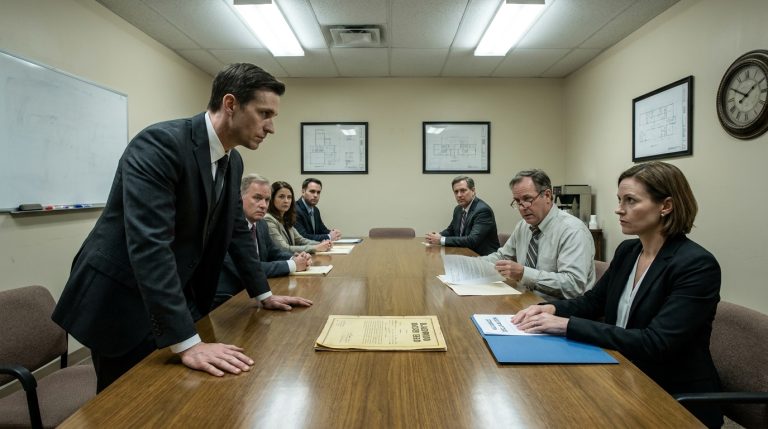
The Current of Deception: A Cold War of Wire, Paper Trails, and Quiet Retribution
CHAPTER 1: THE BLEEDING LINE
The glass dome of the electric meter was cold beneath my fingertips, but the thin metal disc inside was spinning with a frantic, silent urgency. In the damp country air, the mechanism hissed. It was a rhythmic, metal-on-metal tick that counted down the steady drainage of my bank account, one kilowatt-hour at a time. I stood in the shadow of the barn, the cold gravel biting through the soles of my boots, staring at the numbers. They were impossible. I had shut down the dehydrator. I had pulled the plugs on the shop fans. The well pump was silent. Yet, the meter spun as if I were running an industrial forge in the dark.
I pocketed my heavy iron flashlight, its metal casing ice-cold against my palm, and began the search.
The shadows of the oak trees along the north fence line stretched out like long, black fingers. The grass was tall here, overgrown and thick with morning dew that soaked through my canvas trousers. I walked the perimeter, my eyes adjusted to the gray twilight. Then, my boot caught on something solid, half-buried under a patch of dry brambles.
I knelt. The ground was cold, smelling of wet clay and decaying leaves.
With a gloved hand, I parted the weeds. There it lay. A thick, bright orange extension cord, heavy-duty and insulated, running like a synthetic snake through the dirt. It didn’t belong to me. I traced its path, stepping quietly, keeping my weight on the balls of my feet to avoid the snap of dry twigs. The wire ran straight toward the property line, snaking through a narrow, splintered gap in the gray wooden fence slats. The physical bridge of her quiet theft.. Source: tumsasedgars / Getty Images
On the other side lay Karen’s yard—immaculately manicured, sterile, and dark. She was the self-appointed guardian of our local HOA, a woman who treated a misplaced lawn chair as a personal insult, yet here was her orange line, plugged directly into my external barn outlet.
My chest tightened, not with anger, but with a cold, predatory focus. This was a boundary crossed.
I pulled my phone from my pocket, the screen casting a sharp, blue glare across my face. I took three photographs, capturing the exact point where the cord breached my fence. But as I leaned closer to document the connection, the beam of my flashlight caught a strange detail near the splice of the wire.
This was no ordinary extension cord.
Just before the line slipped beneath the fence, it was spliced into a heavy, waterproofed black terminal box about the size of a cigarette pack. The box was bolted directly to a hidden wooden post on her side of the line. Glinting in the pale light was a small, laser-etched aluminum tag riveted to the casing. It bore no commercial brand, no hardware store logo. It had a single, cold line of serial numbers and a corporate mark:
PROPERTY OF AEGIS-WEST // VESPER-9 HUBS
My fingers hovered over the cold metal box. A low, high-frequency hum vibrated through the casing, a sound far too complex for a simple outdoor porch light.
CHAPTER 2: THE SILENT SURVEY
The name Aegis-West felt cold in my thoughts, a hard-edged corporate phantom etched into aluminum. Beneath my palm, the metal casing of the Vesper-9 Hub vibrated with a steady, rhythmic pulse, like a mechanical heart buried in the wet cedar of the fence post. It wasn’t just siphoning power to run a porch light. No household fixture pulled enough juice to hum with this level of low-frequency menace. The sound was a deep, subterranean thrum, a vibration that traveled up through the soles of my boots and settled behind my ribs.
I pulled my hand back, my fingertips tingling from the subtle electrostatic charge clinging to the box. The damp night air seemed to thicken around me. Across the property line, Karen’s house remained dark, but the silence now felt calculated, an artificial quiet maintained to mask the machine running in her backyard.
I didn’t step back. I couldn’t. The logic of the land was simple: when a fence is breached, you trace the gap to its source.
I lowered my body, keeping my movements deliberate, and slipped past the overgrown blackberry brambles that lined our shared border. The ground here was soft and spongy, swallowing the sound of my footsteps. I followed the heavy orange cord, not with my eyes—the darkness was too thick for that—but by running my gloved hand along its rough, dirty plastic exterior. The cord didn’t head toward her back patio. Instead, it angled sharply to the left, angling toward the squat, windowless cedar shed she had erected two summers ago under the guise of storing winter fertilizer.
As I neared the structure, the smell of damp earth was replaced by something dry, hot, and distinctly chemical. It was the scent of warm circuit boards and scorched dust, a smell I knew all too well from my years rebuilding old tractors in the shop, but here, it was concentrated.
I stopped five feet from the shed’s foundation. The wooden walls, painted an HOA-approved shade of slate gray, were practically vibrating. A low, continuous whine—the unmistakable sound of high-RPM cooling fans—drifted through the narrow vents running along the roofline. In the cool night air, thin plumes of shimmering heat rose from the plastic slats of the exhaust, distorting the stars behind them.
My gaze drifted down to the base of the shed. The structure sat on a poured concrete pad, but the orange cable didn’t enter through the wall. It disappeared directly into a thick, reinforced rubber conduit that plunged straight through the concrete, disappearing into the earth.
I knelt, my knees pressing into the cold, damp pine needles. I pressed my ear against the gray cedar siding.
The sound wasn’t just coming from inside the shed. It was echoing up from beneath it, deep in the ground, a hollow, metallic resonance that vibrated through the concrete slab like a trapped engine. Underneath this small, unassuming suburban backyard, something massive was breathing, drawing its lifeblood directly from my barn’s electrical panel.
The scale of the intrusion settled over me with a heavy, chilling weight. This wasn’t a petty neighbor stealing a few dollars of power to heat a pool or light a greenhouse. Karen was running an active node, a buried workstation that hummed with enough processing power to require industrial cooling, all hidden beneath a simple garden shed.
A sudden, sharp metallic click echoed from the back porch of the main house.
I froze, my hand dropping to the ground, my chest pressing flat against the wet earth. The back door of Karen’s house swung open, casting a long, narrow wedge of yellow light across the manicured lawn. The shadow of a figure stretched into the yard, tall and unnaturally still.
I didn’t move. I didn’t breathe. I let my eyes adjust to the edge of the light, waiting for the counter-move.
CHAPTER 3: THE GHOST INVOICE
The yellow light from the porch sliced through the dark, stopping barely two feet from where my face was pressed into the wet weeds. I held my breath, my lungs burning against the cold air, while my hand slowly retracted toward my chest, sliding over the damp earth with glacial, silent caution.
On the wooden deck, the shadow shifted. It was Karen. She stood in a long, dark velvet robe, holding a small white ceramic cup that gave off a thin, curling wisp of steam. Her posture wasn’t that of a tired homeowner checking a stray noise; she stood with her head slightly tilted, her eyes scanning the dark perimeter with an unnerving, systematic sweep. She didn’t look angry. She looked hyper-vigilant, her thin lips compressed into a hard line of quiet authority.
She took a slow sip, her gaze resting briefly on the gray garden shed. Beneath her feet, the faint, low-frequency hum of the buried Vesper-9 Hub vibrated through the floorboards of her deck. She had to feel it. She had to know what was drawing that immense load of power.
Ten seconds crawled by. Then she turned, her robe sweeping against the doorframe as she slid the glass door shut. The yellow wedge of light vanished, plunging the yard back into deep, slate-gray shadow.
I let out my breath, a quiet, controlled hiss of air. I pushed myself up from the cold grass, my muscles stiff from the tension. My hands were coated in damp, gritty soil, but my thoughts were razor-sharp. If she was operating on behalf of Aegis-West, direct confrontation would only cause her to lock down the site and bury the trail. I couldn’t simply cut the wire. If I did, they would find another way, or worse, use their legal and administrative machinery to crush me.
I needed to make her play her hand. I needed to use her own obsession with rules and bureaucratic control against her.
I walked back to my house through the dark, the gravel crunching softly beneath my boots. In the kitchen, the refrigerator hummed a steady, mocking counterpoint to the quiet adrenaline buzzing in my veins. I washed the mud from my hands under cold water, watching the dark silt swirl down the drain. Then, I sat down at my desk.
I pulled up a clean document on my screen. This wasn’t going to be a simple neighborly complaint. If Karen wanted to run an off-grid surveillance node under the Ledger-X Protocol on my dime, she was going to pay the toll—one beautifully fabricated, legalistic lie at a time.
I began to construct the invoice. I didn’t use my name, nor did I use any local municipal templates. Instead, I invented a department that sounded heavy, unyielding, and terrifyingly official: The Regional Infrastructure Adjustment Board.
I adjusted the font to a cold, sans-serif municipal standard, placing a bold, gray emblem at the header. I drafted the line items with meticulous, dry complexity, ensuring every term sounded like a real regulatory penalty designed to slip past a corporate auditor’s standard check:
Residential Energy Redistribution Fee (Zone 4 Surcharge): $2.14
Unauthorized Extension Line Service Fee: $0.75
Infrastructure Draw Surcharge (Aegis-West Override): $25.00
Ledger-X Compliance Verification Surcharge: $5.28
Total Due: $33.17
I added a mock payment routing address and a stern warning at the bottom regarding immediate administrative liens on property titles if unpaid within seventy-two hours. It was a bluff, but it was packaged in the exact language of authority she used to terrorize the neighborhood. If she was running a black-budget operation, she wouldn’t risk letting an official-looking utility dispute go to a formal county review. She would pay to keep the quiet current flowing.
I printed the sheet on heavy, standard-issue cream paper, folded it twice, and slipped it into a plain window envelope.
The clock on the wall read 3:14 AM. I walked out to the road, the gravel cool under my sneakers, and slipped the envelope into her metal mailbox, letting the door click shut with a quiet, decisive snap. The trap was set. Now, I had to see if she would pay the price to keep her secret buried.
CHAPTER 4: PUBLIC DISSECTION
The transition from the shadow of the property line to the harsh, unblinking glare of the community center gymnasium was a violent shock to the senses. The air here didn’t smell of damp cedar or rain-soaked soil; it was a stale cocktail of industrial floor wax, old paper, and cheap institutional coffee. Row after row of cold, gray metal folding chairs squeaked against the scuffed linoleum floor as retirees and local property owners took their seats.
At the front of the room, behind a folding table draped in a sagging vinyl cloth, sat the HOA board. Karen sat at the far end, her posture rigid, her chin tilted up at an angle that practically radiated moral superiority. She wore a thick, hand-woven wool scarf around her neck despite the room’s stuffy warmth, her fingers methodically aligning a stack of printed, color-coded packets.
I took a seat near the back, my boots resting quietly on the linoleum. I watched her hands. There was a tiny, localized tremor in her left index finger—not of fear, but of suppressed, electric irritation.
“Item four on the agenda,” the board president announced, his voice flat and thoroughly exhausted as he tapped a plastic pen against a water glass. “A formal petition of grievance filed by member Karen Vance regarding… unauthorized administrative interference.”
Karen stood up. The movement was sharp, her heels clicking against the floor like synchronized pistol shots. She did not look at the crowd; she looked directly at the board president, her eyes narrow and gleaming with a cold, absolute certainty.
“What we are dealing with,” Karen began, her voice carrying a practiced, crystalline resonance that filled the high-ceilinged room, “is a malicious campaign of administrative fraud. For the past seven weeks, an individual in this community has been distributing fabricated utility notices. They are using highly technical, threatening language to extort funds under the guise of an official regional authority.”
She raised a piece of paper—the very invoice I had slid into her mailbox, its mock-official gray emblem catching the harsh light.
“These documents contain fraudulent claims of compliance violations. They demand specific financial payouts for nonsensical charges like ‘unauthorized shade cast’ and ‘lawn reflection interference.’ It is an obvious, amateurish attempt at harassment.” She paused, her eyes finally sweeping the room, stopping directly on me. A thin, triumphant smile touched the corners of her mouth. “And I have traced the source. I have the security footage of the vehicle, the timeline, and the exact physical coordinates of the distribution.”
A low murmur rippled through the rows of folding chairs. Neighbors whispered behind their hands, turning to look at me. I sat completely still, my hands resting loosely on my lap, letting the tension in the room build until it was almost suffocating.
The board president frowned, taking the invoice from her. “Karen, these charges… they look highly unusual. But why would anyone send you an invoice for ‘lawn reflection interference’ in the first place?”
“Because she was stealing my electricity to run a subterranean server node,” I said, my voice quiet but cutting clearly through the low chatter.
I didn’t rush. I stood up slowly, the metal legs of my chair scraping softly against the floor. I walked down the center aisle, carrying a thick, black cardstock folder under my arm. Karen’s jaw tightened, her hands gripping the edge of the display table so hard her knuckles turned a bloodless white.
“I have no interest in games, Karen,” I said as I laid the folder open on the board’s table. “What I have is a documented audit.”
I flipped open the first page, revealing a high-resolution, color photograph of the bright orange extension cord snaking through the fence gap. Next to it was the close-up of the waterproof junction box, the serial numbers, and the distinctive corporate logo clearly visible under the beam of my flashlight.
“For three months, my barn’s electrical meter has been running at nearly triple its normal capacity,” I explained, directing my words to the board president while keeping my peripheral vision locked on Karen’s rigid posture. “This cord runs from my private, metered outlet directly into the foundation of the garden structure on her property. Every time I flip my primary barn breaker, her entire outdoor security perimeter—and the high-velocity ventilation systems in her cedar shed—completely dies. I have recorded this cycle on video twenty-two times, synchronized with the real-time spikes on my smart-meter application.”
The board president leaned forward, his eyes widening as he flipped to the technical specifications sheet I had compiled. “Is this… a direct splice?”
“Yes,” I replied. “And the invoices she so diligently paid were not extorted. They were accepted. She signed and returned every single payment voucher, processing them without a single formal inquiry to the actual municipal utility company because she knew exactly what she was drawing from my line.”
I turned to face her directly. Her eyes were wide, the pupils dilated with a sudden, cornered panic. Her breath was coming faster now, the thick wool scarf around her neck rising and falling in shallow, jagged movements.
“You have no authorization to access my property,” she whispered, her voice losing its polished composure, descending into a sharp, venomous hiss. “That structure is private. The equipment inside is proprietary.”
“The equipment inside is pulling sixty thousand watts of unmetered current,” I said softly, the silence in the room absolute. “And the state utility commission has already received the telemetry.”
The board president looked up from the folder, his face pale as he stared at the corporate label highlighted on the page. “The board will take this under immediate administrative review. Karen… you need to step down from the committee room. Right now.”
She didn’t move for three long seconds. Her body was locked in place, a statue of absolute, broken pride under the cold fluorescent lights. Then, without a word, she gathered her papers with trembling hands, her heels clicking a ragged, uneven beat against the linoleum as she marched toward the double doors, leaving the room in a stunned, dead silence.
CHAPTER 5: THE SEVERED CURRENT
The heavy gymnasium doors swung shut behind Karen with a dull, pneumatic sigh, but the silence she left behind in the room felt thick and loaded with kinetic potential. Neighbors sat frozen in their metal chairs, their eyes darting between the empty doorway and the black folder still open on the board’s table. I did not wait for the post-mortem chatter to start. I did not need their validation, only their silence. I closed the folder with a deliberate snap of the plastic binding, gathered my phone, and walked out into the cool night air.
The drive back to the property line was a blur of gravel dust and the steady, low beam of my truck’s headlights slicing through the dark. My phone buzzed on the passenger seat—a string of alert notifications from my smart-meter app, showing yet another massive, continuous spike in the barn’s power grid. The Vesper-9 Hub was drawing maximum current now, as if trying to process its final data payloads before the net closed.
I parked the truck by the side of the barn, leaving the engine running. The headlights washed over the weathered wooden siding, highlighting the metal conduit that housed my main electrical panel.
I stepped out of the cab, my boots sinking into the wet grass. The air was cold, smelling of approaching rain, but near the barn, there was a distinct, dry smell of ozone and hot copper wiring. The transformer on the nearby utility pole was humming—a high, strained pitch that vibrated through the metal of my truck’s door frame.
I opened the heavy iron door of the barn’s breaker box. The key turned with a stiff, grating click. Inside, the heavy-duty master switch was warm to the touch. I knew the rules: simply shutting her down wouldn’t undo the network. But pulling the plug completely would force the system to run on its internal backup batteries, exposing its exact coordinates to the local grid regulators who were already on their way.
I gripped the black plastic handle of the primary 200-amp breaker. With a hard, downward thrust, I threw the switch.
A heavy, echoing thunk reverberated through the steel cabinet. Instantly, the hum of the transformer on the pole died. The floodlights illuminating my gravel driveway vanished, plunging the entire property into an oppressive, velvet dark.
For a second, the silence was absolute. Then, from across the fence line, a secondary sound rose—a high-pitched, metallic whine of emergency cooling fans kicking in. Underneath the cedar shed, the backup power supplies of the Vesper-9 Hub were screaming under the load.
A sharp beam of light cut through the trees.
A white utility truck, marked with the reflective blue and orange decals of the State Energy Commission, rolled slowly down the gravel lane. Its amber roof lights rotated silently, casting long, sweeping amber shadows across the gray wooden fence slats. I stood by my panel as the vehicle came to a stop, its heavy diesel engine idling with a deep, reassuring rumble.
The driver’s door opened, and a technician in a yellow flame-resistant jacket stepped out, carrying a handheld electromagnetic scanner.
“You the one who reported the phase imbalance?” he asked, his voice low and professional, his boots crunching on the gravel.
“Right here,” I said, pointing toward the orange line running through the fence gap. “The line runs directly from my barn panel to an unauthorized subterranean vault on the adjacent lot. The current load has been running continuously for weeks.”
The technician pointed his scanner toward the cedar fence. The digital display on his device instantly flared with a bright, crimson warning light, emitting a rapid, staccato beep. “Holy hell. That’s not a domestic draw. We’re looking at a critical infrastructure breach. That signal signature is operating on a restricted industrial band.”
“Aegis-West,” I said, the name tasting like cold metal in my mouth. “They’re running a land-title surveillance node under the Ledger-X Protocol. They’ve been siphoning my current to mask their physical location.”
The technician’s face hardened. He pulled a heavy radio from his shoulder strap. “Dispatch, this is Unit 4. We have a confirmed unmetered industrial consumption tap at Section 12. I’m looking at a direct line tap with heavy signal interference. Initiate a formal grid containment protocol and patch me through to the regional investigation team immediately.”
Behind the fence, the high-pitched whine of the backup systems began to stutter, the pitch dropping lower and lower as the batteries choked on the massive processing load. I stood in the dark, watching the amber strobe lights sweep over the splintered wood of the boundary wall. The silent, unblinking eyes of her network were finally going dark.
CHAPTER 6: THE DUSTY HORIZON
The high-pitched whine from beneath the cedar shed didn’t end with a bang; it died with a hollow, rattling wheeze. The backup power supplies of the Vesper-9 Hub, starved of the immense current they required, finally collapsed. The vibration that had hummed through the soil and into the soles of my boots for weeks simply vanished, leaving behind a silence so sudden and profound it felt like a physical pressure dropping from the air.
The amber strobe lights from the utility truck continued their slow, methodical sweep across the gray wooden fence.
“Dispatch, Unit 4,” the technician said into his heavy shoulder radio, his voice cutting through the quiet. “Target system has achieved hard failure. The draw has dropped to zero. I’m tagging the primary splice now. I need the regional fraud division out here at first light, and someone from the state attorney’s office to pull the title records for this parcel.”
He unclipped a pair of heavy-duty insulated shears from his belt. He didn’t ask for permission. He walked straight to the gap in the fence, grabbed the thick orange extension cord where it met the Aegis-West terminal box, and clamped the shears down. With a sharp, decisive crack, he severed the line. The heavy plastic casing and the copper core snapped. The physical tether between my property and her hidden network was permanently broken.
“They won’t just walk away from this,” the technician muttered, capping the exposed end of my wire with a heavy rubber insulator. “Aegis-West. They deploy these Vesper-9 Hubs into suburban utility grids to run automated title-scraping and targeted zoning harassment through the Ledger-X Protocol. They siphon the power to keep their own corporate footprint invisible while they bleed the neighborhood dry, trying to force cheap foreclosures. But they need an inside operator to host the hardware.”
He looked toward the dark, silent house across the property line. “Whoever she is, she isn’t just a nosy neighbor. She was their anchor. And now that she’s exposed the physical node, they’re going to burn her to insulate themselves. The state commission will levy the theft fines directly on the property owner of record. I’m estimating the penalty for this level of unmetered industrial consumption at roughly sixty thousand dollars, not including the federal wire-fraud investigation.”
He turned back to his truck, his boots grinding heavy and loud on the gravel. “Leave the panel off for tonight. The grid needs to normalize. My team will be back in the morning.”
The heavy diesel engine roared as he put the truck in gear. The amber lights slowly rolled back down the dirt lane, leaving me alone in the deep, velvet dark.
I didn’t move. I stood by the open steel cabinet of my electrical panel, listening to the first heavy drops of rain begin to hit the aluminum roof of the barn.
The next few weeks were a study in silent, bureaucratic violence. Aegis-West did exactly what the technician predicted—they vanished into a labyrinth of shell companies, leaving Karen holding the entirety of the physical evidence. The utility commission’s penalty hit her property title like a sledgehammer. The HOA, terrified of the federal subpoenas circling the neighborhood, completely severed ties with her, voting unanimously to restrict her access to all community grounds.
There were no more velvet robes or condescending lectures. There were only unmarked utility vans, clipboard-carrying investigators, and the slow, inevitable grinding of the system she had once used as a weapon, now turning its gears entirely against her.
It happened on a Tuesday, early in the morning, when the sky was still a bruised, desaturated gray.
I was standing on my porch, a heavy ceramic mug of black coffee warming my hands, when the white moving truck backed slowly into her driveway. She was already out there, hauling a stack of taped cardboard boxes out the front door. She moved with a rigid, frantic energy, her head down, her shoulders tight. She looked smaller. The pristine, untouchable authority she had always carried was gone, replaced by the exhausted, brittle posture of someone trying to outrun the dawn.
I took a slow sip of my coffee, the bitter heat cutting through the morning chill.
She paused at the back of the moving truck, a heavy box balanced on her hip. For a fraction of a second, her gaze lifted, crossing the dew-soaked grass, past the gray wooden fence, and met mine. There was no anger left in her expression, only a hollow, exhausted recognition of defeat.
I didn’t smile. I didn’t gloat. I simply raised my mug in a slow, silent salute.
She broke eye contact instantly, shoving the box into the dark cavern of the truck bed, before turning her back and walking quickly toward the driver’s side door. The engine turned over with a rough sputter, the tires crunching loudly over the immaculate curb as the truck pulled away, disappearing down the long curve of the neighborhood road.
I walked down the steps of the porch, the wet grass soaking the edges of my jeans. I went to the north fence line, to the spot where the blackberry brambles had overgrown. The gap in the gray wooden slats was still there.
I reached into my pocket and pulled out a handful of heavy, galvanized iron nails and a sturdy wooden crossbeam I had cut from scrap pine in the shop. I lined the new wood up against the splintered gap, the rough texture of the pine catching against the old cedar. I raised my hammer, the weight of the steel comfortable and familiar in my grip.
With three solid, echoing strikes, I drove the iron nails deep into the wood. The gap closed. The boundary was sealed.
I lowered the hammer, taking a deep breath of the damp, clean air. The low-frequency hum was gone. The only sound left was the quiet rustle of the wind through the oak trees, and the slow, steady rhythm of a world finally returned to its proper place.