The Frozen Line of Marcus Anakis: A Bitter War of Boundary and Bitter Mountain Soil
CHAPTER 1: THE FROZEN LINE
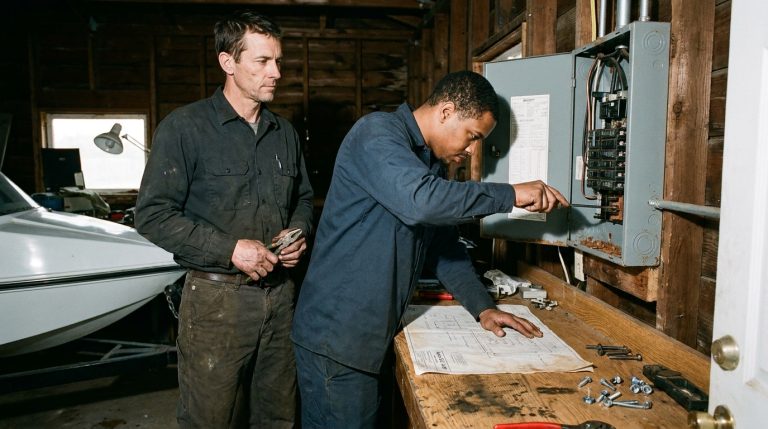
The grease under Marcus’s fingernails had gone cold and stiff, matching the sub-zero iron of the snowmobile’s carburetor. He didn’t hear the machine coming; he felt it first as a low vibration in the floorboards of his workshop, the dry pine structure humming with the threat of an uninvited engine.
He didn’t wipe his hands until he was at the threshold. Outside, the Montana air hit him like a flat-edge shovel. The sky was the color of a wet slate shingle, hanging low over the jagged tops of the western larches. Standing in the middle of his cleared path was a red Polaris utility sled, its exhaust idling in thick, sour plumes that smelled of cheap fuel and winter storage.
Patricia Morrison didn’t get off the machine immediately. She sat with her gloved hands resting on the handlebars, her eyes obscured by polarized lenses that reflected the gray forest back at Marcus like two tiny, mirrored shields. When she finally killed the ignition, the silence that rushed back in was heavy, smelling of damp wool and pine rot.
“You’ve been busy, Mr. Zanakis,” she said. Her voice didn’t carry the warmth of a neighbor; it had the flat, dry rasp of paper sliding across a desk. She pulled a yellow plastic clipboard from the front cargo basket.
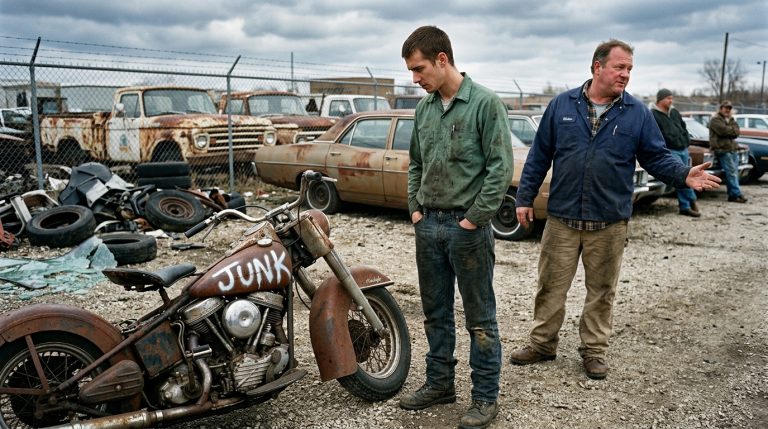
Marcus stepped off the porch, his boots crunching into the frozen crust of the November pack. He stopped ten feet away, his hand naturally finding the cold iron handle of the timber-jack leaning against the siding. “You’re thirty yards past the yellow survey stake, Patricia. That means you’re standing on my gas money.”
“The White Fish Highlands Association doesn’t recognize personal stakes driven into historic thoroughfares,” she said, tapping the clipboard with a black pen. The plastic clicked—a sharp, mechanical sound in the dead air. “This trail connects the north ridge to the county road. We have a maintenance log dating back to the winter of ninety-eight. You can’t fence off what the community paid to clear.”
“The community didn’t buy it from the Harov estate. I did,” Marcus said. His voice was low, filtered through the wool gaiter pulled up to his chin. He looked past her, noticing the fresh tracks leading toward the western creek. There was a second set of snowshoe prints beside her tread marks—wide, heavy, and deep-set. Someone else had been here before she rode up.
Patricia tilted her head, the polarized glasses shifting to reveal the hard, pale skin around her eyes. “We filed the assessment with the county clerk this morning. Five thousand for the unauthorized excavation of the eastern drainage bed, and another five for the motorized use on non-zoned pathways. You have fourteen days to appeal to the board.”
Marcus looked down at the snow. Between his boots and her ski-skegs, a rusted iron wire was peeking through the packed white. It was an old strand of four-point barb, buried under years of duff, now severed cleanly by a fresh bolt-cutter stroke. The zinc plating at the cut was still bright and un-oxidized.
“I don’t have a board,” Marcus said softly, his thumb tracing the cold steel of his jacket zipper. “And you don’t have a deed.”
Patricia didn’t flinch. She simply turned the key, the starter motor whining twice before the engine caught with a metallic snap. “We have the registry, Marcus. That’s more than enough.”
CHAPTER 2: THE HAROV ANNEX
The blue-gray exhaust from Patricia’s Polaris hung in the frozen air long after the whine of her two-stroke engine had faded behind the ridge. It drifted into the pines, sweet and toxic, settling over the clean scent of crushed larch needles. Marcus didn’t move. He stood with his hand still wrapped around the pitted iron handle of the timber-jack, his boots slowly sinking an inch deeper into the crust of the snow.
Beneath the white surface, the cut wire of the fence lay like a cold, rusted needle. He bent down, his stiff leather gloves groaning as he closed his fingers around the severed strand. The zinc at the shear point was too bright. It wasn’t the work of shifting snow or a fallen branch; it had been clipped with twenty-inch bolt cutters, the clean, flat face of the steel wire showing no burrs. Someone had stood right here, took their time, and snipped the boundary line.
He stood up, his joints popping in the dry cold, and looked toward his cabin. It sat three hundred yards away, a dark wedge of peeled logs against the pale hillside. From this distance, it looked secure, but the illusion of isolation had leaked out of the valley.
He walked back to the porch, his movements slow and deliberate, the heavy tread of his boots leaving deep, clean-walled wells in the drift. Inside the workshop, the heat from the barrel stove was already dying, the smell of birch soot thick near the rafters. He reached for his phone on the workbench, next to the scattered brass jets of the disassembled carburetor. The screen was smudged with black grease.
He dialed Dennis Chun’s office in Whitefish. It rang four times before the line crackled to life, accompanied by the dry, rhythmic clatter of an old keyset in the background.
“Dennis,” Marcus said, resting his hip against the wooden workbench. “Patricia was just here. On the east trail.”
A short sigh came through the receiver, followed by the sound of a desk drawer sliding shut. “Let me guess,” Dennis’s voice was dry, the flat cadence of a man who spent his life reading small print. “She brought the clipboard.”
“She brought a bill,” Marcus corrected, his thumb tracing the worn edge of a steel file. “Ten thousand total. Five for an ‘unauthorized excavation’ near the creek, five for the snowmobiles. She claims they filed the assessment with the county clerk this morning.”
The clattering keys stopped. The silence on the other end lasted long enough for Marcus to hear the faint hiss of the stove’s draft regulator.
“They can’t file a lien without a judgment, Marcus. Not legally,” Dennis said, his tone shifting from professional boredom to a colder, more calculated frequency. “But Patricia isn’t playing by the standard real estate manual. I did some digging into the county registry after you called yesterday. Something is off.”
“Off how?”
“The property description they’re using in their cease-and-desist letters doesn’t match the master plat map from ninety-eight,” Dennis said. Marcus could hear the rustle of heavy bond paper being pulled across a desk. “There’s a document reference they keep citing in their bylaws. They call it the Harov Annex. It’s an unnumbered file from the fifty-six county survey. I tried to pull the digital scan, but the index is restricted. Only the physical ledger in the basement vault has the original notes.”
Marcus looked down at his boots, where the gray melted snow was pooling on the rough concrete floor, smelling of old pine oil. “Is that where they’re getting the ‘communal road’ claim?”
“I don’t know yet,” Dennis said. “But the HOA’s corporate registration is three months delinquent on its state filing fees. Their liability insurance is about to lapse. A small-town association with fifty members doesn’t let its basic paperwork slide unless the bank accounts are completely dry. Yet, she’s out there spending money on surveyors and legal notices. She’s hunting for leverage, Marcus. And she’s hunting it on your land.”
“I found a cut wire on the boundary,” Marcus said, his voice dropping. “Clean cuts. Not old.”
“Keep the cameras active,” Dennis warned. “And don’t touch the fence. If they want to claim an easement, let them try to prove it in front of a judge who doesn’t owe his seat to the local builders’ union. I’m going down to the courthouse records office before the storm shuts down the pass. I’ll call you when I have the physical ledger in my hand.”
The line went dead with a dry click. Marcus set the phone back on the grease-stained wood. He reached for his heavy canvas coat, his eyes turning to the small window facing the western creek bed. The shadows were lengthening now, turning the white slopes into a cold, blue steel. He had twelve hours before the next front came through, and the trail cameras weren’t going to hang themselves.
CHAPTER 3: THE COLD TRAIL
The hum of the dead telephone line hung in the workshop like the frost crystallizing along the lower windowpanes. Marcus laid the phone back down on the grease-smeared bench. He didn’t wash his hands. The black oil from the snowmobile’s carburetor had already sunk deep into the grain of his palms, smelling faintly of fuel stabilizer and iron filings. He took a slow breath, listening to the small cast-iron stove rattle as the wind picked up from the north, whistling through the gaps in the doorframe.
If Dennis was right about the Harov Annex, the boundary dispute wasn’t a neighborhood squabble; it was a transaction masquerading as a grievance. But maps in a vault didn’t stop the physical reality of a bolt cutter on his eastern ridge.
He reached under the workbench for his canvas tool bag, his knuckles scraping against a loose floorboard. The wood didn’t give with the usual seasonal warping. It was loose, sitting half an inch higher than the tongue-and-groove planks beside it. Marcus knelt, his knees driving into the cold concrete floor, the smell of damp earth rising from the subfloor gap. He wedged the flat edge of a small pry bar into the seam and lifted.
Underneath, nestled between two dry-rotted joists, sat a steel ammunition box. The olive-drab paint was blistered with rust, and the latch was stiff, sealed with a thick crust of dried yellow grease. Written across the lid in faded white stencil was a military file reference: US-ENG-409.
He dragged the box into the light of the low-hanging shop bulb, the metal scraping with a sharp screech against the concrete. The heavy latch gave way with a dull pop, releasing the smell of paraffin, old moisture, and decaying wood pulp. Inside, wrapped in a yellowed sheet of local newspaper from September 1974, lay a single leather-bound notebook. On the first page, written in thick, indelible violet ink, were the words: The Blackwood Ledger. Below it, in a different, shakier hand, someone had scrawled a sequence of numbers that looked like coordinates, followed by a bold, underlined stamp: Decree 409.
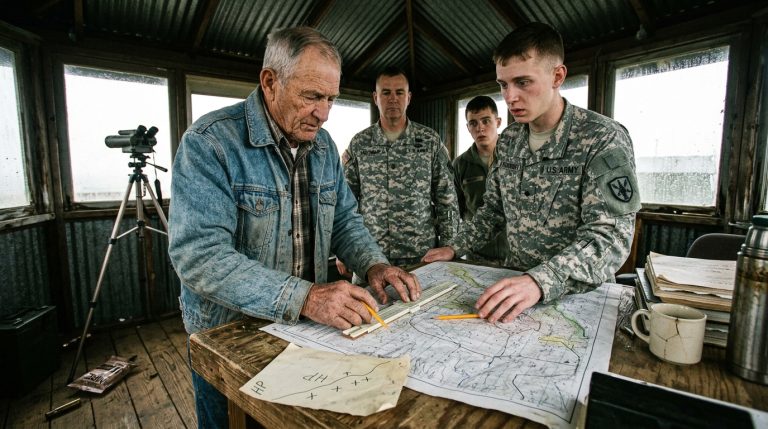
Marcus ran his bare thumb over the dry, cracked leather of the spine. He didn’t have time to decipher the faded columns of figures or the hand-drawn creek maps filling the pages. Outside, the light was failing fast, turning the snow to a bruised violet under the trees. If he didn’t hang the trail cameras on the eastern line before the storm hit, any tracks left by Patricia’s wire-cutters would be buried under six inches of fresh powder.
He wrapped the ledger back in the oilskin, placed it in the deep pocket of his canvas winter coat, and snapped the heavy brass buttons shut. He loaded his pockets with four lithium-battery trail cameras, a roll of steel utility wire, and his insulated leather gloves.
The cold outside was sharper now, the kind of dry mountain air that bit at the throat on the first intake. The snowmobile started on the second pull, its exhaust barking loud against the timber wall before settling into a flat, heavy idle. He didn’t turn on the headlamp. He didn’t want the white beam cutting through the larches to announce his approach to anyone watching from the ridge.
He navigated by memory, steering the machine along the low-lying creek bed where the shadows were thickest. The rusted iron wire of the fence appeared through the gloom, a thin line of black thread stitching together the gray trunks of the pines. He killed the engine fifty yards back, letting the sled coast to a halt in the deep drift.
The silence of the woods was absolute, broken only by the tick of the cooling engine block and the distant, dry creak of two branches rubbing together in the rising wind. Marcus unhitched his tool bag and approached the cut wire.
He knelt in the snow, his eyes scanning the white surface. The snowshoe tracks he’d noticed earlier were gone, partially filled by the light drift, but near the base of a heavy larch, the snow had been packed down hard, revealing a patch of dark, frozen earth. Stuck into the trunk of the larch, just above the snowline, was a freshly blazed surveyor’s mark—a clean, white scar in the bark, marked with a single strip of fluorescent pink ribbon.
Marcus reached out, his gloved fingers touching the cold, weeping sap of the fresh cut. His hand went still. Just below the ribbon, half-buried in the snow, lay a discarded plastic survey cap. He brushed the white crust away, exposing the stamped brass center of the pin. It didn’t bear the name of any local county surveyor.
Stamped into the brass was a single name: Blackwood.