The Weight of Earth and Iron: A Quiet Farmer Confronts the Residual Echoes of Command
CHAPTER 1: THE WEIGHT OF THE SOIL
The truck groaned one final time—a wet, metallic shudder of cooling iron—before settling into the stillness of the afternoon. Greer sat with his hands resting on the steering wheel, his fingers calloused into the shape of a life lived against the grain of the land. The dashboard was coated in a thin, fine layer of red dust, the signature of the Cookeville fields. He didn’t move. He listened to the ticking of the engine block as it contracted, a rhythmic, cooling pulse that felt more honest than the hum of the National Guard conference room.
He looked out the windshield at the farmhouse. It sat low and square, a structure of weathered cedar that looked as if it had grown out of the earth rather than been built upon it. To his right, the south fence line vanished into the horizon, the soybeans already turning to the deep, brittle yellow of late season. The drainage problem he’d mentioned to the General was still there—a sluggish, dark pool of water where the soil refused to yield, a physical defiance he had been wrestling with for three years.
He reached into his pocket and touched the cap, then set it on the passenger seat. The air inside the cab smelled of diesel, dry heat, and the faint, lingering scent of the cold coffee he’d consumed hours ago. He felt the weight of the day in his shoulders, a dull ache that wasn’t just physical. It was the residue of the conversation.
The General’s voice echoed in the stillness: There are people who have asked over the last several years to acknowledge the foundational work.
Greer stepped out of the truck. His boots crunched on the gravel, a sharp, singular sound that seemed to disturb the peace of the property. He didn’t head for the front porch. Instead, he walked toward the barn, his gaze tracing the rusted hinges of the gate. He knew the General hadn’t left that conference room with the intention of stopping. Men like Harlow didn’t stop because a man asked them to; they stopped because they were redirected by a higher order of necessity.
As he reached the barn, he saw it.
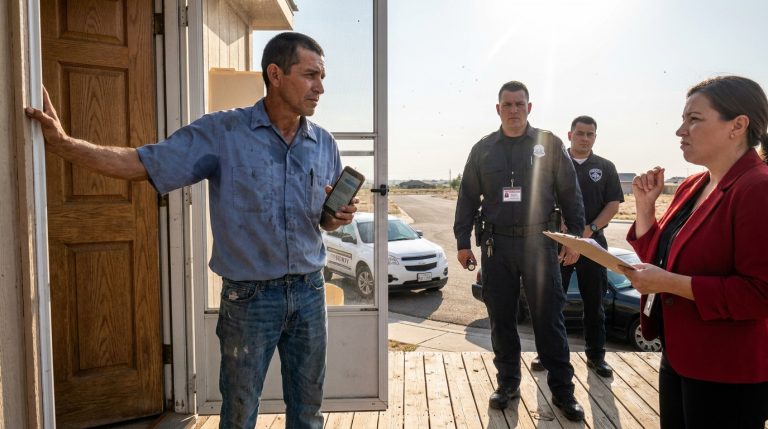
There was a fresh tire track in the mud by the shed, too wide for a farm vehicle, too deep for a casual visitor. It hadn’t been there when he left at dawn. He knelt, his knees popping in the quiet, and examined the pattern. It wasn’t the track of a truck or a tractor. It was the precise, textured imprint of a government-issue tire.
Greer stood, his hands clenching at his sides. He looked back at the house, the windows dark and observant in the fading afternoon light. He realized then that the meeting hadn’t been about a ceremony. It was a reconnaissance. They hadn’t just been looking for a face; they were looking for a way in. He turned his attention to the barn door, the wood swollen from the recent rains, and noticed a faint, metallic smear on the latch—something that hadn’t been there before.
He was being audited, and the audit wasn’t finished.
CHAPTER 2: THE INTRUDERS PATTERN
The iron latch was cold, a biting, industrial chill that stood out against the late-afternoon humidity. Greer’s fingers traced the scratch on the metal—a jagged, superficial gouge that shimmered with the raw, silver scent of exposed steel. It hadn’t been there when he’d fed the livestock that morning. Someone hadn’t just come to the farm; they had come to search, and they had done it with the clumsy, invasive efficiency of a man who didn’t respect the property he was trampling.
He didn’t pull the door open. Instead, he let his hand drop to his side, his muscles coiled, feeling the familiar, low-level vibration of the earth through the soles of his boots. The property was quiet, but it was a synthetic quiet. The usual evening chatter of the crickets felt dampened, as if the very air had been pressurized by an unwelcome presence.
He turned away from the barn and began to walk, not toward the house, but toward the perimeter of the south fence. He moved with a heavy, deliberate grace, his eyes scanning the horizon where the soybean rows met the overgrown brush of the property line. The mud was dry now, crusted and cracked, but there, caught in the deep tread of a recent tire rotation, was a discarded object.
He reached down and picked it up. It was a small, black plastic fastener—a cable tie, heavy-duty, the kind used to bundle thick wiring harnesses in military-grade enclosures. It had been snapped clean, the edge jagged and sharp enough to draw blood if pressed against the skin. It wasn’t agricultural. It was the component of a diagnostic sensor.
Greer squeezed the plastic between his thumb and forefinger, feeling the synthetic friction of it. They weren’t just observing him; they were mapping the farm’s infrastructure, perhaps looking for the old signal repeaters he’d buried in the soil a decade ago.
He didn’t go inside the house. He walked the perimeter, his mind working in a rhythm he hadn’t touched since 2013—a cold, calculated appraisal of defensive geometry. If they were looking for the legacy, they were looking for the buried connections. He remembered the old underground bunker beneath the storage shed, the place where he had kept the original, failed prototypes—the ones that had cost him more than just his career.
A sudden, sharp pop echoed from the direction of the house—a low-frequency snap, like a circuit breaker failing under an immense load.
Greer froze. The sound hadn’t come from the house; it had come from the ground beneath his feet.
The soil, usually stubborn and compacted, seemed to shudder. A section of the drainage ditch near the south fence, the very project he’d been struggling to repair, began to sink. Not a collapse, but a gradual, unnatural subsidence. He sprinted toward the fence line, his boots sinking into the shifting earth. As he reached the edge of the depression, he saw a glimmer of metal buried in the sediment. It was a lead-lined conduit, one he had long ago forgotten, its insulation stripped bare, glowing with the faint, residual charge of a failed, long-buried experiment.
The drainage issue wasn’t a problem with the soil. It was the soil being consumed by the leakage of the program’s discarded hardware.
His heart hammered a slow, rhythmic beat against his ribs—not fear, but the sharp, biting edge of realization. If the conduit was exposed, they hadn’t just been searching; they had been excavating. And if they had tapped into this, they weren’t just looking for his expertise. They were looking to recover what he had tried to bury with his wife.
The wind shifted, carrying the dry, metallic scent of rain—or perhaps something more acidic. Greer stood at the edge of the sinking ditch, his jaw set in a hard, unbreakable line. The intruders hadn’t come for an audit. They had come to trigger a reactivation.
He pulled his phone from his pocket, the screen black and unresponsive, a dead weight against his palm. He looked back at the farmhouse. The porch light flickered once, then dimmed, as if someone inside were testing the current, pulling the power from the grid to feed something else.
He wouldn’t be able to stay in the house tonight. He turned, his gaze sweeping the darkened treeline, and started toward the old root cellar, his hands already searching the familiar, rusted pockets of his jacket for the tools he’d hoped he’d never need again. The farm was no longer a place of quiet growth. It was an active, hazardous site, and for the first time in nine years, the architecture of his life was being dismantled, piece by agonizing piece.
He didn’t rush. Rushing was for men who believed they still had control. He moved with the slow, crushing patience of an avalanche, his boots finding purchase in the shifting mud, his mind already calculating how to sever the connection before they could complete the circuit. The game was no longer a request for a ceremony. It was a fight to keep the ghosts buried in the dark, where they belonged.
CHAPTER 3: THE BURIED HARDWARE
The descent into the root cellar was a ritual of friction. Greer’s boots found the uneven, earthen steps with the muscle memory of a man who had spent his youth bracing against the earth. Behind him, the trapdoor settled into its frame with a dull, heavy thud, sealing out the hum of the cooling truck engine and the encroaching silence of the farm. He didn’t reach for the light. Instead, he allowed his eyes to adjust to the dim, damp dark, his senses sharpening to the smell of wet limestone and the faint, ozone-sharp tang of oxidizing copper.
This was where he had kept the core of it.
He moved toward the back corner of the cellar, where a stack of heavy wooden crates—left over from his father’s time—obscured a false wall of corrugated tin. He pushed the crates aside, their weight familiar, and pried at the rusted seal of the hidden panel. His fingers, calloused and thick, worked with the precision of a watchmaker. He knew exactly where the hardware was anchored. He had placed it there in 2013, a final, definitive burial.
He pulled the tin panel away and reached into the hollow space behind it. His hand brushed against a smooth, synthetic surface—a diagnostic hub, its casing coated in a fine layer of dust that felt like silt. He pulled it into the light—or what little light managed to filter down from the gap in the trapdoor.
It was a command-and-control interface, no larger than a deck of cards, but he recognized the signature instantly. It was the master link for the K9 protocol, a prototype he had sworn he’d dismantled. But it wasn’t stripped. The wiring harness was intact, and tucked against the base, secured by a fresh strip of high-grade adhesive, was a small, glowing indicator—a signal repeater that was active.
It was pulsing with a soft, rhythmic amber light. It was tethered to a remote network.
Greer felt a cold knot tighten in his chest. They weren’t just searching the farm; they were using the farm as a relay. The conduit he’d found in the ditch was not a leak—it was a bridge. By burying this hub and leaving it active, he had unknowingly provided the military with a permanent, subterranean signal boost that allowed them to ping the active deployment protocols in the field from right here, under his own floorboards.
He looked at the device, his thumb tracing the jagged edge where someone had recently spliced a lead into the terminal block. They had been here, and they had tapped in.
The air in the cellar felt suddenly thin. He remembered Lena, the way she had leaned against this very wall during those final, desperate years, her eyes clouded by the same flicker he now saw in the amber light. She had been the first to notice the degradation, the way the dogs didn’t just respond to commands—they responded to the neuro-electric feedback that the hardware was supposed to modulate. She had called it the ‘echo.’ He had called it ‘optimization.’
He had been wrong.
He sat back on his heels, the cold stone of the cellar floor seeping through his jeans. The device in his hand hummed, a low-frequency vibration that seemed to harmonize with the blood pulsing in his temples. He was looking at the reason for his wife’s silence, the reason the government couldn’t replicate his results without him. They were trying to force a stable signal through a corrupted architecture, and they were using his own home to do it.
He could destroy it. He could smash the interface against the limestone wall, sever the link, and force them to look elsewhere. But if he did that, he would alert them immediately that he knew. And if they knew he knew, the ‘audit’ would turn into an occupation.
He stared at the amber light. It was a rhythmic, artificial heart, beating at the center of the life he had built to escape it. He needed a counter-move—something that would scramble their link without triggering a system-wide alert. He needed to introduce a recursive loop, a false feedback signal that would mimic the ‘optimized’ data they expected, while slowly degrading their ability to track the source.
He looked around the cellar. His gaze landed on a shelf of old, analog radio parts—relics of the farm’s early days, long before the digital age had crept into his soil. He had the parts. He had the knowledge. He stood, his movements methodical, almost ritualistic. He didn’t just feel like a farmer anymore; he felt like a saboteur, working in the shadow of a system that had been built on his own mistakes.
He set the diagnostic hub down on the workbench, the amber light casting long, twitching shadows against the stone. He pulled a soldering iron from a dusty toolkit and plugged it into a rigged power line. As the iron began to glow, the smell of flux began to fill the room—a sharp, nostalgic scent of his former life.
He would fix this, not by pulling the plug, but by building a mask. He would give them exactly what they asked for—a flawless, persistent signal—but he would embed the decay within the code, a slow, invisible rot that would make their system collapse under the weight of its own success. He began to work, his hands steady, his mind tracing the architecture of the signal. The silence of the cellar returned, but it was no longer the silence of peace. It was the silence of a trap, being set with absolute, mechanical precision.
CHAPTER 4: THE ULTIMATUM
The smell of rosin and molten lead hung in the confined air of the root cellar, a sharp, metallic reminder of a lifetime spent fixing things that were never meant to be mended. Greer pulled the soldering iron back, watching the fine wisp of smoke dissipate into the dimness. His hands, usually as steady as stone, betrayed him for a fraction of a second, trembling slightly against the edge of the workbench. It wasn’t fatigue. It was the memory.
He remembered Lena standing in a room not unlike this one, her face illuminated by the same flickering amber light of a diagnostic hub. She had been the one to insist that the ‘echo’ in the neural link was a flaw, not a feature. He had spent months trying to code around it, thinking he was the architect of a masterpiece, while she had been the one watching the toll it took on the animals—and on her.
He pushed the memory down, sealing it behind the iron-clad discipline he had cultivated for a decade. He wasn’t here to mourn. He was here to finish the loop.
A heavy, measured thud vibrated through the floorboards above—the sound of someone walking across the porch, the heavy, deliberate gait of a man in uniform. Greer set the tool down and stood, his joints popping in the subterranean silence. He didn’t move toward the ladder. He stood perfectly still, his eyes fixed on the ceiling, listening.
“Mr. Greer?”
The voice was muffled by the earth and timber, but it was unmistakable. It was Harlow.
Greer didn’t answer. He watched as the trapdoor rattled, the tension of the hinges straining under an unseen hand. He had expected them to return, but not this quickly. They weren’t giving him the time to finish the mask. They were accelerating the clock.
“I know you’re down there, Tom,” Harlow said, his voice stripped of the professional courtesy he’d displayed in the conference room. It was thinner now, sharper. “We’ve got a critical failure in the field. 41 assets are offline, and we have reason to believe the issue originated from the source point. We need your oversight. Now.”
Greer looked at the diagnostic hub on the bench. The amber light was still pulsing, but it was flickering—a sign that his recursive loop was already beginning to fight the incoming signal. If he stayed down here, they would simply breach the door. If he went up, he was walking into an active, escalating situation he hadn’t fully contained.
He reached out and picked up his cap from the workbench, pressing it onto his head with a hard, final motion. He moved to the corner of the cellar, where a loose stone offered a small, narrow view of the farmyard through a ventilation grate. He peered through the rusted mesh.
There were two unmarked SUVs parked by the gate, their engines idling with a low, predatory hum. Three men were standing near the front porch, one of them checking a handheld sensor that was sweeping the area, its dial twitching as it caught the leakage from the underground hub.
They weren’t just looking for him. They were tracking the hardware.
Greer realized then that the ‘ultimatum’ wasn’t a choice; it was a containment. They had brought the failure to his doorstep to force his hand, knowing he wouldn’t let the farm be destroyed by the very thing he had created. It was a tactical checkmate, and he was the only piece on the board who knew the rules.
He turned back to the workbench, his fingers hovering over the circuit. He couldn’t finish the loop, but he could trigger a dump—a massive, garbage-data pulse that would crash the relay, forcing the military to disconnect the farm’s bridge in order to save their own internal networks. It would expose his location, it would destroy the evidence he’d buried, and it would ensure that he could never hide here again.
He took a breath, the air thick with the dust of his own history, and brought the soldering iron down one last time, crossing the leads with a sharp, blinding spark of white light.
The cellar plunged into darkness.
Above, the porch door groaned as it was kicked inward. Greer didn’t wait for them to descend. He moved to the shadows of the tool rack, his body blending into the rust and decay of the cellar walls. He was no longer the farmer. He was the architect, and he was about to burn his own building to the ground.
He listened to the heavy, tactical boots hitting the wooden floor of the house, moving with the practiced urgency of a raid. He felt a grim, dark satisfaction. They wanted his expertise; he would give them a lesson in architecture instead.
He waited for the trapdoor to open, his mind tracing the path of the wiring he had sabotaged, feeling the exact moment the feedback spike would hit the relay above. The floorboards rattled. The door lifted, casting a long, jagged beam of light into the darkness. Greer crouched, his hands ready, his heart a steady, ticking clock in the absolute silence of the room.
The first figure appeared in the square of light, silhouetted by the afternoon sun. Harlow. He stopped at the top of the ladder, his posture stiff, his eyes scanning the cellar with the cold, unyielding focus of a man who was running out of patience.
“Tom,” Harlow said, his voice echoing against the limestone. “This doesn’t have to be a closed file.”
Greer stepped out of the shadow, his face a mask of weathered stone. “It already is, General.”
CHAPTER 5: THE FRICTION OF COMMAND
Greer stood in the center of the dark cellar, the darkness pressing in like a physical weight. The air was still, save for the hum of the cooling iron on the workbench, which had finally gone quiet. Above, the house was silent—a tactical silence that told him Harlow’s men were fanning out, securing the perimeter, their movements disciplined and efficient.
Harlow remained at the top of the ladder, a shadow framed by the sliver of daylight from the porch. He didn’t descend. He stood there, his hands resting on his belt, watching Greer with the detached assessment of a commander observing a tactical asset.
“You think you’ve sabotaged the link,” Harlow said, his voice dropping into a low, resonant register that carried through the cellar. “But you’re thinking like a technician, Thomas. You’re thinking about circuits and relays. We aren’t here for the hardware.”
Greer’s hand moved slowly, almost imperceptibly, toward the rack of tools behind him. He wasn’t looking at Harlow; he was feeling for the heavy, iron wrench he knew was tucked into the back corner of the shelf.
“If you aren’t here for the hardware, you’re here to dig up the past,” Greer said, his voice flat, devoid of the cadence of conflict. “But the past is buried, General. There’s nothing left to salvage.”
“The program is failing,” Harlow continued, stepping down onto the first rung of the ladder, the wood groaning under his weight. “We have men in the field, operators who have been conditioned to respond to a cadence they no longer receive. You think you’re protecting your farm? You’re risking the lives of every handler currently linked to the protocol. They are seeing things, Thomas. They are losing their grounding because the feedback loop you created is now reflecting their own subconscious data back at them.”
Greer felt a jolt of cold realization. He hadn’t just created a communication system; he had created a mirror. If the signal was degrading, the animals weren’t just misfiring—they were projecting the psychological state of their handlers. The ‘echo’ Lena had feared wasn’t just a signal decay. It was a bridge of shared trauma.
“They aren’t losing their grounding,” Greer said, his voice tightening. “They’re being exposed to what you’ve been hiding in the code.”
Harlow didn’t respond. He simply descended, his boots hitting the packed-earth floor with a dull, heavy finality. He stood five feet from Greer, the space between them charged with a static, dangerous energy. The General’s eyes were hard, fixed on the workbench, scanning the ruined circuit.
“We need the original source files, Thomas. The ones you didn’t include in the official documentation.”
“I burned them,” Greer said.
“You don’t burn anything,” Harlow replied, his gaze shifting to the back wall, toward the hidden panel Greer had uncovered. “You keep it. You store it. You archive the damage because you think that by holding onto it, you’re keeping the world safe from your own mistakes.”
Harlow signaled to the top of the ladder. Two men in tactical vests descended, their movements fast and fluid, their presence filling the confined space. They didn’t threaten; they simply took positions, effectively cutting off Greer’s access to the workbench and the tools behind him.
“We’re not leaving here without the files,” Harlow said. “And if you’ve truly destroyed them, then you’re coming with us. We have the facilities, the personnel, and the time to help you recall what you’ve forgotten.”
Greer looked at the men, then back at Harlow. He saw the shift in the General’s posture—the slight, almost subconscious lean of a man who was already planning the extraction. He knew he couldn’t win a physical confrontation, but he didn’t need to win. He just needed to trigger the final fail-safe.
He didn’t move toward the tools. Instead, he reached into his pocket and pulled out the small, black plastic fastener he’d found in the field—the diagnostic tag. He held it up, catching the sliver of light from above.
“You think you’re in control because you have the tactical advantage,” Greer said. “But this tag isn’t just a sensor. It’s an identifier.”
He dropped the tag into the stagnant pool of water beneath the leaking conduit he’d exposed earlier.
The floor trembled—a deep, resonant vibration that rose from the earth itself. The conduit, which had been leaking small amounts of electrical charge, suddenly surged. The entire cellar flickered, the lights from the tactical gear of the men around him sparking and dying. The feedback loop he had been building wasn’t just a mask; it was a trigger for the entire underground network of cables he’d laid beneath the farm acres.
“If I go, the network goes,” Greer said, his voice calm, even as the room began to shake. “And every active signal, every dog, every handler currently linked to this relay will lose their connection simultaneously. Do you want that on your record, General?”
Harlow stood frozen, his eyes wide as he realized the true scale of the architecture Greer had built. The cellar floor began to crack, the dry earth yielding to the pressure of the surge. It wasn’t just a threat; it was a demolition.
Greer didn’t wait for them to process it. He turned and bolted for the ladder, the force of the electrical discharge blowing out the remaining lights and plunging the cellar into a total, disorienting chaos of sparks and shadows. He didn’t look back. He scrambled up the ladder, his muscles straining, his breath coming in sharp, ragged gasps as he hit the porch and threw himself into the fading light of the afternoon.
The ground behind him gave way with a sound like tearing metal. He didn’t stop. He ran toward the edge of the property, toward the old, overgrown trail he had ignored for nine years, his heart pounding a rhythm that matched the dying pulse of the farm. He had forced their hand. Now, he had to survive the recoil.
CHAPTER 6: THE SHATTERED RELAY
The night air was cold, biting through the thin fabric of his work shirt, but Greer didn’t feel it. He felt only the raw, electric vibration of the earth under his boots, a frantic pulse that was slowly dying out. Behind him, the barn was a silhouette against the rising moon, the structure groaning as the ground beneath it settled into the void he’d created. He had severed the link, but he had also gutted the only foundation that kept his property upright.
He moved toward the treeline, his steps heavy and uneven. The world felt tilted. His vision blurred at the edges, a byproduct of the electrical surge and the sheer, crushing weight of the adrenaline beginning to ebb. He stumbled, catching himself on the rough bark of an oak tree, his palms scraping against the lichen. He was losing his footing, not just on the land, but in his own tactical assessment. The pursuers were no longer just men in tactical gear; they were shadows in the periphery, whispering commands that he could feel in his own teeth, a phantom resonance of the failed protocol.
He reached the edge of the woodlot, where the soybeans were brittle and dry. He knelt, his knees sinking into the soft, disturbed earth. He pulled a small, manual override key from his jacket—a relic from the 2013 decommissioning. If he could reach the secondary junction box near the south fence, he could initiate a final, permanent hard-wipe. It wouldn’t just crash the relay; it would overwrite the entire neural map stored on the local servers, making it impossible for Harlow to recover the data.
But as he reached for the junction box, he froze.
There, standing in the middle of the field, was a figure. It wasn’t one of the tactical officers. It was smaller, motionless, standing amidst the dying soybeans with a stillness that didn’t belong to the living.
Greer squinted, the darkness playing tricks on his exhausted mind. For a heartbeat, he saw Lena. She was wearing the same worn coat she’d had on the last day he saw her, her hands buried in the deep pockets, her gaze fixed on the horizon where the sun used to set.
“You can’t fix it, Tom,” a voice drifted across the field—not a physical sound, but a vibration in the air, a phantom signal triggered by the residual charge in the soil. “You built a cage, and you’re trying to decorate the bars.”
He closed his eyes, his breathing ragged. The ghost of her presence was the ultimate failure of his architecture. He had been so obsessed with the physics of the connection that he had ignored the human, biological decay that was the real, final cost. He had wanted to optimize the bond between handler and asset, but he had instead created a conduit for suffering.
He opened his eyes, forcing his focus to the junction box. The figure was gone. There was only the rustle of dry soybean stalks in the wind.
He pushed forward, his resolve hardening into a sharp, jagged edge. He reached the junction box and ripped the rusted cover away, exposing the tangled, chaotic mess of wiring he had spent years trying to maintain. He didn’t think about the ghost. He didn’t think about the General. He thought only of the ruin he had caused.
He inserted the key and turned it.
There was no explosion this time. No surge of light. Just a soft, mechanical click—the sound of a lock being engaged, and then, a long, drawn-out sigh of venting pressure. The relay was dead. The entire system, every terminal, every remote node, every line of code that had been leeching the life out of the fields, suddenly went dark.
He felt it as a physical shift in the atmosphere. The pressure in his skull, the constant, low-frequency hum he had lived with for years, vanished. It left him feeling hollowed out, as if a vital, albeit toxic, organ had been surgically removed.
He slumped against the fence, his strength finally deserting him. He looked out over the field, the darkness now absolute. The military was still out there, searching, but they were searching for a signal that no longer existed. He had achieved the ultimate pragmatic goal: he had made himself, and his history, invisible.
But the silence that followed was heavy. It was the silence of a man sitting in the middle of a grave he had spent a lifetime digging for himself. He watched the horizon, waiting for the first sign of the General’s men, knowing that while he had destroyed the relay, he hadn’t destroyed the truth. That, he realized with a sinking heart, was something he would have to carry out of these fields himself.
CHAPTER 7: THE ECHO OF DECAY
Greer didn’t wait for the inevitable sweep of the flashlights through the soybean rows. He dragged himself away from the fence, his legs burning with the friction of the day’s exertion. Every step across the furrowed earth felt like a violation of the peace he had curated for nearly a decade. He wasn’t heading for the house; the house was compromised, a shell filled with men who spoke in the language of logistics and threat. He was heading for the drainage culvert near the south property line, the place where the conduit had first shown its sickness.
He moved in a low, broken crouch, his hand clutching the rusted key. The night was moonless, the sky a vast, indifferent velvet. Behind him, he heard the sharp, rhythmic snapping of soybean stalks. They were closing in. He could hear the faint, high-frequency whine of their tactical comms—a sound he had tuned his entire life to ignore.
He slid into the ditch, the mud clinging to his clothes like wet wool. It was here, in the dark, that he had first felt the shift in Lena. He remembered her hands, shaky and cold, reaching for the same conduit years ago, convinced that the ‘echo’ was something they were physically transmitting through the ground. He had dismissed her, blaming the stress of the program, blaming the isolation of the farm.
He reached the exposed junction, the metal now scorched from the feedback spike he had triggered in the cellar. He pulled a small, silver-backed notebook from his inner pocket—a collection of field notes he had kept, hidden in the lining of his jacket. It contained not just the technical specifications, but the logs of Lena’s own decline, the symptoms he had recorded as ‘anomalies’ until it was too late.
He opened the book. The handwriting was his own, precise and clinical, but it looked foreign in the pale glow of a penlight.
Test Subject 01 (Lena): Neural resonance reaching threshold. Feedback loop mimicking synaptic patterns of the asset. The separation between operator and animal is dissolving.
He stared at the words, the reality of what he had done washing over him with the weight of a physical blow. He hadn’t just built a communication system; he had built a bridge that allowed the biological trauma of the animal to bypass the human brain’s defenses. It wasn’t a flaw in the signal. It was the signal. And the only way to stop it was to sever the human end of the connection—a process that, once initiated, had proven fatal in the pilot phase.
The realization was a cold, sharp blade. Lena hadn’t died from a failure of the program. She had died because she had been the primary interface. She had absorbed the degradation, acting as the ground wire for the entire, bloated experiment.
A beam of white light cut through the dark, swinging wildly over the soybean canopy.
“Greer! We know you’re at the south line!” Harlow’s voice echoed, devoid of the earlier command presence. It was tired, clinical, and increasingly desperate. “You’ve wiped the servers, Thomas, but the hardware is still buried under every acre of this property. You can’t stop it without an external reset.”
Greer looked at the conduit. He had the power to wipe the local data, but the General was right—the infrastructure was woven into the very soil of the farm. He had turned his own land into a giant, subterranean antenna.
He looked at the notebook, then at the conduit. He had one final option: an electromagnetic pulse, generated by short-circuiting the main feed directly into the groundwater. It would ruin the land, turning the farm into a dead zone, but it would kill the signal for good. It would also likely finish whatever remained of his own connection to the system.
He pulled the final wiring harness from his pocket—the one he had stripped from the diagnostic hub in the cellar. He was shaking, the exhaustion finally overriding his discipline. He wasn’t just a farmer protecting his property; he was a man holding the detonator to his own life.
He shoved the wires into the scorched conduit, his knuckles scraping against the jagged metal. The air hummed. He could hear them now, the soft crunch of tactical boots on gravel only twenty yards away. They were too close.
He didn’t hesitate. He took the notebook—the record of his arrogance—and shoved it into the dirt, burying it beneath the weight of the conduit. If he was going to burn the world down, he wouldn’t leave a map for the next man to find.
He grabbed the wires and twisted them together, the spark of contact lighting the ditch in a brilliant, terrifying blue.
CHAPTER 8: THE PRICE OF THE FIELD
The world didn’t end with a bang; it ended with the slow, agonizing collapse of a magnetic field. The blue light faded, leaving Greer slumped in the mud, his vision swimming in streaks of violet and gray. The air was heavy with the stench of scorched ozone and wet, upturned earth. For a long, ringing moment, there was nothing—no comms, no tactical chatter, no sound of approaching boots. Just the heavy, rhythmic thud of his own heart, echoing in his ears like a drum in an empty hall.
Harlow’s voice broke the silence, but it was distant, stripped of its authority. The General was standing at the edge of the ditch, his tactical light beam cutting through the settling dust. He wasn’t reaching for a weapon. He was staring at the conduit, his face pale, the realization of what Greer had done finally registering.
“You killed it,” Harlow said, his voice a flat, dead thing. “You didn’t just wipe the data. You melted the entire sub-surface grid.”
Greer pushed himself up, his hands trembling as he reached for the muddy bank. He didn’t look at the General. He looked at the field—his field. The soybean stalks were withered, a sea of brown that seemed to have aged a decade in the space of a heartbeat. He had grounded the entire neural load of the program into the soil, and the soil had taken it, but it had stripped the land of its vitality in the process.
“I ended the loop,” Greer said, his voice raspy.
He climbed out of the ditch, his movements slow, his joints protesting every inch of the transition. He stood before Harlow, his clothes caked in mud, his eyes steady. Behind the General, the tactical team stood frozen, their gear flickering with dying, erratic lights. They were cut off from the network, isolated, no longer soldiers of a hidden command but simply men standing in a dying field in Tennessee.
“You realize what this means?” Harlow asked, gesturing to the dead electronics around them. “The assets, the handlers, the records—everything we built is gone. You’ve destroyed the only successful neural-mapping program in existence.”
“I destroyed a parasite,” Greer corrected.
He walked past the General, toward the farmhouse. He didn’t check to see if he was being followed; he simply kept walking. The house stood in the moonlight, a structure that had survived the storm, but it felt different now. The tension was gone, leaving behind a profound, hollow stillness.
He stepped onto the porch. The door, kicked open by the tactical team, hung askew on its hinges. He walked into the kitchen and stopped.
He didn’t need to look at the documents they had been searching for. He walked to the window and looked out at the south fence line. The land was quiet. The phantom resonance, the persistent, low-frequency hum that had been the background noise of his life for nine years, was gone.
Harlow appeared in the doorway, his silhouette framed by the pale light of the porch. “We have the resources to rebuild, Tom. We can start over. We know you kept the foundation.”
“There is no foundation,” Greer said, turning to face him. “There was only a signal. And it was never meant to be sustained by a human mind.”
He reached into his pocket and pulled out the small, silver notebook he had buried, the one he had retrieved in the ditch moments before the surge. He looked at it for a long moment, then placed it on the kitchen table. It was the only proof of the degradation, the only record of the cost. He pushed it across the scarred wood toward Harlow.
“That’s the truth,” Greer said. “Not a program. A casualty report. Take it. Let them see what it cost to ‘optimize’ their control.”
Harlow looked at the book, then at Greer. The General’s expression, for the first time, softened—not into pity, but into a grim, shared acknowledgment of the weight. He didn’t reach for the book. He didn’t order the men to take Greer. He simply stood there, a man who had come for a secret and found only a gravestone.
“They won’t let this go,” Harlow said quietly. “They’ll come for the accountability.”
“Let them,” Greer said.
He walked to the utility closet and retrieved a heavy iron wrench—the one he had used to maintain the drainage pipes for years. He walked out to the backyard, where a small, unmarked stake marked the place Lena had been laid to rest. The ground was cold, unyielding, but he began to dig. He didn’t need the wrench to dig, but he held it as he worked, his hands finally finding a task that required no circuit, no code, no architecture other than the simple, honest labor of keeping the earth in order.
He sat by the mound for a long time as the sun began to bleed a pale, thin light over the horizon. The tactical SUVs were gone. The farm was silent, the fields dead, but for the first time, the weight in his chest had shifted. He hadn’t just destroyed the relay; he had stopped the echo.
He stood up, his body aching, and looked at the field. He would have to leave—the land was ruined, and the questions would never stop—but the silence of the morning was finally his own. He walked back toward the house, his gait steady, his mind unburdened by the signal. He had finally paid the debt he owed the field, and in return, the earth had given him back his peace.