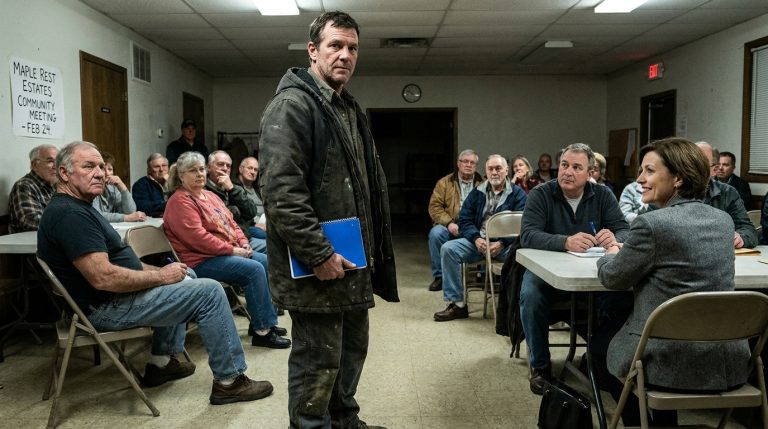
From Dust to Cathedral Echoes: How an Unheard Voice Shattered the Ivory Tower of Musical Privilege
CHAPTER 1: THE FREIGHT BUS ARRIVAL
The Greyhound brakes hissed outside the Nashville terminal, spitting gray exhaust onto the wet asphalt. Byron reached down, his fingers brushing the church-bin wool of his trousers. The fabric was hemmed an inch too short, exposing ankles grayed by the fourteen-hour ride.
He pulled a plastic grocery bag from beneath the seat, its handles twisted tightly around a stack of photocopied sheet music. His shoes, mended the night before with a tube of industrial super glue, protested with a faint crunch as he stepped down into the damp morning air.
Around him, families huddled under branded umbrellas, hoisting designer garment bags stamped with conservatory crests. Whitfield, Eastman, Thornton. Parents murmured encouraging phrases, adjusting silk ties and checking itineraries printed on heavy cardstock.
A woman in a tailored camel-coat glanced at Byron’s plastic bag, her gaze dropping instantly to his glued soles. She stepped aside with a sharp intake of breath, her hand tightening around the strap of a leather folio.
“Deliveries go around the back, sweetheart,” she said, her voice clipped and polished, before turning back to her husband without waiting for an answer.
Byron didn’t blink. He shifted the plastic bag to his other hand, feeling the cold bite of the cheap plastic against his palm. He walked past the sliding glass doors of the lobby, his boots clicking softly against the marble floor.
The registration desk sat at the far end of the cavernous hall, flanked by towering floral arrangements that cost more than Loretta’s monthly electricity bill. A man behind the mahogany counter was stamping registration cards with a rhythmic, indifferent thud.
Byron stepped up, placed the plastic bag on the polished wood, and laid his crumpled confirmation email flat.
“I’m here to compete,” he said.
CHAPTER 2: THE FIRST NOTE
The registration card slid across the counter with a dry scrape.
The clerk didn’t look up from his ledger. —Next, please— he muttered, his hand already reaching for the brass stamp.
Byron stood his ground, his fingers curling slightly around the edge of the plastic grocery bag. The weight of the photocopied sheet music pressed against his thigh like a heavy secret. Behind him, the low murmur of conservatory students rehearsing scale runs buzzed through the marble hall.
A tall young man in a pristine blazer bumped against Byron’s shoulder without slowing down. —Watch the floor, freshman— the blonde baritone murmured, not even turning his head as he adjusted his portable vocal monitor.
Byron didn’t flinch. He picked up his card, tucked the plastic bag under his arm, and walked toward the designated holding area.
The room smelled of stale coffee and nervous sweat. Fourteen contestants sat in rows of folding chairs, each clutching custom leather portfolios or sipping from branded water bottles. Nobody looked at Byron, and Byron didn’t look at them.
He found an empty metal chair near the corner, the cold seat biting through his church-bin trousers. He reached into his pocket and pulled out a small, worn piece of paper containing his performance slot. Eleven. Right after the lunch break when the judges’ stomachs were full and their patience was wearing thin.
The hours stretched like dry leather. Across the room, a soprano from a prestigious eastern academy ran through her arpeggios, her voice bouncing effortlessly off the high ceiling. Byron closed his eyes, shutting out the polished perfection of the room. He didn’t have a vocal coach whispering encouragement. He had the memory of a dripping kitchen faucet and a hot tin roof in South Memphis.
—Shaw, Byron— an assistant called out, holding a clipboard against her chest. —You’re up next. Stage left.—
Byron stood up, his glued shoes clicking sharply against the linoleum. He walked down the dimly lit corridor, the air growing colder the closer he got to the wings.
Through the heavy velvet curtain, the low murmur of two thousand people hummed like an electric wire.
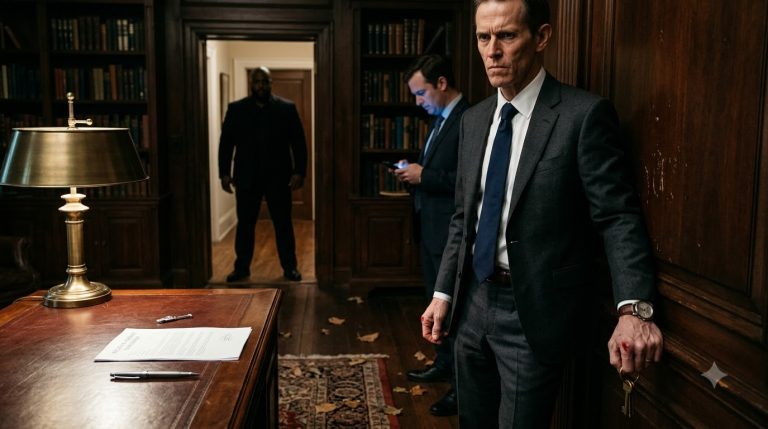
Gregory Caldwell leaned back in his leather chair at the center of the judges’ table, his arms crossed over a crisp grey suit. He picked up his golden pen, twirled it once between his fingers, and dropped it onto the scorecard.
—Let’s get this over with— Caldwell muttered to the woman seated to his right, loud enough to carry into the wings.
Byron stepped past the velvet drape and walked out onto the glaring expanse of the stage. The overhead spotlights hit his eyes like physical weight, blinding him to the sea of faces stretching out into the dark.
He didn’t adjust the standing microphone. He didn’t clear his throat. He just planted his worn shoes firmly on the wooden planks, closed his eyes, and waited for the restless whispers in the front rows to die down.
Silence swallowed the auditorium. Three long, heavy seconds of absolute stillness.
Byron opened his mouth and released the first note of Schubert’s Ave Maria.
The sound didn’t just fill the room; it struck the back wall and bounced forward with a warm, cathedral-sized resonance that made the water glasses on the judges’ table shiver.
In the front row, Gregory Caldwell’s golden pen stopped spinning.
CHAPTER 3: THE DEAD MICROPHONE
The semi-final round arrived with a gray, heavy twilight pressing against the high windows of the Nashville auditorium.
Byron sat alone in the corner of the holding room, his knees drawn up, staring at the scuffed toes of his glued shoes.
When the stage manager called his name for the final slot, he walked out into the glare of the lights without looking at the judges’ table.
He chose a raw, emotional gospel arrangement that mirrored the resilience of South Memphis, stepping up to the center mic and opening his throat.
Forty-five seconds into the performance, the sound died instantly.
The monitors hissed once, flatlined into total silence, and left his voice hanging suspended in empty air.
Byron stopped singing, his thumb tapping twice against the wire mesh of the grill.
A stagehand scrambled from the wings, shoving a replacement stand into his hands. Byron took it, adjusted his footing on the wooden boards, and launched into the verse once more.
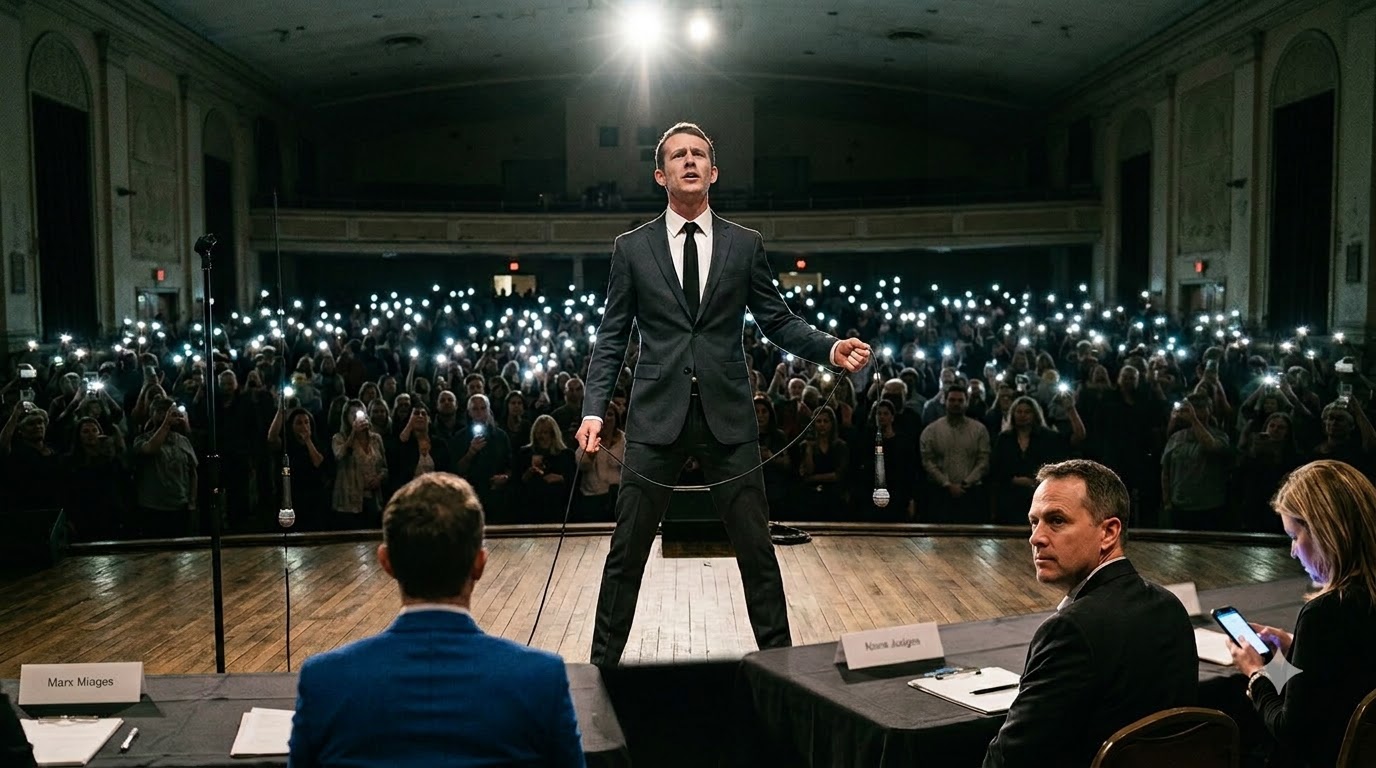
Fifteen seconds later, the second microphone went completely dead.
In the front row, Diane Caldwell glanced down at her glowing phone screen while Gregory Caldwell stared straight ahead with a carefully neutral expression.
Byron didn’t look for help, didn’t ask for a technician, and didn’t step back.
He unhooked the dead microphone from its clip, let it dangle by its cord against the stand, and planted both feet firmly on the stage.
He threw his voice forward into the two-thousand-seat auditorium using only his chest, his ribs, and the raw power of fourteen years spent singing against tin roofs in the southern heat.
The acoustic architecture of the hall caught the unamplified sound and carried it upward, swelling into a vast, resonant wave that made the balcony railings shiver.
In the wings, the head sound technician stared at the master audio rack, his fingers hovering over the frequency dials as he saw the manual override logs flashing red.
—Somebody gutted these channels on purpose— the technician muttered, pulling a small silver flash drive from his pocket to download the proof.
Out in the auditorium, hundreds of glowing phone screens snapped into the air, recording every unfiltered second as the raw music shook the room.
CHAPTER 4: THE PAPERWORK WALL
The morning sun filtered through the dusty venetian blinds of the administrative office, casting sharp parallel stripes across Diane Caldwell’s desk.
Diane pressed a printed complaint form against the glass desktop, her fingernail tapping a hard rhythm against Article Nine.
—Unverified credentials— Diane said, not looking up as the heavy oak door clicked shut. —The boy lacks formal institutional backing. He does not belong on this stage.—
Byron stood on the other side of the mahogany barrier, holding a notification slip between thumb and forefinger.
—I sang what was asked of me— Byron answered, his voice level and entirely devoid of panic.
Diane looked up then, her lips thinning into a tight, bloodless line.
—This is a professional competition, Mr. Shaw, not a community center talent show— she replied, sliding a suspension notice forward with a single manicured finger. —Your status is revoked effective immediately. Clean out your dorm locker by noon.—
Byron didn’t raise his voice, didn’t slam his palms onto the wood, and didn’t beg.
He folded the paper twice, tucked it neatly into his pocket, and turned toward the exit.
In the corridor outside, Nathan Brooks leaned against the wall, holding a thick folder crammed with newspaper clippings and old choral programs from South Memphis.
—Hold up, man— Nathan said, pushing off the plaster. —They think a title on a certificate is the only thing that counts. Let’s show them what a real forty-year teaching career looks like.—
Inside the building, the digital notice boards flickered, broadcasting the suspension to the entire network while thousands of online comments began flooding local news feeds.
CHAPTER 5: THE UNANIMOUS STAND
The boardroom air was thick with the scent of polished mahogany and manufactured authority.
Diane Caldwell remained seated at the head of the long walnut table, her jaw locked as Nathan Brooks slid the archival papers across the polished surface.
—Forty years of community instruction— Nathan said, his voice ringing flat and hard against the wood. —The rules require verifiable education. My folder proves it existed long before you built this stage.—
Diane’s hand curled flat against the corner of her contract, her knuckles turning bone-white under the fluorescent lights.
—A church choir in Tennessee does not meet conservatory accreditation standards— she snapped, her voice rising in a sharp, defensive spike.
Before the board members could respond, the heavy double doors swung open with a sharp click.
Pauline Voss stepped into the room, her silver hair catching the light, holding a printed petition signed by six finalist contestants and backed by the sound technician’s flash drive.
—If Byron Shaw is barred on a technicality, my resignation goes on this desk right now— Pauline said, laying her veteran badge beside the paperwork with a heavy metallic clack. —And the entire country will know exactly why.—
Diane stared at the badge, her chest rising in a harsh, shallow breath as the trap closed entirely around her manufactured rules.
The board chairman cleared his throat, reaching slowly for a clean pen to sign the reinstatement order.
Byron didn’t smile or gloat; he simply took back his folder, turned on his heel, and walked out toward the stage where the final round was waiting.
CHAPTER 6: THE NEW NORMAL
The auditorium lights reflected off the polished wood of the stage floor where Byron stood alone, his hands resting easily against the leather folder containing his sheet music.
One year ago, that same floor had been a battleground of closed doors, rigged frequency boards, and paper rejections designed to break a common-sense working boy from South Memphis.
Now, the front row held a single occupied seat, draped in quiet dignity.
Loretta sat upright, her hands folded over the fabric of a dress bought with the first disbursement of the scholarship fund bearing her name, her eyes fixed entirely on her grandson.
Out in the wings, Gregory Caldwell’s empty dressing room remained locked, a silent monument to the system that had finally collapsed under its own unearned arrogance.
Byron stepped up to the stationary microphone, closed his eyes against the glare of the overhead spots, and let out a single breath.
He didn’t need to shout, and he didn’t need to chase anyone’s approval.
He opened his mouth and sang.
The notes filled the hall with a warm, unfiltered resonance that carried effortlessly to the highest balcony, demanding nothing from the equipment and leaning entirely on the bone and breath behind it.
When the final chord faded into absolute silence, the applause didn’t erupt like a storm; it rose as a steady, rolling wave of pure, earned respect.
Byron bowed his head once, stepped back from the mic, and walked off the stage into the cool shadows of the wings, where the backstage door opened directly onto the quiet evening air.
Later that night, back in the small apartment kitchen in Memphis, the faucet dripped with a steady, rhythmic ping against the porcelain sink.
Byron sat at the worn wooden table, his thumb tracing the corner of an old shoe box resting beside a cold cup of coffee.
He reached out, turned the handle of the faucet until the dripping stopped completely, and left the room in perfect silence.