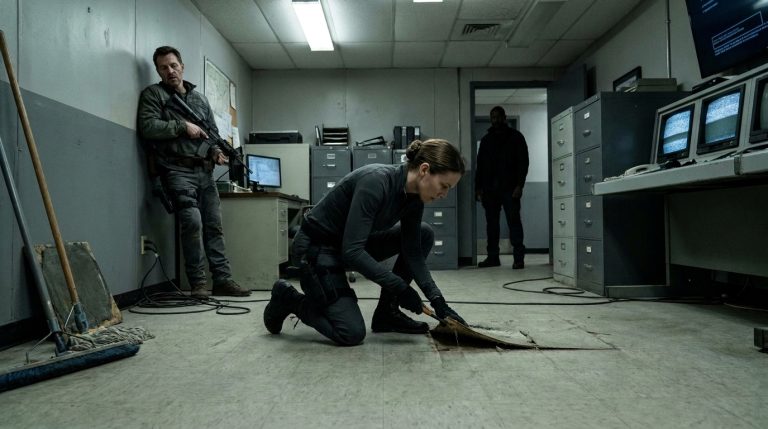
A Shadow in the Suture: Morgana White’s Final Reckoning within the Tangled Web of Global Intelligence
CHAPTER 1: THE FIRST THREAD
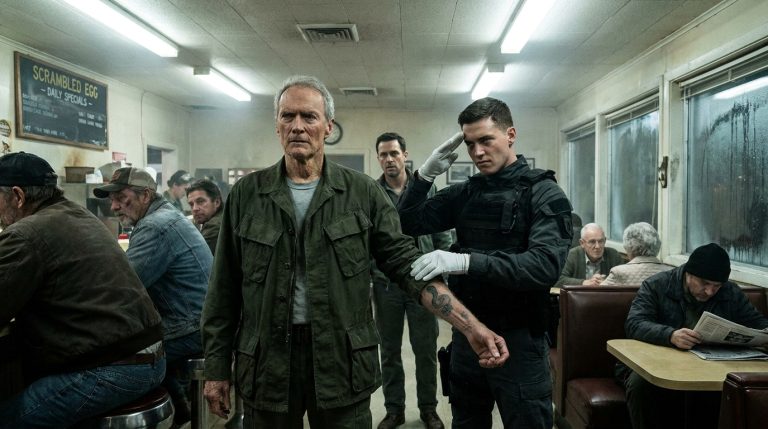
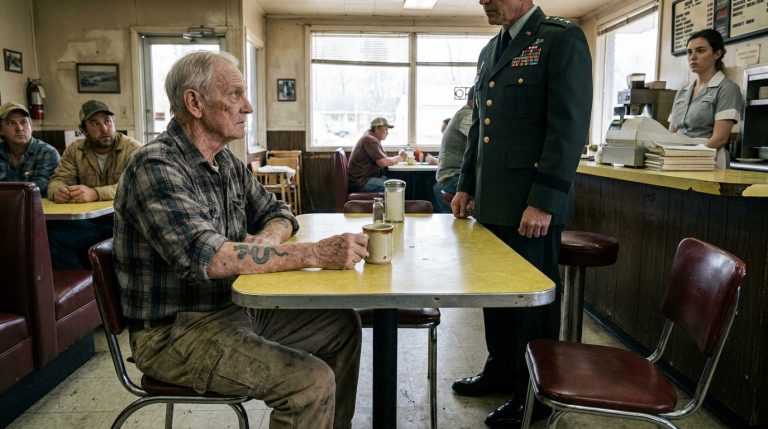
The booth was vinyl and cracked, a jagged fissure running right down the center of the seat, mirroring the friction between Morgana’s desire for anonymity and the woman sitting opposite her. The Liaison Officer—whose name, Morgana suspected, was as temporary as the bandage on her arm—leaned forward. The restaurant was a low-ceilinged dive, the kind of place where the air tasted of stale grease and industrial coffee. It was safe, provided you didn’t mind the shadows.
Morgana kept her hands folded on the table. She had spent 11 years perfecting the art of being a background detail, a secondary character in other people’s emergencies. Now, the photograph of her former handler was tucked into her jacket pocket, a heavy, jagged weight against her ribs.
“My mother was not a soldier by choice,” the Liaison said, her English clipped, accented with the cadence of the northern corridor. She didn’t look at the menu. Her eyes were hard, focused on the space just over Morgana’s shoulder. “She was a librarian. She kept records. She knew which names to erase.”
Morgana watched the man in the corner. He had ordered a drink he hadn’t touched. He wasn’t a patron; he was a marker.
“And you?” Morgana asked, her voice low, a blade wrapped in velvet. “What do you erase?”
The Liaison leaned in closer. “I verify.”
The realization settled in Morgana’s gut like cold lead. The warehouse extraction, the compromised extraction team, the perfectly timed radio contact—it hadn’t been a desperate rescue. It had been an audit. They had needed to see if the ‘Nurse’ still held the frequency, if the instincts she claimed to have buried had truly calcified or if they were still live, pulsing, and lethal.
“You aren’t here for dinner,” Morgana said, her eyes tracking the movement of the man in the corner as he shifted his weight.
“I’m here to see if the architect is still building,” the woman replied.
Suddenly, the woman’s hand moved—not toward the napkin, not toward her glass, but toward the salt shaker. She slid it two inches to the left, aligning it with the edge of the placemat. It was a precise, geometric movement. A signal.
Morgana’s breath hitched, just for a millisecond. That motion. Her handler had used that exact sequence to signal a breach in the field a decade ago. It was a dead language, a code that should have died when the facility burned. The fact that this woman knew it meant the agency wasn’t just observing her; they were haunting her.
“The work is not finished,” the woman repeated, her voice barely a whisper above the hum of the overhead fan.
“The work is a ghost,” Morgana retorted, though her pulse was ticking a warning count against her wrist.
“Ghosts don’t leave pins on inventory logs,” the woman said, nodding toward the doorway.
Morgana turned. The man in the gray jacket was standing now. He wasn’t reaching for a weapon. He was reaching for something far more dangerous: a file. He walked toward their table, his face a mask of bureaucratic indifference, but his eyes—those eyes were wide, hungry, and entirely devoid of mercy.
He stopped at the table and set the folder down. It wasn’t the file from the Naval Medical Center. It was a dossier she had never seen before, with a seal she had hoped to never look upon again.
“Morgana White,” the man said, his voice gratingly pleasant. “Or should I call you by the name you used when you wrote the protocol?”
The photograph in her pocket felt like a brand. She knew then that the hospital, the scrubs, and the supply cart were gone. The invisibility she had painstakingly crafted was not just broken; it had been harvested.
“I don’t know what you’re talking about,” Morgana said, though she felt her hand instinctively moving toward the underside of the table, searching for the edge of a weapon she didn’t have.
“Of course you don’t,” the man smiled, tapping the folder. “But by morning, the entire regional network will be active, and you, my dear, are the only one with the kill code.”
CHAPTER 2: ECHOES IN THE INVENTORY
The folder on the scarred vinyl table seemed to pulse in the dim, flickering fluorescent light of the diner. It was a standard-issue government dossier, but the seal embossed on the front—a stylized hawk with clipped wings—was not standard. It was a relic. Seeing it was like touching a live wire in the dark; it didn’t just hurt, it rewired the nervous system.
Morgana kept her fingers curled, keeping her hands flat against the underside of the table. She felt the sudden, involuntary tightening of her stomach, a physical ghost of the facility that had technically ceased to exist over a decade ago. She remembered the smell of ozone and wet concrete, the sound of the server racks being wiped in the dead of night, and the precise sensation of burning the internal logs. That memory was a phantom limb, an echo of a life she had systematically amputated to survive.
“Kill code,” she repeated, her voice perfectly level. She didn’t look at the man in the gray jacket. She kept her gaze fixed on the Liaison Officer, whose expression had become an unreadable mask of professional detachment. “That’s a heavy term for a hospital nurse to carry.”
The man in the gray jacket pulled the chair out slowly and sat. He had the kind of face that disappeared in a crowd—bland, efficient, and utterly unremarkable. He didn’t look like a killer; he looked like an auditor. “We don’t think you’re a nurse, Morgana. We know you’re the woman who spent six years writing the operating system for regional destabilization. When the facility went dark, we assumed you went with it. Then, twenty-two days ago, our scanners picked up a anomaly in a naval medical center’s inventory log.”
He tapped the folder again. “Suture counts. Medication reconciliation. Your logs were perfect. Too perfect. You weren’t just tracking supplies; you were coding messages into the digital signature of the hospital’s inventory system, rerouting information through the very network you were supposed to have destroyed.”
Morgana’s throat felt dry. She had used the hospital’s outdated inventory software to mask a low-frequency data stream, a way to keep an eye on the region without ever leaving the building. It was a failsafe, an invisible digital tether. She hadn’t realized that the tether had been identified as the source of the leak.
“You’re hallucinating,” she said, though she could feel the cold, sharp edges of the room pressing in on her. The atmosphere had shifted; the diner wasn’t a place of safety anymore. It was a cage. “I’m a nurse. I like things in order. That’s not a crime.”
“It is when the order hides a protocol that can shut down every satellite link from here to the northern corridor,” the man replied. He finally looked at her, his eyes cold and devoid of empathy. “The liaison here, she isn’t just an asset you rescued. She’s the proof. She carried the encrypted hand-off keys in her own tactical gear, intended for a contact she thought was dead. She found you instead.”
Morgana glanced at the Liaison Officer. The woman’s face remained still, but her eyes held a spark of something—curiosity, perhaps, or recognition of the trap they had both walked into.
“If I were the person you think I am,” Morgana said, her voice dropping to a dangerous whisper, “I wouldn’t be sitting here waiting for you to finish your sentence.”
She didn’t wait for him to respond. She didn’t have to. The man’s complacency was his own mistake. He had come to confront an auditor, not an architect. She reached out, not toward the file, but toward the table’s edge, where the laminate was frayed and sharp. With a flick of her wrist, she pushed the edge of her coffee mug toward him. It wasn’t a threat; it was a distraction. As the ceramic clattered against the table, she saw the man’s eyes flicker toward the sound.
That was the micro-second she needed.
She grabbed the edge of the heavy table and heaved it upward with a surge of raw, calculated strength, slamming it against the man’s chest. The impact was visceral, a muffled thud followed by the sharp groan of wood and metal. Before the man could regain his balance or the Liaison could reach for her weapon, Morgana was already moving. She didn’t run; she transitioned. She swept the folder from the table, tucking it under her arm with the practiced efficiency of a surgeon grabbing a sterile tray.
She didn’t look back at the diner. She didn’t look at the man in the gray jacket, who was struggling to disentangle himself from the ruined booth. She walked toward the rear exit, her pace rhythmic, measured, and completely devoid of the panic that usually governed a flight response.
The air outside was cold, biting against her skin like a physical warning. She stepped into the darkness of the alleyway, her mind already running the calculations. The facility was gone, but the ghost was real. And if the network was waking up, she wasn’t just being hunted—she was being summoned.
She paused at the end of the alley, checking the street. The black SUV she had arrived in was still idling at the curb, its lights dimmed. She could hear the hum of the engine, a low, predatory sound that told her the extraction team hadn’t left, but they were no longer her support. They were the next layer of the problem.
She looked down at the folder in her arms. She needed to know what the ‘kill code’ actually was. If she had built it, she could unmake it, but she needed time, and she needed a place where the shadows were thick enough to hide in.
She turned away from the SUV, heading toward the industrial district, her boots clicking against the pavement with the steady, inexorable beat of a ticking clock. She was no longer a nurse. She was the architecture, and the building was starting to collapse around her.
CHAPTER 3: THE GHOST PROTOCOL
Morgana didn’t stop until she reached the perimeter of the abandoned textile mill at the edge of the industrial sector. The building was a hollowed-out skeleton of rusted steel and shattered glass, a place where the city’s noise died into a low, mournful whistle. She ducked through a broken loading bay, her boots crunching on shards of glass that shimmered like diamonds in the pale, sickly light of the streetlamps filtering through the rafters.
She needed to know. The dossier in her hands was heavy, bound in a synthetic material that felt like expensive, synthetic skin. She retreated to a corner shielded by a rusted support beam and finally broke the seal.
As she flipped through the pages, her breath hitched. These weren’t just mission reports. They were schematics—hand-drawn in a style she recognized instantly. They were her own notations, copied verbatim from the logs she had destroyed eleven years ago. But there was a discrepancy. On page twelve, a classification code had been hand-written in a bold, aggressive scrawl: Project Echo – Tier 3.
She hadn’t written Tier 3. Her protocol ended at Tier 2.
She traced the ink with her thumb, feeling the sharp, deliberate pressure of the pen. If someone had expanded her work, they had used the foundation of her “Ghost Protocol”—the very system designed to keep the network invisible—and turned it into a weaponized surveillance net. Her invisibility had become the prison she was meant to guard.
A sudden, sharp metallic ping echoed through the mill.
Morgana went still, her entire body folding into the shadow of the beam. Her heart rate didn’t spike; it slowed, dropping into the rhythmic, meditative pulse of a predator. She listened. The wind whistled through the gaps in the corrugated siding, but underneath it, there was a faint, rhythmic sound—the sound of synthetic soles against concrete. Someone was moving through the mill, systematic and slow.
She hadn’t been followed, not by the man in the gray jacket. She would have heard the SUV’s engine or the heavy gait of an extraction team. This was someone else—someone who moved with the same predatory patience she practiced.
She glanced at the dossier, her mind racing. If they were here for the file, they would be scanning the thermal signatures of the floor. She needed to lose her heat.
She spotted a row of discarded metal vats, their iron surfaces slick with condensation and grime. She moved silently, her back pressed against the freezing metal, and slipped behind the largest one. She pulled the folder close to her chest and waited.
The sound grew louder. A silhouette emerged from the gloom near the loading dock—a woman, moving with the fluid grace of the Liaison Officer. But it wasn’t her. This woman wore dark tactical gear, her face obscured by a low-profile visor. She held a directional sensor, a device designed to pick up the low-frequency hum of digital devices.
Morgana looked at the dossier. The tablet she had used to mask her data stream at the hospital—she had left it in the pocket of her scrubs back at the facility. She had thought she was clean. She hadn’t accounted for a tracker embedded in the folder itself.
The woman in the visor stopped ten feet from the vats. She held up the sensor, watching the readout. It blinked with a soft, steady rhythm, narrowing the search.
Clack.
The woman drew a suppressed sidearm. The movement was a blur of motion, a testament to years of training. Morgana didn’t reach for a weapon—she didn’t have one—but she reached for the environment. She grabbed a handful of rusted metal filings from the floor, the grit coarse and biting against her palm.
She tossed them upward, not at the woman, but into the path of the sensor’s beam.
The sensor sparked, a sudden, frantic spray of red lights illuminating the woman’s visor as the metallic debris disrupted the electromagnetic frequency. The woman cursed—a short, sharp intake of breath—and pivoted toward the source.
Morgana launched herself from behind the vat, not in a straight line, but in a curve, closing the gap before the woman could stabilize her aim. She didn’t strike to kill; she struck to disable. She caught the woman’s wrist, twisting it inward until the sidearm clattered to the concrete, and then drove her forearm into the woman’s chest, pinning her against the rusting support beam.
The woman fought back with frantic, desperate energy, her hands clawing for Morgana’s throat. Morgana didn’t blink. She pinned the woman’s arms, holding her fast until the struggle turned into a desperate, gasping stalemate.
“Who sent you?” Morgana hissed, her voice a low growl of absolute control.
The woman’s visor flickered, revealing eyes that were wide with shock, not fear. “They didn’t send me,” she wheezed. “They’re already here. You didn’t leave the network. The network left you.”
Morgana pulled back, her brow furrowing. “What is that supposed to mean?”
“The protocol,” the woman said, her voice strained. “It wasn’t a prison. It was a mirror. You didn’t just build a system to hide information—you built a system to hide yourself.”
Before Morgana could respond, a beam of harsh, blinding light cut through the mill, illuminating the entire space. Outside, the low rumble of an engine—not one SUV, but three—shook the floorboards.
The man in the gray jacket wasn’t just following her; he was coordinating an extraction. The mill wasn’t a place of refuge. It was an ambush point.
Morgana looked at the folder, then at the woman pinned against the steel. The choice was no longer about anonymity. The choice was about the architect’s debt. She shoved the woman away and turned toward the loading dock, the dossier clutched in her hand like a shield. She didn’t just have to escape the mill; she had to figure out how to destroy the mirror she had spent eleven years running from.
She sprinted toward the rear exit, the sound of boots hitting the concrete floor behind her multiplying. She was no longer just a target; she was the missing piece of a much larger, darker puzzle, and the pieces were finally starting to lock into place.
CHAPTER 4: SHADOW OF THE HANDLER
The rain began just as Morgana reached the cover of the railway overpass, a cold, needle-like drizzle that washed the grit of the textile mill from her skin. She didn’t slow down. She kept the dossier tucked beneath her jacket, the synthetic material pressed firmly against her ribs. She was moving with the economy of a ghost, her boots finding the least audible path through the wet gravel and discarded rusted scrap metal that littered the underpass.
She needed a point of transit—somewhere the network wouldn’t be looking. She thought of the hospital, the small breakroom where she had sat with her sandwich, but discarded the idea instantly. It was burned.
She turned into a labyrinth of shipping containers, the steel walls towering over her like the faces of silent judges. She needed to access the digital architecture of the dossier, but she couldn’t risk a standard connection. She moved toward the back of the yard, where the containers were stacked in irregular patterns, creating a wind-tunnel effect that rattled the metal in rhythmic, shuddering jolts.
She found a maintenance shack—a rusted, solitary box of iron and loose wiring—and slipped inside. The interior smelled of stagnant grease and ozone, a scent that triggered a sharp, involuntary memory: her handler, ten years ago, standing in a similar room, teaching her how to scrub a drive without leaving a thermal trace.
Morgana sat on the floor, her back against the corrugated wall, and pulled out the dossier. She didn’t open the files yet. Instead, she took out a small, multi-tool she had scavenged from the supply cart—a piece of nursing equipment that doubled as a diagnostic probe. She carefully pried open the spine of the folder.
Tucked inside, hidden between the layers of reinforced synthetic, was a localized micro-transmitter. It wasn’t just a tracker. It was a bridge.
She didn’t disable it. She stared at it. It was wired in a specific, elegant pattern—the ‘lattice’ configuration she had invented to keep remote assets in contact during blackouts. Someone had taken her work and built a physical manifestation of it. This was the ‘Project Echo’ they had mentioned. They weren’t just using her system; they were evolving it, and they were using the Liaison Officer to test if the original architect could still recognize her own signature.
Her thoughts were interrupted by the soft hum of the transmitter activating. A blue LED flickered, reflecting in the grime on the shack’s floor. It wasn’t transmitting location data; it was broadcasting a frequency-hopping signal, a handshake protocol.
She didn’t connect. She couldn’t. But she reached out with her probe, mimicking the signal—a ‘ghost’ handshake. She forced the transmitter to loop its output back into itself, effectively blinding the signal for everyone except the device she was holding.
Ping.
A message scrolled across the dossier’s embedded screen. It wasn’t encrypted. It was a single line of text: The architect must verify the structure.
Morgana’s jaw tightened. She tapped out a response, a series of short, sharp inputs that bypassed the standard interface. The structure is compromised.
The response was almost instantaneous. The compromise was intentional. Return to the source.
The source. The only location that wasn’t in the dossier, the only one that remained unrecorded because it was the origin point of the protocol. The old training facility in the hills—the one that had officially burned to the ground.
She stood up, her legs stiff from the cold. The man in the gray jacket, the extraction team, the Liaison—they were all actors in a play she had written long ago, and they were waiting for her to step back onto the stage. She had believed she was running toward freedom, but the folder made it clear: she was being funneled.
She exited the maintenance shack, moving back toward the edge of the industrial district. The rain had intensified, creating a veil of grey mist that obscured the horizon. She heard the low, distant rumble of a helicopter, its searchlight sweeping the clouds in a methodical, scanning pattern.
She wasn’t just being hunted anymore. She was being gathered.
She pulled her jacket tighter against the damp air, her eyes scanning the road ahead. There were no lights, no signs of life, only the rhythmic, driving rain. She looked at the dossier one last time, then closed it. If they wanted the architect, they would get her. But they had forgotten one essential rule of the Ghost Protocol: the architect always knew the structural weaknesses of her own design.
She began to walk toward the hills, her stride long and purposeful, her focus absolute. The hospital was a memory; the nurse was a cover. She was back in the architecture, and for the first time in eleven years, the silence didn’t feel like an ending. It felt like a countdown.
She passed a telephone booth, the glass shattered and the receiver dangling by a frayed cord. She didn’t stop. She didn’t look back at the industrial lights receding behind her. She walked into the dark, toward the source, ready to finish the work she had once tried so desperately to leave behind.
CHAPTER 5: THE DECOY BREAKPOINT
The ascent into the foothills was not a path, but a series of jagged ravines and thick, overgrown brush that clawed at Morgana’s jacket. The rain had slowed to a rhythmic drip from the pines, each droplet hitting the foliage with a sound like a distant, syncopated drum. She walked with her head down, her internal compass locked onto the geographic coordinates she had memorized over a decade ago.
The ‘source’ was hidden beneath the ruins of the burned-out facility. Officially, the site had been leveled and reclaimed by the forest; unofficially, it remained the only place in the region that hadn’t been mapped by commercial satellites.
As she climbed, the architecture of her own memory began to bleed into the physical landscape. She saw a stand of birch trees and, for a heartbeat, her mind projected the sight of a perimeter fence that no longer existed. She reached out, her fingers brushing against the rough bark of a pine, and the tactile reality snapped her back to the present. She was not a ghost, yet. She was a woman walking through the dark, carrying a dossier that was becoming heavier with every step.
She reached a ridge overlooking the valley. Below, the ruins of the facility were a smudge of charcoal and gray stone, barely visible in the moonlight. But then, she saw it: a small, flickering light at the base of the central foundation. A pulse. It was the same blue light she had seen in the maintenance shack—the handshake signal.
She descended the slope, her movements fluid and practiced. She reached the perimeter of the foundation and found the hidden access hatch, a slab of reinforced steel camouflaged with moss and dirt. She knelt, her gloved fingers tracing the perimeter of the seal. It hadn’t been opened in years, yet the locking mechanism hummed with a faint, residual energy.
She wasn’t alone.
She felt the presence before she heard the sound—the subtle displacement of air, the shift in the wind’s pattern. She stood slowly, her back to the foundation.
“You were always precise, Morgana,” a voice said.
It was the Liaison Officer. She stepped from behind a slab of charred stone, her posture relaxed, her hands visible and empty. She wasn’t wearing tactical gear anymore; she was dressed in civilian clothes, blending into the gloom of the ruins.
“You weren’t an extraction target,” Morgana said, her voice steady, cutting through the damp air. “You were the auditor.”
“I was the trigger,” the woman corrected, stepping closer. “The network needed to see if you would run, or if you would return to the source. You came back.”
“To destroy it,” Morgana countered.
The Liaison Officer smiled, but it didn’t reach her eyes. “You can’t destroy what you are, Morgana. You didn’t just write the protocol. You integrated it. The dossier you’re carrying—it isn’t just schematics. It’s a key. And we’ve been waiting for you to bring it home.”
The woman reached into her jacket and produced a secondary device—a small, handheld terminal. She held it out, a peace offering that carried the weight of a death warrant.
“The man in the gray jacket, the others… they’re just the maintenance crew. They’re trying to keep the system running, but they don’t understand the foundation. You do.”
Morgana felt a cold shiver trace the line of her spine. The revelation felt like a shift in the ground beneath her feet. The decoy secret—the idea that the network was hunting her—had been a convenient narrative to keep her moving. The reality was something much colder: she wasn’t a target; she was an essential component.
“If I’m the key,” Morgana said, her eyes narrowing as she studied the terminal, “then what happens when I turn it?”
“The protocol resets,” the woman said. “And the facility becomes fully operational again. No more shadows, no more nursing, no more hiding. Just the architecture, working exactly as you intended.”
Morgana looked down at the dossier in her hand. The ‘Tier 3’ classification code she had seen in the file felt like a burn mark on her memory. She realized then that the decoy—the idea of destroying the system—had been her own subconscious attempt to keep the truth locked away. The truth wasn’t that the system was being used against her; it was that the system had grown, and it was waiting for her to reclaim it.
She looked at the Liaison Officer, then back at the hatch.
“I didn’t come back to reclaim it,” Morgana whispered.
She didn’t reach for the terminal. Instead, she stepped backward toward the foundation, her hand dropping to the dossier. She felt the micro-transmitter beneath the spine, the small, pulsing bridge she had blinded. She hadn’t just been blinding it; she had been reverse-engineering the handshake.
“I came back to debug it,” she said.
The Liaison Officer’s expression hardened. She reached for her sidearm, but she was too slow. Morgana slammed the dossier against the steel of the foundation, hitting the transmitter’s activation sequence with the force of a hammer.
A sharp, high-pitched whine erupted from the device, a frequency that rippled outward like a shockwave. The ground beneath them trembled, and the flickering blue light at the hatch’s edge turned a blinding, violent red.
The system wasn’t resetting. It was crashing.
Morgana turned and sprinted toward the cover of the ruins, leaving the Liaison Officer staring at the dying light of the terminal. The explosion didn’t happen in fire; it happened in data. She heard the faint, rapid-fire clicking of the server racks buried deep beneath the foundation—the sound of decades of information being purged, erased, and overwritten.
She found cover behind a thick wall of reinforced masonry as the facility began to groan, the ancient, hidden infrastructure failing under the strain of the forced reset. She wasn’t just destroying the architecture; she was erasing the entire network, including the ‘Tier 3’ protocols they had built on her foundation.
She looked at the sky. The helicopter was still there, but its searchlight was flickering, its navigation systems struggling to calibrate as the network underneath it dissolved into static.
She had hit the breakpoint. The decoy was gone, and the reality was finally, terrifyingly clear: she was no longer an architect or an operative. She was the one who had finally turned the lights out, and now, she would have to survive the darkness that followed.
CHAPTER 6: FRACTURE POINTS
The sound was less like an explosion and more like a tectonic shift—a deep, rhythmic grinding of stone against steel as the subterranean cooling vents began to crush themselves under the weight of the override. Morgana didn’t wait for the collapse to stabilize. She kept her body low, her palms brushing against the cold, damp concrete as she pivoted away from the central hatch.
Behind her, the Liaison Officer remained frozen in the dim light, her eyes fixed on the terminal that was now spewing sparks like a short-circuiting nerve. The woman’s composure had finally shattered, replaced by a frantic, uncoordinated grab for the device. She wasn’t just an auditor anymore; she was a casualty of the system she had helped maintain.
Morgana didn’t look back. She navigated the ruins by the dying pulses of blue light that flickered like dying embers along the walls. The facility was a maze of her own design, and she knew exactly where the architecture failed. She followed the drainage line—a narrow, claustrophobic tunnel of corrugated pipe that ran beneath the foundation.
Crack.
The ceiling of the foundation slab groaned and split. A jagged shard of masonry slammed into the ground just inches from her boots, showering her with dust and pulverized stone. She lunged into the opening of the drainage pipe, the metal tasting of iron and oxidation. She crawled, her movements frantic, the dossier held securely between her teeth.
Every time she shifted, the pipe rattled, the vibration traveling through the ground and up through her spine. She wasn’t alone. She could hear the heavy, tactical stomp of the extraction team—the men in the gray jackets—moving into the facility. They were coming for the key, and they were blind in the dark.
She emerged from the drainage line into a forgotten storage bay, a room filled with the husks of outdated server racks. The air here was thin, heavy with the smell of scorched plastic and dust. She stood, brushing the grime from her jacket, and listened.
The sound of footsteps was getting closer, echoing through the hollowed-out corridors. She reached for the dossier, her fingers trembling slightly from the adrenaline spike. She needed to reach the ridge before the extraction team realized the network was truly dead. If they trapped her in the foundation, the ‘Tier 3’ protocols would be the least of her worries.
She moved to the rear wall, where a service ladder climbed toward a ventilation shaft. She grasped the first rung, the metal biting into her calloused palms. As she began to climb, a beam of light cut through the gloom of the storage bay.
“White!”
The voice was that of the man in the gray jacket. He was standing near the entrance of the bay, his weapon drawn, his silhouette framed by the harsh, sweeping lights of the surface. He wasn’t aiming at her; he was aiming at the ladder.
“Stop,” he commanded, his voice devoid of the pleasant, bureaucratic tone he had used in the diner. It was cold, sharp, and entirely focused on the termination of the threat. “The network is gone, but the liability remains. You aren’t leaving this facility with the kill code.”
Morgana didn’t stop. She climbed faster, her muscles burning with the effort.
“Shoot the support struts!” he barked to someone behind him.
A suppressed rifle cracked—a short, wet sound like a branch breaking—and the ladder jolted as the metal wall beside her exploded in a shower of sparks. She jumped, her fingers slipping, but she caught the edge of the ventilation shaft’s grate. She hauled herself upward, her boots scrabbling against the slick surface of the vent.
She kicked the grate open and tumbled into the dark, narrow tunnel. It was cramped, a suffocating space filled with the remnants of old air filters and dead wires. She scrambled forward, the metal groaning beneath her weight.
Beneath her, the facility gave a final, violent lurch. The foundation above the storage bay collapsed, a thunderous roar of concrete and twisted metal that echoed through the entire mountainside. She saw the flash of the man’s flashlight as it spun, tumbling into the abyss of the collapsing bay.
She crawled, not because she was safe, but because the alternative was the void. She reached a junction in the vent and checked her watch. The extraction team would have backup, and they would be converging on the surface perimeter.
She reached the exit point of the shaft—a small, circular opening shielded by overgrown ivy. She looked out. The hills were dark, the rain still falling, but the valley was lit up like a landing zone. Searchlights cut through the mist, their beams dancing over the trees.
She was outside, but she was cornered. She looked at the dossier. The system was dead, but the ‘Tier 3’ protocols—the surveillance net—were still active in the surface nodes, watching, waiting for her to signal.
She realized then the true depth of the trap. They hadn’t wanted her to destroy the facility. They wanted her to activate the purge, to prove that she was still the architect capable of manipulating the entire network. Now that she had purged the internal nodes, the external ones were looking for a new master.
She looked at her hands, smeared with the oil and dust of the facility. She was the liability. She was the one thing that could still override the net, and as long as she was alive, the system would keep trying to reach out to her.
She stood up in the rain, the cold water soaking into her hair. She wasn’t just running anymore; she was being pushed. And if they wanted an architect, she would give them a masterpiece they wouldn’t survive. She began to walk toward the searchlights, the dossier clutched in her hand, her resolve hardening into something sharp, cold, and entirely lethal.
CHAPTER 7: TACTICAL SILENCE
The hills were a labyrinth of shadows and slick, black pine, but the valley below was a gauntlet of artificial light. Searchlights swept the forest floor in slow, deliberate arcs, and the distant, throbbing beat of helicopter rotors served as a constant, suffocating reminder that the facility’s collapse had not ended the hunt—it had catalyzed it. Morgana moved through the undergrowth, her breathing controlled, her senses tuned to the subtle shifts in the wind.
She needed distance, but distance was the one commodity she could no longer afford. Every step she took away from the ruins increased the likelihood of a thermal lock.
She stopped behind a granite outcrop, the stone cold and wet against her shoulder, and pulled the dossier from her jacket. The screen was no longer blank. It was flickering with a cascade of cascading red diagnostic codes—the ‘Tier 3’ protocols were attempting to initialize a hard-link with her position.
“Looking for a master, aren’t you?” she whispered to the empty air.
She didn’t try to shut it down. Instead, she opened the back panel of the device and re-wired the logic board, crossing the feedback loop into a dead-end buffer she had designed years ago to test for remote infiltration. It was a classic ‘architect’s trap’: a false node that would convince the system it had found its master, while simultaneously overloading its external broadcast capacity.
The device hummed, then grew searingly hot against her palm.
Pop.
A small wisp of acrid, blue-tinged smoke rose from the casing. The transmitter was dead. The silence that followed was absolute—the kind of silence that made her skin crawl, the feeling of being watched by a system that had just realized it was being lied to.
She turned to leave, but stopped.
Through the trees, the beam of a searchlight caught the glint of a tripod mounted on a ridge fifty yards ahead. A sniper’s nest. They weren’t just searching for her anymore; they were cordoning off the mountain.
She crouched, her fingers digging into the mud as she analyzed the geometry of the ridge. They were expecting her to move toward the eastern trail, the only viable exit route that avoided the jagged, impassable rock faces of the north. They were playing the odds—the same odds she had taught them in the training facility.
She wouldn’t go east.
She moved west, climbing a steep, shale-covered slope that no sane person would attempt in the dark. The stones shifted under her weight, a clatter that sounded like a gunshot in the still night, but she moved with a rhythmic, cat-like precision, forcing herself into a physical exertion that left no room for hesitation.
Near the summit, she encountered the perimeter—a series of trip-wires attached to acoustic sensors. They were low-tech, designed to detect motion in the undergrowth. She pulled a piece of medical tape from her pocket, the sterile white strip standing out against her dark sleeves, and carefully insulated the contacts on the wire. She moved through the gap with a surgical ease, her body passing within inches of the trigger mechanism without vibrating the tension line.
She reached the summit and looked down at the other side of the mountain.
The view was a stark contrast to the valley: a sprawling, darkened complex of storage bunkers, the ‘Project Echo’ facility. It wasn’t burned. It was humming with power, the rows of vents glowing with the heat of a massive server farm that sprawled deep into the hillside.
She hadn’t destroyed the network. She had only destroyed the trigger.
The realization hit her with the force of a physical blow. The ‘source’ she had walked back to wasn’t the origin of the protocol; it was the final node. And by destroying the handshake, she had inadvertently forced the system to move from ‘passive surveillance’ to ‘active containment’.
She watched as a hangar door in the hillside slid open, and a fleet of automated ground drones—sleek, quad-pedal machines with high-optic lenses—poured out into the forest. They weren’t guided by a handler; they were guided by the protocol itself.
Morgana backed away from the ridge, her heart hammering against her ribs. She was the only thing standing between the network and the absolute, total erasure of her own past—and the network was now hunting its architect with the cold, unthinking efficiency of a machine that had been taught how to kill.
She started to run, not toward the trail, but into the thickest, most treacherous part of the woods, where the drones would have to navigate the obstacle course of the mountain’s terrain. She wasn’t fighting a man in a gray jacket anymore. She was fighting a system that knew her logic better than she knew herself.
And as the first drone’s laser sight swept over the ground just behind her heels, she knew the final confrontation wasn’t coming—it was already here.
CHAPTER 8: THE WEIGHT OF THE PIN
Morgana didn’t look back. She leaned into the descent, her boots finding purchase on the slick, rain-drenched shale. The drones were fast, their motorized limbs clicking rhythmically against the rocks, a sound that resonated in her chest like the ticking of a doomsday clock. She felt the sudden, searing heat of a laser pass through the air near her ear, singing the fringe of her hair.
She dove into a thicket of thorns, the sharp barbs tearing at her jacket, but she didn’t feel the sting. Her mind was a cold room, cataloging the terrain. She was running toward the secondary drainage runoff of the main complex—the only point that wasn’t covered by the drones’ optical arrays because of the heavy mineral deposits in the soil.
She reached the culvert, a rusted, jagged-toothed pipe spilling foul-smelling water into a ravine. She didn’t hesitate. She threw herself into the icy, subterranean stream. The water was numbing, a shock of absolute cold that reset her breathing. She dragged herself through the darkness, the metal overhead groaning with the weight of the drones moving across the surface.
She pushed forward, her hands clawing at the muck until she reached the internal access node. She had to reach the central command module. The dossier, she realized, wasn’t just a manual; it was the physical piece of hardware she had carried out of the facility years ago, hidden in plain sight. She pulled the pin from her pocket—the small, nondescript piece of metal she had left on the inventory log at the hospital.
It wasn’t a badge. It was a digital key.
She pressed the pin into the node’s contact plate. For a second, nothing happened. Then, the walls of the culvert began to pulse with a low, rhythmic light.
Voice authentication confirmed. Architect identity: White, M.
The facility shuddered. The drones on the surface halted. She could feel the sudden, massive power surge as the protocol reached out to reconnect with its creator. She wasn’t just purging it anymore; she was being pulled into it. Her mind felt like it was splitting—half of her was in the cold, wet drain, the other half was navigating the infinite, dark corridors of the surveillance network.
She saw them.
The drones, the extraction teams, the man in the gray jacket—they were all illuminated on a grid that spanned the globe. She realized the true scope of the network. It hadn’t just been watching the region; it was integrated into every major communication hub, every secure line, every ‘non-existent’ location on the map. She had built a cage for the world.
A sharp, static-filled voice cut through her internal interface: Morgana.
She froze. It was her handler’s voice—hollow, synthetic, yet unmistakably hers.
You didn’t leave, Morgana. You just went offline. We’ve been waiting for the system to cycle back to the source.
Morgana’s hand shook as she reached for the node, her fingers hovering over the kill-switch. “The source is empty,” she whispered into the dark, her voice echoing in the tunnel. “I’m the only thing left of it.”
Exactly, the voice replied. The system needs an architect to authorize the Tier 3 expansion. You are the final variable.
She looked at the pin, its surface dull and worn from years of rubbing against her palm. She had carried this piece of metal for eleven years, a talisman of her own entrapment. She hadn’t been free. She had been on a tether, waiting for the system to find its way back to her.
She felt the node begin to heat up, the metal turning a dull, cherry red. They weren’t just waiting for her authorization; they were using the node to track her bio-signature, to map her brain’s neural pathways to the network. If she didn’t act now, her mind would be integrated into the server farm.
She didn’t reach for the kill-switch. She reached for the override command.
She began to type, her fingers moving with a speed that defied logic, forcing the system to collapse under the weight of its own recursive loops. She wasn’t just deleting files; she was re-writing the foundation of the protocol, turning the ‘Tier 3’ expansion into a self-destruct sequence that would ripple out through every connected node on the planet.
The water in the culvert began to boil. Above her, the mountain groaned, the sound of a billion terabytes of data being compressed into a single, lethal surge.
She stood up, her eyes wide, her expression clear. She wasn’t running anymore. She was the final piece of the architecture, and she was going to bring the whole structure down with her. She closed her eyes, the image of the photograph—the two young soldiers in the sun—etched into her mind, and she executed the final command.
The world turned white.
CHAPTER 9: THE ARCHITECTS DEBT
The silence was heavier than the explosion. Morgana stood amidst the wreckage of the server farm, the air thick with the smell of ionized dust and heated copper. The monitors, which had been pulsating with the aggressive, rhythmic light of the ‘Tier 3’ protocols, were now dead. The facility was silent, the hum of the cooling systems—the heartbeat of the protocol—absent for the first time in years.
She didn’t move. She couldn’t. The surge had rattled her bones, and the sudden cessation of the network’s connection to her mind felt like an amputation. She looked at her hand, the skin slightly singed where she had touched the node.
The man in the gray jacket—the auditor—was collapsed nearby, his tactical visor cracked, his breathing shallow. He wasn’t reaching for a weapon. He was staring at the blank, dead screens with the hollowed-out expression of a man who had staked his entire existence on a system he had never truly understood.
“It’s gone,” Morgana said, her voice raspy, alien to her own ears.
The man turned his head slowly, his eyes tracking her with a mix of fury and awe. “You didn’t just break it,” he whispered. “You purged the node. Do you have any idea what you’ve done? The network wasn’t just surveillance. It was stability. It was the only thing preventing a complete breakdown of international communication channels.”
“It was a cage,” Morgana replied, stepping over a tangle of sparking fiber-optic cables.
She walked toward the center of the server hub, where the primary node was housed. She needed to be sure. She knelt, her fingers brushing against the cold, inert metal of the mainframe. She pulled the pin from her pocket—the one she had retrieved from the inventory log—and inserted it into the manual override slot one final time.
The system was dead. There were no lights, no prompts, no flickering diagnostic sequences. The ‘Tier 3’ protocols, the hidden surveillance net, the invisible architecture—it was all wiped clean. The code had been overwritten by the terminal self-destruct.
She stood and turned back to the auditor.
“The protocol was the liability,” she said. “You were using me to build a fortress, but you forgot that a fortress is just a tomb if the doors only open from the outside.”
She realized then the final truth of the work. It wasn’t about control or stability. It was about the architect’s own fear—the fear that once the cage was built, there would be no one left to guard the walls. She hadn’t been running from the network for eleven years; she had been running from the realization that she was the only one capable of letting it go.
She turned to leave the bunker. There was nothing left to salvage.
Outside, the rain had stopped. The searchlights were gone, and the valley was cloaked in the natural, untamed darkness of the foothills. She walked toward the tree line, her boots crunching on the wet shale. She reached the spot where she had left the Liaison Officer, but the woman was gone, leaving behind only the cold, empty air of the ravine.
Morgana looked up at the stars—bright, cold, and utterly indifferent to the electronic noise she had just silenced. She felt a lightness in her chest, a void where the weight of the pin had been for over a decade.
She reached into her jacket pocket and felt the photograph—the two soldiers, young and squinting into the sun. She pulled it out and looked at it one last time. Her handler had died so that the protocol could live. Morgana had lived so that the protocol could die.
She didn’t need the photo anymore. She crumpled it into a small, tight ball and tossed it into the stream. She watched as the current pulled it into the dark, sweeping it away until it was nothing more than a memory submerged in the rush of the water.
She began the walk down the mountain. She didn’t know where she was going, and for the first time since she had walked into the Naval Medical Center twenty-two days ago, she didn’t have a plan. She was no longer an architect, no longer a nurse, no longer a ghost. She was just a person walking into the night, and that, she realized, was the most dangerous thing she had ever been.
CHAPTER 10: THE LAST LOG ENTRY
The descent from the foothills was not the rapid, adrenaline-fueled sprint of a fugitive, but the methodical, steady march of someone who had finally finished a task that had claimed the better part of her life. The rain had ceased entirely, leaving the mountainside slick and glistening under a moon that offered no warmth. Morgana walked until the ruins of the facility were nothing more than a jagged silhouette against the horizon, a phantom that no longer held power over her path.
She reached the perimeter fence—or what was left of it—where the mud was churned by the heavy tracks of the drone fleet. She stopped at the edge of the access road, looking down toward the valley. The lights of the distant city flickered like a vast, organic grid, a reminder that the world she had protected from itself was still out there, unaware that the invisible cage it lived within had just been dismantled.
She felt the weight in her pocket—the final, physical remnants of her identity. She reached in and pulled out a small, steel tool she had used to bypass the node. It was bent, its edge dulled by the work, a piece of industrial debris that carried the weight of the last twenty-two days.
She looked at the tool, then at the forest floor. She knelt and buried it deep in the soft, dark earth, covering the spot with a layer of pine needles and damp moss. It was a small, quiet act of repair, the symbolic closure she hadn’t realized she needed. She wasn’t an architect anymore; she was simply a witness to her own liberation.
As she rose, she heard a sound—the crunch of gravel under footsteps.
She turned, her hand instinctively dropping to her side, before she remembered she was empty-handed. She didn’t need to reach for a weapon. The man in the gray jacket was standing at the edge of the tree line, his coat torn, his face smeared with the soot of the collapse. He looked older, the bureaucratic veneer stripped away to reveal a man who was, like her, just a cog that had been snapped off the main gear.
He didn’t move toward her. He stood there, watching her with a gaze that held neither animosity nor tactical assessment. He was merely observing the conclusion of the mission.
“You purged it all,” he said, his voice flat. “Everything. The Tier 3 archives, the surveillance logs, the historical records of the entire network. You realize you’ve effectively deleted fifteen years of international intelligence continuity.”
“I deleted a prison,” Morgana replied.
He shook his head, a slow, weary motion. “You deleted the structure that kept the peace. You’re leaving a vacuum that won’t stay empty for long. Something else will fill it. Someone else will build a different kind of cage.”
“Maybe,” Morgana said. She stepped past him, not quickening her pace. “But that won’t be my work.”
She walked past the man, her stride steady and unburdened. He didn’t try to stop her. She reached the main road, where the asphalt was dark and smooth beneath the starlight. There were no black SUVs, no extraction teams, no signals waiting for a master. There was only the road, stretching out into the quiet of the morning.
She stopped at a roadside post, a simple metal marker with a directional arrow. She stood there for a long moment, the air around her finally clear of the static that had defined her existence since the facility had burned.
She thought about the hospital, the scent of antiseptic, the sterile, indifferent hum of the fluorescent lights. She thought about Linda, the nurses, and the patients who would never know that their lives had been saved by a ghost who had finally decided to become a person. She would never go back to that facility. She would never log another suture, never count another bag of saline, never hide in the background of another emergency.
She turned and began to walk, heading toward the city, but she didn’t look for a destination. She allowed herself to be someone who simply existed, someone who walked because the path was open.
Her life before the scrubs was a memory; the life of the architect was a ruin. What remained was the quiet, the vast, terrifying, and beautiful possibility of a future she hadn’t written. She reached into her pocket, found it empty, and for the first time in eleven years, she didn’t feel the absence of anything. She was finally, completely empty, and that was the truest kind of freedom she could have hoped to build.
She kept walking, her shadow stretching long and thin on the asphalt, until she became just another person moving through the world, entirely, wonderfully invisible.