The White Ghost’s Ledger: A Sniper’s Cold Descent into the Heart of Institutional Betrayal
CHAPTER 1: THE IMPOSSIBLE RECORD
The wind screamed against the reinforced glass of the Carpass Ridge outpost, a high-pitched, desolate sound that felt like it was trying to peel the insulation from the walls. Sergeant First Class Daniel Marsh watched the screen, his eyes burning from nineteen hours of uninterrupted surveillance. His coffee had been cold for three hours, a layer of oily film forming on the surface, but he didn’t care.
The screen flickered. A contact appeared. Grid Bravo 7.
Colonel Ysef Brandt. He was just a shape in the thermal feed—a man standing by an armored vehicle, fur collar up against the sub-zero chill, looking untouchable. He was four kilometers away. In the parlance of the base, he was a ghost, a name they had chased across six countries for eight months.
Marsh pressed the headset, his thumb hovering over the authorization key. “Command, we have a visual on Brandt. Requesting—”
He didn’t finish the word.
On the screen, Brandt didn’t fall; he evaporated. One second, he was standing, a distinct silhouette of warmth against the freezing granite; the next, he was a crumpled pile of carbon. The bodyguards reacted with the frantic, disjointed movement of an anthill kicked by a boot. One dove, another swept a rifle toward the horizon in a futile search for a shooter who wasn’t there.
Then, the sound arrived. Two seconds of dead air, followed by the distant, hollow crack of a rifle echoing off the canyon walls.
“Specialist, run the calculation,” Marsh snapped, his voice tight. “Distance. Now.”
Specialist Rebecca Holt’s fingers flew across the keyboard. The terminal, usually a blur of near-instant data, hesitated. Eleven seconds. A lifetime in a combat zone.
“It’s a malfunction, Sergeant,” she said, her voice dropping an octave.
“Run it again.”
“I have. It’s four thousand, two hundred and eighty-seven meters.”
Marsh stared at the figure. His brain rejected the data like an immune system fighting a virus. The world record for a confirmed kill was nowhere near this. This wasn’t a shot; it was a theoretical impossibility manifested in frozen air.
He went to speak, but the screen shifted again. A line of text, cold and jagged, bloomed beneath the distance data. The sniper ID code.
The system logged the signature. It wasn’t an error code. It was a person.
Voss, Elena C. Captain. Special Operations Command, Europe.
Marsh felt the air leave the room. He turned, expecting the senior officers to rush the console, to scream about a technical breach. Instead, the room was silent. The coffee machine finished its cycle with a mocking, sterile beep. Every person in the room was staring at the name, the truth suddenly colder than the wind outside.
“She’s been dead for five years,” Holt whispered.
Outside, the storm shrieked, burying the ridge in blinding white. Somewhere, four kilometers away in a sector that didn’t exist on any map, the person who had been dead for half a decade was already moving.
Marsh watched the screen, his hand shaking as he reached for the direct line to Allied Command. He didn’t know yet that the ghost hadn’t just returned—she had come back to finish a list. And as he looked at the coordinates of the next target, he realized with a sick, hollow dread that the list wasn’t finished.
CHAPTER 2: THE ANOMALY FLAG
General Wallace Puit did not move for a long time after the connection to the command room was severed. He remained seated on the edge of his bed, the darkness of the room punctuated only by the dim, rhythmic pulse of the digital clock on his nightstand: 04:29.
He didn’t need to look at the screen to know what was on it. He could visualize the ballistic terminal—the stark, clinical white text against the navy-blue background. He could see the name. He could feel the weight of the five-year-old file, sealed and buried in the deepest sub-directories of the Allied Command internal network.
The silence in his quarters felt different now. Before the call, it had been the silence of a man who had successfully managed the friction of a long, distinguished career. Now, it was the silence of a man watching the foundation of his own house shift.
He stood, his joints protesting the sudden movement. His uniform was draped over a chair nearby, the fabric stiff and cold. As he dressed, his hands moved with the mechanical precision of habit, but his mind was not in the room. It was on a mountain ridge that existed only in redacted field reports and his own memory.
He didn’t call his driver. The protocols for an anomaly of this magnitude—a ghost reappearing on an active battlefield with a lethal signature—did not allow for intermediaries. He drove his private vehicle, the engine’s idle too quiet in the pre-dawn stillness, toward the heart of the operations center.
The four levels of biometric clearance felt like a gauntlet. The retinal scanner clicked, the beam of light tracing his eye with a sterile, unforgiving hum. He felt the cold air of the facility reach out to greet him, carrying the scent of ozone and overheated electronics. He entered the sequence from memory, his fingers punching the keys. The file opened.
Voss, Elena Clair. Rank: Captain. Status: KIA.
He scrolled past the dates, the medals, the commendations that had been meticulously cataloged until the day the file went dark. He stopped at the mission summary for Operation White Cedar. The maps were there, the terrain photos, the schematics of the weapons pipeline.
He looked at the route planning. It was perfect. On paper, it was a textbook example of tactical efficiency. But as he traced the path of the third special operations detachment, a sudden, sharp memory pierced the clinical stillness of the office.
He remembered the morning of the briefing. He remembered Brigadier Grant Harwick’s face—not the mask of professional concern he wore for the cameras, but the look of a man watching a complex chess move finally click into place.
Puit squeezed his eyes shut. The image of that room, the low hum of the projector, the smell of burnt coffee, all flooded back. It had been a Tuesday. The date had been etched into the system logs as a minor operational hiccup, a tragic but acceptable loss.
He looked back at the screen. Elena Voss had been the variable they didn’t account for. She hadn’t just been a sniper; she had been a master of the math of the mountains. If she had survived, if she had spent five years in the silence of the high peaks, then she wasn’t just coming for a record.
She was coming for the architecture of the lie.
Puit walked to the command console and pulled up the real-time feed from the Carpass Ridge outpost. The screen was dominated by the shifting, grey-white blur of the storm. Nothing moved. There was no sign of a body, no sign of a weapon, no sign of a human presence. Just the ridge, indifferent and ancient.
He stood there, his reflection ghosting in the glass. He knew the protocol. He knew that an unidentified hostile with advanced capabilities was a target to be eliminated. That was the directive.
But as he stared at the empty screen, he realized the directive was written by men who didn’t understand the person they were dealing with. He knew that the search team he had ordered—twelve men, cold-weather certified, armed with everything the agency could provide—was already moving.
Major Greer was a good soldier. But Greer was looking for a sniper who followed the rules of engagement. Greer was looking for a soldier who would try to survive.
Puit leaned forward, his hands pressing against the edge of the table until his knuckles turned white. Elena Voss wasn’t trying to survive. She was trying to finish an account.
And if she was as good as her record—no, better than her record—then the team in the mountains wasn’t a search party. They were a set of pawns being walked into a trap they hadn’t yet realized they were caught in.
He looked down at the terminal. He could see the logs accumulating. Eleven shots. Eleven kills. The logic was impossible to ignore. Each kill had been a node in the network that had authorized Operation White Cedar. Brandt. Foss. Pullman. They had all been removed with the surgical precision of a blade.
He turned toward the window, looking out into the dark. The wind hammered the building, a physical force that rattled the frames. Somewhere out there, hidden by the storm, the ghost of the third special operations detachment was watching, calculating, and waiting for the next name on the list to reveal itself.
He felt a cold draft ripple across his neck, and for a terrifying moment, the sterile, warm, and secure command center felt like a cage.
CHAPTER 3: THE GHOSTS HIDE
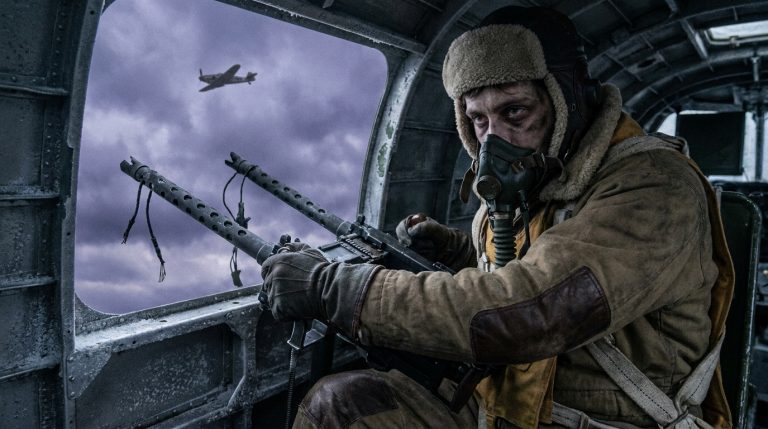
The northern face of the ridge was not a place for human life. It was a cathedral of basalt and ice, carved by winds that could strip the paint from an aircraft. Here, the temperature was a number on a sensor, irrelevant to the physical reality of a body trying to maintain the internal heat required to operate a bolt-action rifle.
Elena Voss lay beneath a drift of snow that had accumulated over hours of stillness. She was not cold. Cold was a state of mind, a signal the body sent when it was failing, and she had long ago learned to decouple her consciousness from the biological urge to shiver. She was a single, static point in a dynamic landscape of white-out fury.
Her breathing was shallow, rhythmic, controlled. Each inhalation was filtered through a face mask designed to dampen the plume of condensation that would otherwise flag her position to a thermal optic. She kept her eyes on the small, handheld rangefinder resting in the crook of her gloved hand. The device was a piece of junk to the untrained eye—scuffed, taped, and weathered—but inside its housing was a custom atmospheric processor that accounted for the chaotic micro-climates of the ridge.
She didn’t move. She hadn’t moved for three hours.
In her mind, she replayed the sequence of the day. The armored vehicle. The fur collar. The specific, hollow sound of the bullet striking target. It wasn’t the distance that mattered. It was the ID code. She had calculated the trajectory for four kilometers precisely because she knew the NATO ballistic systems would be forced to acknowledge the signature. She needed them to know. She needed the panic.
Her gaze shifted slightly, scanning the lower approaches of the ridge through the integrated optic of her rifle. The weapon, a 408 Shayac, was an extension of her own nervous system. She felt the slight vibration of the rock beneath the bipod, a tremor caused by the sheer ferocity of the wind. She adjusted her hand, compensating for the sway of the mountain face with a degree of grace that defied the brutal conditions.
She knew they were coming. She had left the breadcrumbs—the signature, the specific engagement pattern—and the institution would react with the predictability of a machine. They would send a team. They would try to “sanitize” the anomaly.
A shadow moved in the valley below, too deliberate to be a natural shifting of snow.
Elena’s pulse did not quicken. Her internal focus narrowed. She watched the shape emerge from the white haze. It was a figure, heavily laden with gear, moving with the rhythmic, weighted step of a high-altitude mountaineer. Then another. And another.
Twelve of them.
She cataloged them with the cold efficiency of an accountant. They were moving in a staggered formation, following the natural contours of the gully—a textbook approach. They were not looking for a fight; they were looking for a corpse. They thought they were hunting a ghost that had wandered back into the world of the living, not realizing that the ghost had built this mountain into a fortress of geometry and fire.
She didn’t target them. To kill the team would be to invite a larger, more indiscriminate response, and she wasn’t finished with the names on her list. The team was an inconvenience, a delay she had already factored into her timetable.
She turned her attention back to the data. She keyed a small, encrypted device strapped to her forearm. The display showed the internal communication logs of the Carpass Ridge outpost. She watched, in near real-time, the flow of data. The frantic queries, the verification protocols, the sheer, unadulterated fear rising through the command chain.
She saw the name Puit. She saw the transmission logs tied to his unique biometric header. She knew his role now, as she had known it for years. He was the one who had cleared the anomaly flag during the White Cedar cover-up.
The wind shrieked, a sudden, violent gust that threatened to dislodge the snow pack over her head. Elena stayed beneath the white fabric, her body as still as the stone she rested on. She was calculating the next move. She didn’t need to eliminate the search team; she needed to misdirect them, to push them further into the frozen heart of the mountain, away from the path she had carved out for her final objective.
She reached for a small, weighted canister in her pack—a localized signal emitter she had jury-rigged from salvaged parts. It was designed to mimic the heat and communication signature of a sniper’s hide, but with a delayed fuse. She would leave it in the depression she currently occupied, a digital phantom to draw their fire, while she drifted into the white like a shadow.
She allowed herself a single, fleeting thought of the unit patch she had left behind at the previous site. The fabric had been worn, frayed, a piece of a past that no longer had a place in the world. She wasn’t carrying vengeance. She was carrying balance.
She began the slow, arduous process of retracting the bipod. Every movement was a calculation against the wind. She was a master of the environment, not its victim. As she began to slide backward into the deepening cover of the ridge, the search team below paused, their lead officer looking toward her position.
They saw nothing but the mountain. They saw only the cold, unyielding face of the ridge.
Elena retreated, moving with a silent, feline precision. She was already gone, leaving the mountain to the wind, leaving the search team to chase a phantom of their own making. The ledger was not yet closed.
CHAPTER 4: THE CLEANUP CREW
Major Patrick Greer moved with his head down, the blizzard scouring the exposed skin around his goggles with the force of sandpaper. Every step was a negotiation with the terrain—the crust of the ice, the instability of the scree hidden beneath the fresh powder, the deceptive geometry of the wind-blown drifts. He didn’t look at the ridge face. He knew what was waiting there. Or rather, he knew what he was supposed to find.
His team followed in a loose, disciplined file. Twelve men. All of them certified for high-altitude extraction, all of them veterans of deployments that didn’t appear on their service records. They moved with a silence that was unnatural even for a special operations detachment. It was the silence of people who knew the mission was not about the survival of the target, but about the erasure of the footprint.
Greer signaled a halt behind a natural rock outcropping. He checked his sidearm—a habit, not a necessity. He didn’t look at his lieutenant; he looked at the satellite feed projected onto his wrist-mounted terminal. The feed was laggy, struggling against the atmospheric interference of the storm, but it showed a thermal hotspot flickering near the northern ridge sector.
“Two hundred meters,” Greer said, his voice barely audible over the howl of the wind.
His lieutenant, a man named Halloway, didn’t move. He kept his rifle trained on the upper slope, his breathing steady, rhythmic. “Something’s wrong, Major.”
Greer paused. “Define wrong.”
“The thermal signature,” Halloway said, pointing toward the screen. “It’s too clean. It’s been sitting there for thirty minutes without a pulse, without a heat flicker. It’s not a human; it’s a beacon.”
Greer looked closer. The signature was indeed too uniform—a perfect, geometric dissipation of heat. It was the heat signature of a decoy emitter, a piece of sophisticated tech intended to draw a search team into a kill zone, or perhaps simply to waste their time until the blizzard swallowed their window of operation.
Greer felt a cold prickle at the base of his neck. They had been sent here with the explicit directive to locate a rogue sniper. But looking at the decoy, he realized that the sniper wasn’t just hiding; she was playing with them.
“They’re watching us,” Greer realized aloud.
He didn’t need to ask who. The ID code on the ballistic logs had burned itself into the minds of every man on this ridge. Captain Elena Voss. The legend they had been told was a tragedy, a story of a unit lost to a mortar strike and an unlucky gully. But a ghost didn’t deploy decoys. A soldier did. And a soldier of that caliber didn’t leave a trail unless she wanted it to lead somewhere specific.
“We proceed,” Greer said, the command cutting through the wind. “But adjust the formation. We aren’t moving toward the beacon. We’re moving toward the flank.”
“If we deviate, we’re off the search path,” Halloway warned.
“If we don’t, we’re walking into a grave,” Greer countered.
They adjusted, moving laterally across the ridge. It was harder ground, steep and treacherous, requiring them to use their picks and axes to maintain purchase. The cold was a living thing now, a weight that tried to pull them toward the frozen earth. Greer felt the familiar ache of altitude in his chest, the thinning air making every breath a conscious effort.
As they ascended, Greer noticed something. The snow pattern on the ridge was not entirely natural. Beneath the fresh drift, there were faint, rhythmic depressions—the remnants of a crawl. Not a panicked scramble, but a slow, calculated movement. The person they were chasing had navigated this entire vertical face without once triggering a slide, without once leaving a clue that wasn’t deliberate.
He stopped, crouching down to examine a mark in the ice. It wasn’t a footprint. It was the impression of a bipod. And beside it, a small, distinct indentation—a unit patch, deliberately left exposed for them to find.
He didn’t touch it. He pulled his camera and took a photograph, the flash a jarring, artificial spark in the gray-white world. He wasn’t supposed to find this. He was supposed to find a body, or an empty hide, or a weapon. He wasn’t supposed to find a message.
“Major,” Halloway called out, his voice tense. He was staring at his terminal. “The command center. They’re pinging us. They want to know why we’ve deviated from the search path.”
Greer looked at the patch again, then at the ridge above. The storm was worsening, the visibility dropping to near zero. He knew that if he told the command center what he had found, the mission parameters would shift. They wouldn’t let him continue the search. They would order an air strike. They would burn this ridge to ash, and in the process, they would destroy the evidence that he was beginning to suspect was the real reason for this deployment.
“Ignore the ping,” Greer said.
“Sir?”
“We are having signal interference due to the storm,” Greer said, his voice flat. “We proceed toward the northern sector. We find the shooter.”
He knew he was lying. He knew he was crossing a line that would end his career, or worse. But as he looked at the patch—the insignia of the unit that the official reports said had died five years ago—he realized that the truth wasn’t in the reports. The truth was here, buried in the ice and the wind, waiting to be unearthed by someone who was willing to look at the math instead of the propaganda.
He stood, gesturing for his team to follow. They moved upward, deeper into the storm, toward a summit that felt less like a tactical objective and more like an altar. He didn’t know if they would find Elena Voss, but he knew they were walking into a reality that would change the structure of the war he had spent his life serving.
The wind screamed, but for the first time in his career, Greer found he was listening to the silence beneath it.
CHAPTER 5: THE OBSERVERS PARANOIA
Major Adrien Cole lay pressed into the hollow of the granite, his body temperature sinking into the same lethargy as the stone itself. He had been in this position for five hours, his scope trained on the sector where he had last triangulated Elena Voss’s movement.
His muscles ached—a deep, marrow-level soreness born of static tension. He didn’t move. He didn’t even shift his weight. He was a piece of the landscape, a sentient sliver of ice in a blizzard that felt like it was trying to erase the very concept of a human presence.
Through his earpiece, the channel remained open but empty. Greer’s team was silent. He had tracked their movement through the digital breadcrumbs they inadvertently kicked up—faint, encrypted handshakes between their comms gear—and he knew they were currently navigating the jagged southern flank. They were supposed to be sweeping for a target, but their pathing was illogical. They were moving in a pattern that avoided the obvious kill zones and instead clustered around a specific geological fault line.
Cole’s paranoia, always a sharp, functional tool in his kit, began to sharpen. He checked his own gear, his fingers moving over the receiver of his rifle with a tactile familiarity that bordered on prayer. He felt the cold iron, the weight of the bolt, the familiar texture of the grip.
He was being watched. He didn’t have a sensor alert, he didn’t have a visual, but the air felt different. It was the same feeling he had had three years ago, before the mission that went wrong—a sudden, electric shift in the pressure, as if the mountain itself had suddenly decided to observe his intent.
He keyed his secondary radio, the encrypted frequency he used to reach his contact in Intelligence. “Status on the clearance authorization,” he whispered, the sound barely a breath against the wind.
The reply was instantaneous, a burst of compressed digital noise that resolved into a voice he barely recognized—hollow, strained. “The file was purged, Cole. Ten minutes ago. Every trace of the anomaly flag, every authorization entry. It’s like it never existed.”
Cole felt his heart hammer against his ribs, a rhythmic, frantic thud that was the only thing making noise in his world. “Who?”
“Doesn’t matter. They know you’re looking. Get out.”
The line went dead.
Cole didn’t move to leave. Instead, he did the opposite: he dug in. He realized then that he had underestimated the scale of the rot. It wasn’t just the command chain; it was the infrastructure itself. The very network that provided his intelligence, his targeting data, and his communication was now a weapon turned against him.
He looked through his scope again. The sector where he suspected Elena was hiding was now a blur of white-out, but he saw something else. A flicker of movement on the lower ridge—not Greer’s team, but a smaller, faster silhouette. Someone or something moving with a speed that shouldn’t have been possible in these conditions.
It wasn’t Elena. It was too fast, too erratic.
He tracked the silhouette, his finger trembling on the edge of the trigger guard. He was looking at a shadow—a ghost within the ghost. The paranoia shifted from a tool to a weight. He realized that Greer’s team wasn’t just a cleanup crew. They were bait. And he, by observing the search, had become part of the narrative architecture they were building.
He adjusted his aim, his mind racing through the physics of the engagement. He needed to warn them, or perhaps, he needed to stop the entire operation before it reached a point of no return.
He heard the distinct, sharp sound of a radio transmission that shouldn’t have been on the public channel. It was an automated burst—a sequence of coordinates, encrypted in a code that dated back to the third special operations detachment’s old training manuals.
It was a trap.
Elena wasn’t just hiding; she was orchestrating a confrontation. She had drawn the cleanup crew here, and she had drawn him here, and she was waiting for the moment when the system would have to drop its mask to survive.
Cole felt a cold sweat break beneath his thermal layers, the liquid chilling instantly against his skin. He looked at the coordinates. They weren’t for the ridge. They were for the command center itself.
He shifted his aim, scanning the empty, howling void. He was no longer a hunter. He was a witness to an execution, and as he watched the storm, he realized that in a few short hours, there would be nothing left of the hierarchy he had spent fifteen years of his life obeying.
He didn’t pull the trigger. He waited, his breathing syncing with the roar of the wind, his eyes fixed on the inevitable approach of the end. He was a man holding the mirror up to a monster, and he knew that when the glass broke, he would be the first thing to shatter.
CHAPTER 6: THE SHATTERED HIDE
The movement began as a subtle shift in the vibration of the mountain, a low-frequency groan that vibrated through Elena’s boots before it registered in her inner ear. She was already in motion, her hand moving to the release pins of her custom-built hide, when the rock face beneath her erupted. It wasn’t a landslide—it was a controlled collapse, a localized detonation of the unstable granite she had been using for concealment.
The force of the blast didn’t hit her directly, but the secondary concussive wave sent a cascade of razor-sharp shale into her position. She rolled, a fluid, practiced motion that prioritized the integrity of her rifle over her own safety. The world turned into a blurred chaos of spinning rock, blinding white snow, and the screeching fury of the wind.
She landed in a lower gully, the impact jarring the breath from her lungs. She stayed low, her senses immediately shifting from strategic calculation to raw, predatory survival. The decoy emitter she had left in the upper hide ignited—a flash of heat and signal intended to convince the cleanup crew she was still pinned—but she knew the distraction wouldn’t last more than a few seconds.
The cleanup crew wasn’t just searching. They were observing. And she had just given them the one thing they needed: a confirmed change in position.
She moved through the gully, dragging the rifle by the sling, her body low to the ice. She didn’t look back at the plume of debris where her hide had been. She was already calculating the next variable. The collapse had been too precise; it wasn’t a natural occurrence. It was a targeted strike from a remote-launched mortar, likely guided by the very tactical sensors she had spent weeks monitoring.
They weren’t just hunting her; they were attempting to channel her.
She reached a narrow rock chimney, a vertical fissure that offered a path toward the western ridge. It was a climb that would shred the hands of a normal operator, but for Elena, it was a lifeline. She began to ascend, her fingers finding microscopic cracks in the basalt.
High above, she heard the rhythmic, disciplined thud of boots on crust—Greer’s team. They were moving in a pincer formation, closing the gap she had created by moving toward the collapse. They were fast, efficient, and lethal. She was being compressed into a tightening radius of frozen space.
She pulled herself over a ledge, the cold biting into her knuckles. She paused, catching her breath, and checked the encrypted comms feed. Major Cole. He was still watching. She saw the digital ping of his position—a stationary, cautious observer—and she knew what he was waiting for. He was waiting for the mask to drop.
She took the radio emitter from her pack and tuned it to a frequency that bypassed the tactical encryption. She didn’t send a signal; she left a trail. A series of distorted, non-linear signals that would lead the cleanup crew straight into a secondary, natural hazard—a high-altitude, unstable shelf of corniced snow that would, with the right pressure, collapse under their weight.
She wasn’t trying to kill them. She was trying to force a tactical retreat. If she could neutralize the search party, she could reach the command interface she needed to finish the last name.
As she scaled the final stretch of the chimney, she saw a flicker of movement to her right. A drone—small, silent, and nearly invisible against the gray sky. It was hovering, its lens adjusting to lock onto her movement.
She didn’t aim the rifle. She didn’t even slow down. She continued the climb, her movements a study in deliberate, controlled momentum. She knew that the person behind the drone’s controls wasn’t Greer. It was the command structure, watching from the comfort of a heated facility, treating her life as a variable in a black-market balance sheet.
She reached the summit of the ridge, the wind tearing at her ghillie suit. She stood for a fraction of a second, her silhouette exposed against the storm, and she looked toward the distant, unseen location of the command center. She was no longer the hunted. She was the architect of the final act.
She disappeared into the whiteout, a shadow merging with the tempest. Behind her, the drone lost its lock, its lens spinning in a confused, electronic dance. Elena moved, a force of nature in a mountain that no longer belonged to anyone but her. She was heading toward the final confrontation, and she was carrying the weight of eight lives, a list of names, and the cold, unyielding resolve of a ghost that refused to stay buried.
The path ahead was narrow, steep, and lethal. It was the only path left.
CHAPTER 7: THE FINAL NAME
The descent from the ridge was a blur of calculated risk. Elena moved through the gullies and the frozen ravines with an efficiency that bordered on the robotic. She knew every inch of this terrain, not because she had mapped it, but because she had spent five years breathing it. The storm was her only ally, a chaotic shroud that neutralized the thermal sensors and satellite coverage the command post relied upon for their illusion of control.
She didn’t stop until she reached the perimeter of the Forward Operating Base. It was a sprawling, industrial scar on the frozen valley, a collection of modular barracks and communication masts that hummed with the high-frequency vibration of a hive. She laid her rifle across a frozen mound of shale and pulled a handheld signal dampener from her pack—a device she had built from salvaged circuit boards.
She activated it. A small, blue LED glowed—a tiny, synthetic heartbeat in the vast dark of the tundra.
The base’s external security perimeter flickered. The motion sensors, which were calibrated to detect even the movement of a mountain hare, suddenly went dead in a circular radius of fifty meters. It was a digital hole in their armor, a gap she had engineered through weeks of silent, patient observation of their maintenance cycles.
She moved through the gap, her body a shadow among shadows. She wasn’t just infiltrating; she was dismantling their reality.
She reached the main server node, a reinforced container that housed the tactical communications array. She pulled a data-shunt from her vest—a device that would bypass the hardware security of the terminal. Her hands were steady, despite the cold. She didn’t feel the bite of the wind, nor the exhaustion that had been trying to claim her for months. She felt only the clarity of the task.
She connected the shunt. The monitor blinked, a cursor pulsing on the screen.
Authorized Personnel Only.
She typed the twelve-character alphanumeric code she had extracted from the fragments of the past. The screen flashed green.
Access granted.
She began the query. She bypassed the operational logs, the mission summaries, and the standard command hierarchy. She dug into the sub-layers, the places where the systemic corruption was hidden in plain sight. She found the signature—Brigadier Grant Harwick.
He was the final name.
As she navigated the logs, the screen began to populate with communication intercepts. Not mission orders, but private, encrypted channels. She watched the text flow, each line a jagged piece of a mirror. Harwick wasn’t just a commander. He was the architect of the pipeline, the man who had sold the routing data of her unit to the highest bidder in the weapons trade.
And then, she saw the motive. It wasn’t greed. It was a desperate, clinical attempt to maintain the “balance”—a cold, utilitarian belief that the unit’s destruction was a necessary cost of the larger game.
She felt a wave of cold fury, sharp and surgical, wash through her. It was the same emotion she had felt in the gully five years ago, but this time, it was balanced by the weight of the eight names on her list.
She began the upload. It wasn’t a virus; it was a broadcast. She was routing the raw intelligence—the intercepts, the signatures, the proof—not to the command hierarchy, but to the external oversight committees, the press, and the open-source intelligence archives that she had cultivated over the last four years. She was exposing the entire structure.
The terminal chirped. An alert flared: Internal Security Lockdown.
They knew.
Sirens began to wail—a low, mournful sound that was quickly swallowed by the blizzard. She didn’t panic. She didn’t run. She stood there, watching the progress bar on the screen as it moved toward completion. 10%, 30%, 60%.
The door to the server node slammed open.
She turned, her rifle raised in a single, fluid motion. Brigadier Harwick stood in the doorway, his uniform impeccable, his face a mask of professional, indignant rage. He had two bodyguards with him, their weapons leveled.
“Captain Voss,” Harwick said, his voice cold, steady. “You are officially dead. You have been for five years. Nothing that happens to you tonight will be recorded as anything other than a terminal accident.”
He didn’t realize that he was already a ghost.
“The file is uploading, Brigadier,” Elena said. Her voice was quiet, stripped of everything but the truth. “By the time your security team clears this room, your name will be public property.”
Harwick’s composure cracked, a subtle flicker of doubt crossing his eyes. He looked at the screen, and for the first time, he saw the reality of his own undoing. He reached for his sidearm, a move of pure, animal desperation.
“Don’t,” she said.
He didn’t listen.
She pulled the trigger. Not to kill him—that would be too easy, too swift. She pulled the trigger to shatter the console beside him, the bullet sending sparks and glass showering across the room, the sound a deafening finality in the small space. Harwick fell back, scrambling against the wall, his own weapon dropping to the floor.
The data finished uploading. 100%.
The screen went black, the system finally succumbing to the trauma of the hack. The sirens died, replaced by the heavy, suffocating silence of the blizzard outside.
Elena looked at Harwick. He was trembling, the mask of the commander stripped away to reveal the terrified, small man beneath. She didn’t need to do anything else. The list was finished. The account was settled.
She backed away into the dark, leaving him to the silence and the certainty of the ruin that was arriving for him. She walked out into the storm, the weight of the rifle finally slipping from her shoulders as she left the base behind. She was finished.
CHAPTER 8: THE DENOUEMENT OF GHOSTS
Elena walked. She did not look back at the Forward Operating Base. Behind her, the facility was a cacophony of alarms, panicked shouting, and the frantic, disorganized movement of men who had realized too late that their control was an illusion. The broadcast had reached its destination; the digital ripples were already spreading across the networks, turning the secure, classified reality of the command hierarchy into a public, undeniable stain.
She moved through the whiteout, her body a rhythmic machine of survival. Every step was deliberate, calculated to save the remaining energy in her limbs. She was no longer a sniper, no longer a ghost, and no longer a variable. She was simply a woman walking through the cold, the weight of the last five years slowly lifting with every meter she put between herself and the mountain’s peak.
She reached the tree line, the lower reaches of the ridge where the snow gave way to the skeletal, frozen needles of alpine firs. Here, the wind lost some of its lethal bite. She stopped beneath the canopy of a heavy, snow-laden branch, the air finally still enough to hear the soft, rhythmic thrum of her own heart.
She reached into her pocket and pulled out the unit patch—the Third Special Operations Detachment, worn and faded. It had been the anchor of her existence, the symbol of the unit she had been unable to save. She held it for a long moment, the fabric brittle against her gloved skin. Then, with a slow, deliberate motion, she tucked it into a hollow in the base of the fir tree, burying it beneath a layer of fresh, undisturbed powder.
It wasn’t a burial; it was a release. The patch didn’t represent a death anymore; it represented a truth that was now, finally, part of the record.
She heard a sound—not the wind, but the crunch of boots on ice.
She turned, her hand instinctively going to the sling of her rifle, but she didn’t raise the weapon. Major Cole emerged from the trees twenty meters away. He was alone, his gear covered in a thick layer of rime, his goggles pushed up to reveal eyes that were tired—profoundly, utterly tired.
He stopped when he saw her. He didn’t reach for his sidearm. He didn’t make a move to capture or to confront. He just stood there, the silence between them as expansive as the mountain valley.
“It’s done,” Cole said. His voice was raspy, a low, exhausted sound.
“Yes,” Elena replied.
“They’re going to try to scrub it,” Cole said, gesturing toward the ridge behind them. “They’ll try to call it a hack, a foreign intrusion, a sophisticated disinformation campaign. But the data is out there. It’s too late to bury it.”
Elena nodded. She watched him, noting the subtle tension in his posture—the way he held himself, not as a soldier, but as a man who had finally recognized the war he was fighting.
“Why didn’t you take the shot?” she asked.
Cole looked down at the snow. “Because I saw the names,” he said. “And because I realized that if I pulled that trigger, I wasn’t just silencing you. I was confirming that the lie was worth more than the truth.”
He reached into his pack and produced a small, leather-bound notebook—a field log he had been keeping for years, the detailed, unauthorized account of every mission that had failed for reasons no one would talk about. He stepped forward and placed it on the branch of the fir tree, near where she had hidden the patch.
“I’m leaving,” he said. “The command structure is going to spend the next forty-eight hours trying to figure out how to survive the fallout. They won’t be looking for us.”
“And where will you go?”
“Somewhere where the maps don’t match the reality,” he said with a thin, tired smile.
He turned and began to walk away, his figure quickly swallowed by the gray, shifting curtains of the blizzard. Elena watched him until he vanished. She was alone again, but the silence felt different now. It wasn’t the silence of a sniper, the breathless, agonizing wait for a target. It was the silence of a landscape that was finally, after five years, simply a mountain.
She shouldered her rifle—the weight of it was just metal now, nothing more—and turned toward the lower valley. The trail ahead was faint, a whisper of a path leading toward a world that did not know her name and, for the first time, did not demand it.
She walked. The cold was still there, but she didn’t fight it. She moved with it, a part of the drift, a part of the rhythm of the earth. The ghost was gone. The ledger was closed. And as the sun began to hint at a faint, pale gray on the horizon, Elena Voss took the first step into a morning that belonged, for the first time in her life, entirely to herself.