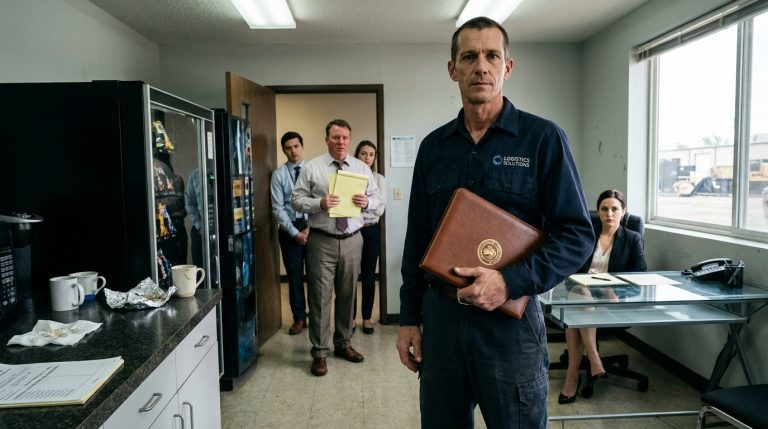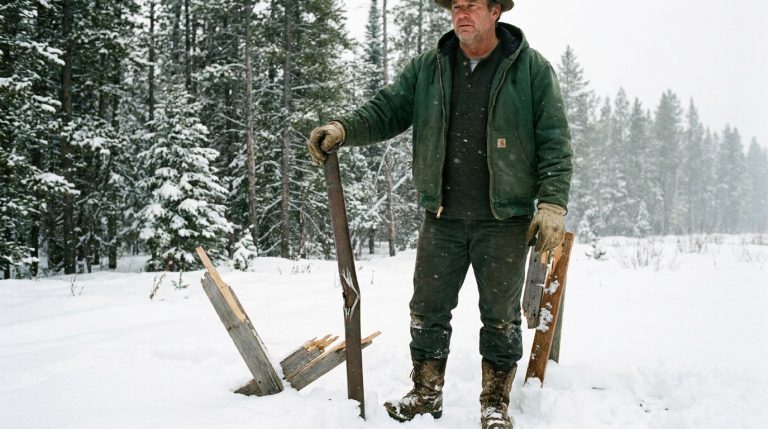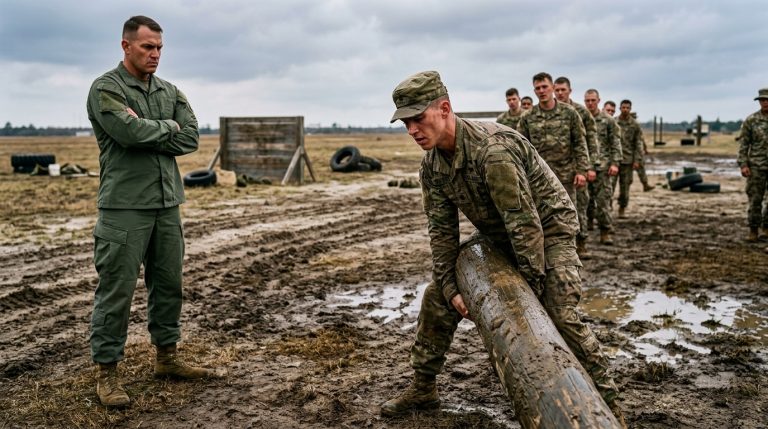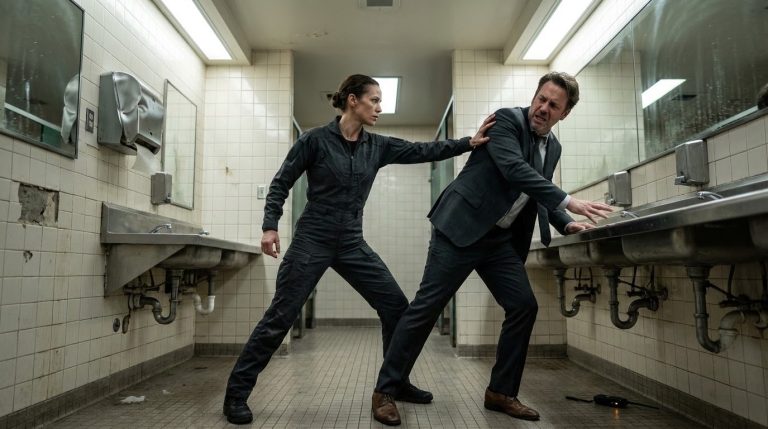
The truth remains a silent anchor holding back the tide of a past that refuses burial
CHAPTER 1: THE CANVAS TRAP
The heat inside the general-purpose tent smelled of old grease, parched grass, and the bitter, chemical tang of fresh waterproofing compound. It was an institutional smell, heavy and low, trapped beneath three hundred square yards of olive drab canvas that choked out the midday breeze.
Harold Winters didn’t look up. He kept his palms flat against the coarse denim of his knees, feeling the micro-vibrations of the base generator through the soles of his shoes. His fingers, thickened by decades of masonry work and stiffened by the damp salt air of the coast, didn’t tremble. They simply stayed where he put them—two heavy, liver-spotted weights anchoring an eighty-nine-year-old frame to a tubular steel folding chair.
“Hey. Old man. I’m talking to you.”
Corporal Davis stepped into Harold’s narrow field of vision, the polished brass of his waist plate catching a stray beam of yellow light through a gap in the tent’s lacing. The fabric of his desert digital camouflage uniform hummed with the starch of a Monday morning inspection. He was close enough for Harold to smell the mint-scented tobacco tucked behind his lower lip—a clean, synthetic sharpness that belonged to a world where everything came in plastic blister packs.
Behind Davis, two other Marines shifted their weight, their boots scuffing the dry dirt floor. One of them adjusted his rig, the nylon webbing giving a short, dry click. They were laughing, but it was a low, transactional sound, the kind of noise men made when they wanted to ensure their place in the pack.
“This section is closed to the civilian drift,” Davis said, his thumbs hitching into his utility belt. The leather was stiff, uncreased. “The historical annex layout is down by the pavilion. You missed the sign by about two hundred yards.”
Harold slowly turned his chin. The movement felt like gravel grinding in a dry mortar. His eyes, a pale, washed-out blue that had lost its pigment during the third winter in the valley, fixed on the third button of Davis’s blouse.
“I saw the sign,” Harold said. His voice was small, dry, the cadence rhythmic and unhurried, like an old grandfather clock whose pendulum was dropping through thick oil.
“Then you know how to read,” Davis sneered. He leaned down, his torso casting a long, sharp shadow over Harold’s boots. “Which means you missed the part about active-duty clearance. I need your identification card. Now. Base policy during open house. We don’t run a shelter here.”
The crowd around the glass-fronted display cases—a mother with a stroller, a retired tech sergeant in a faded ball cap—went quiet. The silence was immediate, the specific, heavy drop in pressure that happens before a line squall hits the coast.
Harold reached back. His hand moved into the hip pocket of his khakis, his knuckles catching on the frayed edge of the belt loop. He extracted a wallet of split cowhide, the edges turned black and greasy from forty years of hip-pocket friction. The plastic sleeve inside was cloudy, scratched by the grit of three different decades of dust. His thumb, broad and blunt, slipped twice against the edge of the state ID before it cleared the plastic.
Davis snatched the card. The plastic gave a sharp snap against his fingernail.
“Northwood senior community,” Davis read aloud, his voice carrying toward the tent poles. He didn’t look at the face on the card; he looked at the expiration date. “Well, Harold, this doesn’t say Marine Corps. This says you’re three miles outside your zip code.”
He began to flip the card back with a two-finger flick, but his hand stopped. His gaze dropped to the left collar of Harold’s blue polo shirt, where a small, irregular scrap of dull gray metal was pinned through the cotton. It wasn’t brass. It had no safety clasp—just a rough-cut wire pricked through the fabric and twisted flat against the skin of Harold’s clavicle. It looked like a piece of zinc roofing slag or an iron washer filed flat by a clumsy hand.
“What’s that piece of junk?” Davis asked, his finger rising to point. The tip of his nail was clean, clipped square. “You find that in the gravel outside? Or did they give you that for cleaning the grease traps at the mess hall?”
The two Marines behind him let out a synchronized snort, the sound flat and hollow beneath the canvas.
Harold didn’t blink. He watched the loose thread on Davis’s left cuff swing in the draft of the generator. The iron pin on his own collar felt suddenly cold, heavy as a five-gallon bucket of wet grout, pressing down into the marrow of his collarbone. The scent of the waterproofing compound vanished, replaced by the smell of scorched copper and frozen wool.
CHAPTER 2: THE SHADOW OF CHOSIN
The stench of the waterproofing compound didn’t just fade; it grew brittle, freezing solid in the space between two breaths. The hum of the diesel generator outside the canvas flap dropped in pitch, transforming from a modern mechanical drone into the rhythmic, low-frequency thrum of distant twelve-millimeter artillery pounding the frozen crust of a valley five thousand miles away.
Harold didn’t shift his boots. He couldn’t. The dry dirt floor beneath his soles felt suddenly as hard and unyielding as the blue-black shelf ice near the reservoir, where the mud had turned to iron before the first snow fell. His eyes remained locked on the loose thread dangling from Corporal Davis’s starched left cuff. In the yellowed, filtered light of the tent, that single strand of synthetic nylon looked exactly like the fraying edge of Captain Richards’s wool mitten—the one the captain had chewed through to keep his bare thumb from freezing to the receiver of a jammed carbine.
“I asked you a question, old man,” Davis said. His voice was closer now, a dry scrape that lacked the density of a grown man’s register. His shadow stayed wide, blocking out the glare from the open-air displays behind him. “You got a permit for that metal? Or are you just collecting scrap off the base parameters?”
Harold let his breath out through his nose. It didn’t form a cloud—the air inside the GP tent was ninety degrees—but his lungs felt the phantom sting of air that had sat at forty below zero for seventeen days. The skin across his knuckles, dry and mapped with thin blue veins, tightened until the joints looked like filed stone. He didn’t answer because the words required more leverage than his chest could muster. To speak would mean acknowledging that the boy in front of him was made of real meat and bone, rather than the pale, shifting gray shapes that usually populated Harold’s peripheral vision during the long afternoons at Northwood.
Behind Davis, the two younger Marines had stopped their snickering. The silence from the crowd had spread outward, thick and clumsy, like grease spilled on a clean workshop floor. The tech sergeant in the back had taken two slow steps forward, his boots making a distinct crunch-crunch against the gravel walkway that bordered the historical section. His eyes weren’t on Davis; they were fixed on the small, irregular zinc square pinned to Harold’s faded polo. He knew what official metal looked like—he wore three rows of it on his dress blues—but this thing had no luster. It had been cut with an entrenching tool from the housing of an AN/GRC-9 radio set while the battery acid was still bubbling in the casing.
“Let me see the back of it,” Davis commanded. He reached out, his hand moving with the casual, heavy authority of a man who had never seen an order questioned on a legal grid. His forefinger, rough from weapon maintenance, brushed the edge of Harold’s collar.
The contact was a small friction, but it carried the weight of seventy-six years of compressed earth. Harold’s left shoulder, the one that still held three fragments of Chinese mortar iron beneath the blade, went rigid. The internal matrix shifted. He wasn’t looking at a twenty-one-year-old corporal with three ribbons and a clean record; he was looking at the white-out glare of a ridge where the sky was the color of a wet slate shingle and the only thing keeping the perimeter from folding was thirty rounds of dirty ammunition and a promise whispered into the wool of a dead man’s collar.
“Don’t touch the pin, son,” Harold said. The volume wasn’t high—it wouldn’t have carried past the second tent pole—but it had the dry, heavy finality of a iron gate dropping into a concrete groove.
Davis’s hand hovered, his fingers curling slightly into a loose fist. His jaw worked, the tobacco bulge shifting beneath his skin like a small, trapped animal. “What did you say to me?”
“He said don’t touch it,” the tech sergeant from the crowd called out, his voice cutting through the generator hum with a flat, Midwestern weight. He didn’t look at Davis’s chevrons; he looked at the space between the corporal’s shoulder blades. “The man gave you his card, Corporal. Call the desk or give it back. You’re blocking the line.”
Davis didn’t turn his head toward the crowd. His pride had already hardened into a specific type of administrative logic—the kind that allowed a man to convince himself that a small cruelty was actually an act of institutional vigilance. He looked down at the state ID card still clutched between his thumb and forefinger, his nail digging into the laminated plastic until it turned white.
“This card is registered to a private residence,” Davis said, his voice dropping into a professional register that was worse than the sneer. “The pin on your uniform doesn’t match any standard insignia for retired or active personnel. Under Section Four of the base security protocol, I have the authority to retain any unidentified material within the command perimeter until it’s cleared by the section chief.”
He didn’t lift his hand to snatch it, but his posture shifted back—the calculated movement of a guard who knew exactly how much space he needed to draw a sidearm if the old man proved more agile than his bones suggested. He was treating Harold like a problem on a clipboard, a discrepancy in an inventory report that had to be ironed out before the general’s staff car cleared the main gate.
Harold watched him. He didn’t feel anger—anger was a luxury for men who still had enough blood to waste on the surface of their skin. He felt only the familiar, dry labor of endurance. The zinc pin against his neck remained heavy, a small, cold anchor keeping him from drifting entirely out of the tent and back into the snow where Captain Richards was still waiting, his lungs rattling like a bucket of wet gravel in the dark.
CHAPTER 3: THE ARRIVAL OF REYES
Corporal Davis’s hand remained suspended in the heavy air, a calculated distance from Harold’s collar. The silence beneath the three hundred yards of canvas had become structural, a dry casing that threatened to crack under the rhythmic thump of the distant base machinery. The state identification card was still trapped between the young Marine’s fingers, its laminated edge slightly warped from the heat of his grip.
A shadow broke the glare at the edge of the historical annex display. It didn’t arrive with the quick, starched energy of the lower ranks; it moved with a deliberate, weighted density that slowed the air around it.
Gunnery Sergeant Reyes walked into the narrow lane between the metal folding chairs and the display cases. His utilities were faded to a dull, washed-out green, the fabric seasoned by the sand of two separate deployments and the oil of several dozen vehicle parks. The chevrons on his sleeve were not the ironed-on patches of a clerk; they were stitched with heavy, blackened thread that had begun to fray at the points. He stopped exactly three feet behind Davis, his arms hanging loose at his sides, his eyes flat and unblinking as they mapped the micro-movements of the corporal’s shoulders.
“Corporal,” Reyes said. The voice didn’t rise above the drone of the generator, but it possessed a rough, low-frequency resonance that made Davis’s back straighten by a fraction of an inch. “State your business in this section.”
Davis didn’t turn around immediately. He kept his eyes on Harold for one more second, attempting to preserve the perimeter of his administrative authority before he pivoted on his left heel. When he did move, his arm dropped back to his side, though he kept Harold’s card tucked against his palm.
“Gunny,” Davis said, his chest rising as he tried to re-establish the crisp cadence of a security report. “I’m performing a standard identification check under Section Four. This individual has entered the active logistics sector without proper military credentials. He’s wearing unlisted hardware on his collar, and he’s refusing to clarify the origin of the material.”
Reyes didn’t look at Davis. His gaze moved slowly down to Harold, passing over the worn leather of the old man’s shoes, the heavy, stone-like set of his knees, and finally settling on the jagged piece of zinc pinned to the blue cotton of the polo shirt. Reyes’s eyes narrowed slightly. He had spent eighteen years looking at military metal—the stamped, polished, precision-milled insignia of modern states. He knew the difference between a trinket bought at a flea market and something hammered out of raw material under a sky that had no mercy. The irregular wire pricked through the fabric wasn’t a commercial pin; it was an field-expedient modification, the kind of crude utility born when everything else had been stripped away by the terrain.
“Give him back the card, Corporal,” Reyes said.
Davis shifted his weight, his boots grinding a few small grains of gravel into the dirt floor. His jaw tightened, the mint tobacco under his lip forming a hard lump. “With all due respect, Gunny, base regulations during the public presentation require a secondary verification if the artifact or the individual lacks a certified logistics log. We have reason to believe this might be an unauthorized foreign collection piece. It needs to go to the section chief for cataloging.”
“I didn’t ask for a citation from the handbook, Corporal,” Reyes said, his voice dropping another register until it was a dry, scraping rattle. “I told you to give him back his property.”
Harold watched the two men. From his seat on the steel chair, they looked like two distinct generations of iron—one still bright and brittle from the forge, the other pitted by rust and oil but settled into its grain. His left shoulder felt cold where the old mortar fragments sat against the bone, a deep, internal ache that always grew sharp when the air grew too thin or the silences lasted too long. He didn’t want the card back because the card was just a piece of plastic with a date on it; he only wanted them to stop looking at the collar pin. Every time their eyes crossed that scrap of zinc, the smell of the waterproofing compound in the tent grew more like the bitter, greasy smoke of the radio batteries that had burned in the snow while the platoon’s perimeter shrunk to the width of a single ditch.
“He’s staying right here,” Davis shot back, his voice tightening into a dangerous, thin line of insubordination. The presence of his two friends behind him had become a weight he couldn’t drop without losing his stature. “I’ve already signaled the patrol at the gate. The military police are on route for a routine administrative clearance. Until they verify the registry of this metal, the individual stays within the section.”
Reyes took one step forward. It wasn’t an aggressive movement, but it closed the physical distance between his faded utilities and Davis’s crisp camouflage until the corporal had to tilt his chin up to maintain eye contact. The air between them grew hot, filled with the sharp scent of starch and the damp, sour musk of the old canvas overhead.
“You’re dancing on something you don’t have the map for, son,” Reyes whispered. His fingers didn’t move toward his belt, but his posture was completely locked, the weight distributed evenly across the soles of his boots. He turned his head slightly toward the entrance of the tent, his eyes catching the shape of the young captain from the logistics office who had just stopped by the display line. “Step back. Right now.”
Davis didn’t move. He stood his ground with the unearned confidence of a man who believed the written rule was a shield against the older, heavier laws of the service. He held Harold’s card up between his fingers like a small piece of evidence, his face hardening into a mask of stubborn, bureaucratic certainty.
Reyes looked at him for three long seconds, the silence between them widening until the hum of the base generator seemed to die out completely. Then, without another word, the gunnery sergeant reached into his hip pocket and pulled out his cell phone, his thumb tapping the screen with a heavy, deliberate rhythm.
CHAPTER 4: THE CIRCUIT BOARD
The plastic housing of Gunnery Sergeant Reyes’s phone gave a minute, dry creak under the pressure of his thumb. He did not raise the device to his ear immediately. Instead, he held it flat in his palm, his eyes remaining fixed on the stiff seam of Corporal Davis’s left shoulder. The light filtering through the overhead lacing gave the screen a pale, sickly green tint, reflecting off the micro-scratches in the glass.
Harold did not look at the phone. His attention remained anchored to the floorboards, where a rusted framing nail protruded a quarter-inch from the dry-rotted wood near the leg of his chair. That small iron head was dark, pitted by decades of salt humidity, looking exactly like the shear pins they used to lock the base assemblies of the heavy mortar plates into the frozen rock. If you struck them too hard when the steel was cold, they didn’t bend; they simply sheared flat, leaving the tube useless until a man could dig the frozen core out with a knife point.
“The registry is clear, Gunny,” Davis said, his voice rising by a fraction of a decibel as he noticed the phone in Reyes’s hand. He held Harold’s state identification card higher, the laminated edge catching the low-frequency hum of the generator. “If the command net doesn’t have a record of the asset on his collar, it’s a standard retention procedure. We have an influx of foreign procurement details crossing the main terminal today. Security logistics overrides civilian courtesy.”
Reyes didn’t answer. He dragged his thumb across the glass screen, his rough skin making a soft, raspy friction against the surface. A low, gray icon flashed at the top of the display—a single vertical bar that flickered once before dying out completely. The heavy, copper-treated threading woven into the olive drab canvas was doing its work, acting as an unintended shield against the base’s internal cellular loop. He shifted his weight back onto his right heel, his boots making a dry hiss in the dust as he moved toward the tent’s main support pole where the lacing was wider.
“You’re talking about assets, Corporal, and you haven’t even looked at the logistics log for the annex,” Reyes said, his voice level, flat, devoid of the administrative rhythm Davis was trying to use as leverage. He turned the phone slightly to catch the ambient glare from the open flap. “The terminal desk doesn’t track private property unless it enters through the commercial freight dock. If the man is a guest of the historical section, his paperwork is handled by the command post, not a checkpoint detail.”
“The logistics sergeant didn’t clear him,” Davis insisted. He took a half-step back, his boots finding the edge of a steel display casing. The glass inside rattled—a sharp, thin vibration that cut through the low thrum of the diesel exhaust outside. “We checked the entry manifest for the early shuttle. His name isn’t on the regional roster. If he’s an unregistered civilian inside a secured maintenance sector during an open house, the protocol requires an escort to the gatehouse.”
Harold reached up with his left hand, his blunt fingers moving slowly toward the left breast pocket of his polo shirt. The movement was small, measured, but it caused the two younger Marines behind Davis to shift their posture, their hands dropping an inch closer to the nylon webbing of their equipment belts. They were reacting to the movement out of raw, modern habit—the frantic, hyper-vigilant training of a guard force that had been told every anomaly was a potential breach.
“There’s an old logbook in the truck,” Harold murmured. His voice had the dry, scraping quality of a trowel clearing old mortar from a brick face. He didn’t lift his eyes to meet Davis’s glare. “If you need the serial numbers for the unit transition, they’re in the glove box. Beneath the tire iron.”
Davis let out a short, thin breath that smelled of the mint tobacco. “We aren’t cataloging trucks, old man. We’re cataloging you. The card stays with the section detail until the MPs clear the gate.”
Reyes stopped near the wooden tent pole. He raised the phone to his jaw, his thumb holding the call button down as he leaned his shoulder against the rough, splintered grain of the pine timber. The wood was dry, seasoned by three seasons of coastal heat, bleeding small beads of sticky amber resin that caught the dust. He spoke into the microphone, his lips barely moving, his tone dropping below the register of the crowd’s low murmur.
“Desk, this is Reyes at Annex Four,” he said. He paused, his head tilting as he listened to the faint, metallic crackle of static coming through the receiver. “I need an immediate verification on a civilian ID card. Name is Winters, Harold. Cross-reference the regional service archive, not the active deployment roster. And get the Captain off his station. We have a discrepancy on the floor that’s going to turn sour if the gatehouse detail doesn’t pull back.”
The phone gave a sharp, electronic chirp—the sound of an interrupted signal trying to reconnect through the heavy canvas lining. Reyes didn’t lower the device. He kept his eyes fixed on the back of Davis’s neck, watching the way the young Marine’s skin had turned a faint, blotchy red beneath the crisp edge of his starched collar. The corporal was committed now; he had built a small wall out of base policy, and he didn’t have the leverage to tear it down without someone noticing the cracks in his armor.
Harold’s thumb rubbed the seam of his trousers. The fabric was thin, cheap cotton, nothing like the six-layer green wool that had turned to ice around his knees during the retreat from the hills. He remembered the weight of that wool when it was wet—how it would double in weight until every step felt like pulling a boot out of deep river clay. Captain Richards had lost his trousers to a white phosphorus fragment on the second night, and they had wrapped his legs in an old canvas equipment cover that smelled exactly like the tent they were sitting in right now.
“The patrol just cleared the secondary gate,” Davis said, his eyes darting toward the open flap where the blinding glare of the concrete apron cut through the dark interior. The sound of a vehicle engine—the heavy, mechanical rattle of a diesel utility truck—was growing louder, vibrating through the parched earth beneath their feet. “They’ll handle the retention report at the station house. Give the man his space, Gunny. We’re just following the ledger.”
Reyes lowered the phone slowly, his thumb sliding across the dark screen as the line finally went dead. He didn’t put the device back in his pocket. He held it by the corners, his knuckles white against the black plastic casing.
“The ledger doesn’t have a column for what you’re doing, Corporal,” Reyes said, stepping away from the timber pole and back into the narrow lane. His shadow fell over Davis’s boots, thick and dark as old oil. “And you’re about to find out how much the blank spaces cost.”
CHAPTER 5: THE SCREEN GOES WHITE
The dead tone inside the phone’s receiver left a small, metallic echo in Gunnery Sergeant Reyes’s ear before he slid the device away from his cheek. Outside the tent lacing, the heavy, double-stroke rattle of the diesel utility engine slowed its cadence, the sound turning into a wet, rhythmic chug as the tires found the looser gravel near the secondary display gate. The vibration traveled up through the wooden support poles, setting off a continuous, microscopic dance of dust motes in the single ray of yellow light hitting the floorboards.
Harold didn’t look up to track the sound of the vehicle. His hand remained flat against his denim trouser leg, his thumb tracing the coarse, ridged weave of a patch he had sewn himself with heavy-gauge cobbler’s thread. That thread was black, stiffened by beeswax, smelling faintly of the old drawer where he kept his oilstones and his replacement boot laces. It was the same density as the cord they used to bind the field telephone wires to the scrub oak branches along the supply route—coarse, bitter stuff that would cut into a man’s palm if he tried to haul it through the frost without his mittens on.
“The net is down, Gunny,” Corporal Davis said, his voice dropping into a flatter, colder register as he saw Reyes drop his hand. He didn’t return Harold’s state identification card. He tucked it deeper against his ribs, his starched utility sleeve making a sharp zip-zip against his side plate as he shifted his stance. “If the command post isn’t responding on the landline, the standard safety buffer applies. The individual remains under observation by the section detail until the perimeter sergeant logs the ledger entry.”
“The Captain isn’t at his desk because he’s already moving, Corporal,” Reyes said. He didn’t raise his voice, but the words had a dry, ungreased friction that made the two young Marines behind Davis look toward the tent’s entry flap. “And the desk sergeant doesn’t need a ledger entry to know who’s sitting in that chair. He needs you to clear the lane so he doesn’t have to explain to the logistics colonel why a three-ribbon detail is running a checkpoint inside a public presentation space.”
“The public space ends at the white line,” Davis insisted, his thumb twitching against the seam of his utility belt. He took a half-step sideways, his heel catching on the corner of an old cast-iron display stand that held a collection of disassembled Browning mechanics. The heavy iron frame didn’t tip, but the weight of it shifted with a low, metallic clunk against the rotted wood below. “If we let every unregistered civilian drift through the hardware racks without an escort, we’re violating the core readiness clause. The pin on his shirt is still an unverified asset, Gunny. It has the markings of a non-standard tactical retrieval item.”
Harold’s chin dipped a fraction of an inch lower. The small gray square of zinc on his collar felt intensely cold against the skin of his throat, like a coin left out in the rain overnight. He knew what they meant when they said retrieval item. They thought it was something taken from a pocket or a locker—a trophy kept in a cedar box behind the wool blankets. They didn’t know that Captain Richards had cut it from the side casing of a shattered radio while the liquid in the tubes was still hissing against the snow. The captain’s fingers had been split open by the frost, his blood drying into black, hard crusts along the edges of the metal before he could press it into Harold’s palm. Don’t let them forget the names, Winters, he had rasped, his breath barely forming a gray mist in the iron air. The files are gone. The truck burned at the bridge. It’s just you and the wire now.
“There are no assets in this tent, son,” Harold said. His voice was small, but it had the clear, heavy ring of an old anvil struck with a soft mallet. He didn’t look up at Davis’s crisp camouflage. “Just some old lumber and some men who don’t know how to keep their boots grease-free. If you want to check the inventory, the serial numbers are stamped on the brass plates under the housings. You don’t need a ledger for that. You just need to bend your back.”
Davis’s face flushed a deep, dull red beneath the sharp line of his field cap. “The ledger is what keeps this base from turning into a scrap heap, old man. If you don’t have the entry clearance, you’re just a discrepancy on the screen.”
Reyes didn’t move from his position by the pine pole, but his shadow lengthened across the floorboards as the light outside changed. Far down the gravel lane, inside the air-conditioned, neon-lit core of the primary command center, Master Sergeant Miller’s terminal gave a short, high-frequency chime. The screen had been tracking the public shuttle logs, a continuous stream of gray and green lines that rarely changed speed. But as Miller typed the name Winters, Harold into the central archive loop, the system didn’t give the usual secondary verification prompt.
The screen went completely white.
The gray rows of data vanished, replaced by a single, solid block of crimson text that locked the cursor in the center of the grid. It wasn’t an administrative error flag; it was a priority-one security quarantine, the kind of automated block that only triggered when a terminal user pulled a file that carried a direct presidential citation log. Miller’s hand froze on the plastic casing of his mouse, his forefinger hovering an eighth of an inch above the button. He didn’t click. He sat perfectly still for three long seconds, his chest rising against the stiff fabric of his tan shirt as he read the four lines of black type that had populated the bottom of the white field.
“Evans,” Miller said. The voice didn’t have the standard command center volume. It was low, thin, strained by a sudden lack of air. He didn’t look up at the young captain who was standing by the tactical map rack with a plastic coffee mug in his hand. “Captain Evans. You need to drop the log right now.”
Evans didn’t turn around immediately. He was adjusting a red plastic marker on the regional coordinate chart, his starched sleeve making a light, dry rustle against the paper. “What is it, Master Sergeant? If the shuttle schedule is behind, tell the gate detail to run the secondary buses through the northern perimeter.”
“It’s not the shuttle, sir,” Miller croaked, his hand finally dropping off the mouse to press flat against the gray steel edge of his desk. His rolling chair gave a sharp, metallic squeak as he pushed back from the light of the monitor. “It’s the civilian name Reyes flagged from the annex. Look at the screen, sir. Look at the top tier.”
Captain Evans walked three slow steps over the rubber floor mats, his boot heels making a muffled, heavy sequence of thuds before he stopped behind Miller’s shoulder. He leaned down, his eyes scanning the red text block, his gaze passing over the black-and-white photograph of a serious, unsmiling twenty-year-old Marine whose utility blouse had the old-style high collar of the mid-century line. The name beneath the picture was printed in large, unspaced block letters, but it was the small, gold-bordered emblem flashing in the corner of the frame that made the captain’s hand tighten until the plastic of his coffee mug gave a loud, clean crack.
“Get the commandant on the line,” Evans whispered, his voice losing its starched, professional edge completely. He didn’t look at Miller; his eyes remained locked on the single, three-word designation printed directly under the old photo. “Don’t use the regular terminal loop. Use the direct net to his staff car. And tell the MPs at the annex gatehouse that if anyone touches that old man before the general arrives, they’ll be spending the next five seasons cleaning the grease traps at the brig.”
CHAPTER 6: THE CONVERGENCE
The hum of the diesel engine outside the canvas lacing fell into a heavy, throat-clearing idle that vibrated directly through the steel legs of Harold’s folding chair. Corporal Davis stood his ground, his fingers adjusting their grip around Harold’s state identification card. As he turned the plastic laminate against his palm, the rough nylon seam of his tactical glove caught on the card’s edge, tilting it toward the amber glare of the display lamp.
Along the top border of the plastic, where the laminate had peeled back from decades of friction, a series of tiny, hand-inked alphanumeric characters became visible under the dust. It was a secondary log stamp—the precise, violet-tinted ink used by overseas security ports to inventory unclassified materials cleared through the Pusan perimeter during the winter pull-back. To a young clerk trained on modern digital grids, those numbers didn’t look like an administrative archive. They looked like a black-market broker’s lot code, the kind of clandestine tracking sequence etched into stolen state property or unvouched military relics smuggled out of an armory crate.
“The registry on the card has a foreign port marker, Gunny,” Davis said, his voice hardening into the sharp, triumphant rhythm of a guard who had finally found the physical discrepancy he needed to justify his wall. He held the card out toward Reyes, pointing his gloved finger at the violet ink. “This isn’t standard domestic issuance. The tracking code is a maritime transit stamp from the third sector. Under the emergency preservation act, any artifact carrying an unvouched logistics stamp is subject to immediate physical seizure until the collection chief certifies the ledger.”
Reyes didn’t lean forward to examine the ink. His eyes remained fixed on the small, irregular zinc square pinned to Harold’s collar. He knew what that violet ink meant—he had seen old logbooks from the supply regiments that had been dragged across the mud before the docks were blown at Hungnam. The ink wasn’t a broker’s mark; it was the stamp of a dead clerk who had stayed at his station until the grease in his stamping machine froze solid.
“Put the card on the table, Corporal,” Reyes said, his voice so flat it sounded like an iron rod sliding across wet concrete.
“The protocol doesn’t allow for a mid-tier drop, Gunny,” Davis shot back, his shoulders bunching as he stepped closer to Harold’s chair. His boot scuffed the dry-rotted wood of the floorboards, kicking up a small swirl of gray dust that smelled of old dry-rot and iron filings. “The patrol car is at the gate line. We’re running a tracking report on the metal through the security loop. If the old man won’t account for how he cleared a third-sector asset through the perimeter, the ledger requires an administrative hold.”
Harold didn’t lift his head to meet the corporal’s eyes. His gaze stayed fixed on the rusted head of the framing nail near his shoe. The small zinc square against his skin felt heavier now, its raw edges pressing into the cotton of his shirt like a blunt chisel. He could hear the sound of boots on the gravel outside—not the light, irregular scuffing of the open-house tourists, but the rhythmic, synchronized thud of heavy-soled combat leather moving in a file.
“The wire was cold,” Harold murmured. His lips didn’t look like they had the leverage to move, but the words came out clear, carrying that dry stone cadence that didn’t belong to the room. “When the captain took it off the radio, his thumb stayed stuck to the casing. We had to use the blade of the entrenching tool to clear the skin so he could close his palm. He didn’t write it down in the book because the book was already in the stove. We needed the paper to keep the grease from freezing in the locks.”
Davis frowned, his thumb sliding across the violet ink on the card border. “The stove doesn’t clear an inventory item, old man. If the serial number isn’t in the main net, the item is unvouched.”
The main flap of the GP tent was thrown back with a sudden, violent surge of air that tore three of the hemp lacings from their brass eyelets. The afternoon heat rushed into the dark interior, bringing with it the sharp, oily reek of unburned diesel exhaust and the screaming whine of a multi-car military police convoy that had just locked its brakes across the concrete apron outside.
The crowd inside the annex split instantly, their bodies pulling back against the glass cases with a series of frantic, muffled thuds as four white-helmeted MPs entered the lane. They didn’t draw their sidearms, but their hands stayed locked on the black plastic grips of their holsters, their boots making a deafening, metallic thunder against the floorboards as they formed a double line from the flap to the center of the lane.
Behind them came Major General Marcus Thorne.
The base commandant moved with an unhurried, terrifying velocity that made the canvas walls seem to shrink toward the center poles. His utilities were crisp, the two silver stars on his collar polished to a white glare that caught the ambient light from the display cases. His face was a hard, gray piece of granite, his jaw set so tight the tendons beneath his ears looked like steel cables under thin skin. He didn’t look at Gunnery Sergeant Reyes, and he didn’t look at the two young Marines who had instantly dropped their hands to their sides. His eyes, dark and flat as river slate, locked onto Corporal Davis’s right hand.
Davis froze. The unearned confidence that had held his shoulders square for the last twenty minutes vanished, leaving his frame looking small and brittle beneath the heavy nylon of his plate carrier. His hand stayed suspended in the air, still clutching Harold’s state identification card, the fingers trembling by a fraction of an inch as the shadow of the two-star general fell over his boots.
General Thorne stopped exactly three feet from Harold’s chair. He didn’t speak. He didn’t look at the ledger on Davis’s clipboard. In the absolute, tomb-like silence that had fallen over the annex, the general brought his right hand up to the brim of his cap, his forearm forming a perfect, rigid forty-five-degree angle as he executed a salute so sharp the starched fabric of his sleeve gave a loud, clean crack in the quiet.
“Sergeant Major Winters,” Thorne’s voice boomed, the sound dense enough to vibrate the glass inside the Browning display cases. “It is an absolute honor to have you on this installation, sir.”
Davis’s mouth opened slightly, his jaw dropping until the lump of tobacco under his lip became visible against his teeth. The state ID card slipped from his fingers, falling through the hot air to hit the dry dirt floor with a small, flat click right beside Harold’s worn leather shoe.
CHAPTER 7: THE GENERALS OFFICE
The salute hung in the air like a blade—a sharp, rigid architecture of iron-starched fabric and decades of absolute discipline. General Thorne’s hand didn’t tremble, nor did his eyes flicker away from Harold’s face. He held the position, his posture offering a silent, monumental validation that seemed to push the very air out of the crowded annex. Behind him, the four MPs stood at a rigid, statuesque parade rest, their gazes fixed on the middle distance, their expressions entirely absent of the human curiosity that had defined the crowd minutes before.
Corporal Davis remained motionless. The state identification card lay at his feet, a small, insignificant scrap of white plastic against the dark, dust-caked wood. His chest rose in a shallow, stuttering sequence—a boy’s breathing trapped in a soldier’s frame. He didn’t look at the General; he couldn’t. He looked at the floorboards, where the dust had been pressed into the grain by the weight of their boots, his own mind struggling to reconcile the reality of the man in the chair with the bureaucratic discrepancy he had tried so hard to build his day around.
Harold slowly pushed himself up. The motion was an agonizing, real-time negotiation with his own joints; the wood of the chair groaned, a dry, splintering sound that carried for twenty feet in the dead quiet of the tent. As he straightened, his polo shirt bunched at the shoulders, and the small zinc pin on his collar caught the light—a dull, jagged glint of iron that looked utterly alien against the modern, high-tech sheen of the General’s dress uniform.
“General,” Harold said. His voice wasn’t loud, but it possessed a strange, resonant authority that seemed to pull the oxygen out of the space. He didn’t offer a return salute—his arms were heavy, the joints rusted by the long, slow passage of decades—but he offered a slow, deliberate nod. It was the nod of a man who had seen the same stars on the collars of commanders who were now nothing more than names on granite slabs in Arlington.
Thorne dropped his arm, the movement quick, efficient, and precise. He turned his head—a slow, predatory shift that brought his gaze onto Corporal Davis. The air in the tent seemed to drop ten degrees, the heat from the generator dying out as the General’s presence expanded to fill the frame.
“Sergeant Major,” Thorne said, his voice dropping to a low, dangerously calm murmur. “I am deeply sorry that your presence on this installation was met with anything other than the highest regard. It is a failure of command oversight that I intend to correct immediately.”
He didn’t scream. He didn’t need to. He looked at the two young Marines standing behind Davis, and they instantly turned a pale, sickly ash color, their chins tucking into their chests as they avoided his stare. He then turned his focus to Davis, his eyes scanning the corporal from the polished tips of his boots up to the tight, nervous knot of his throat.
“Corporal Davis,” Thorne said. The name tasted like poison in his mouth, a flat, rhythmic sound that carried a promise of a future that would be very short and very quiet. “You will leave this tent immediately. You will report to the commandant’s office—not as a security detail, but as an individual under investigation for conduct unbecoming of the uniform you are currently disgracing. Gunnery Sergeant Reyes, you will take charge of him and his associates. You are relieved of your post at the historical exhibit until further notice.”
“General,” Reyes said, his voice clicking into a sharp, efficient cadence. He snapped to attention, his heels making a synchronized, heavy thud against the floorboards that sounded like a gunshot in the silent room. He didn’t look at Davis, but he moved with a sudden, kinetic energy that left no room for hesitation. “Sir.”
Davis turned. He moved like a man who had been hollowed out, his hands hanging limp at his sides, his posture stripped of the starched, puffed-up bravado that had defined him ten minutes ago. He didn’t look at Harold. He didn’t look at the ID card on the floor. He walked toward the tent flap with a shambling, heavy gait, his boots scuffing the dirt floor, leaving a trail of gray dust behind him that looked like a scar.
Thorne turned back to Harold. He looked at the old man—at the liver spots on his hands, at the fraying edges of his blue polo shirt, at the stubborn, quiet endurance written into the set of his jaw. He didn’t see a relic. He saw a man who had held a piece of reality that the rest of the world had decided to incinerate in the name of efficiency.
“I have a vehicle waiting outside, sir,” Thorne said, his tone shifting into something softer, something that carried the weight of a man talking to a father. “My office is not a place for briefings or records. It is a place for quiet. I believe you have been carrying the burden of that ground for long enough.”
Harold looked down at the floor, where the zinc pin on his collar seemed to hum with a faint, phantom vibration. The smell of the tent had shifted again, the diesel fumes dissolving into the sharp, metallic tang of an old radio housing cooling in the snow. He felt the phantom pressure of a hand on his shoulder—a dead man’s hand, cold and desperate.
“It’s not a burden, General,” Harold said, his voice barely audible over the hum of the cooling generator outside. “It’s just a clock. It only keeps time for the ones who didn’t come back to the bridge.”
CHAPTER 8: THE DUST OF THE ARCHIVES
The transition from the high-tension glare of the General’s command to the stagnant, lightless throat of the base museum felt like stepping into a tomb. Corporal Davis pulled the heavy steel door shut behind him, the latch catching with a hollow, metallic thud that seemed to vibrate for ten seconds in the still air. Here, there was no hum of modern electronics, no rhythmic pulse of the diesel generators. There was only the thick, suffocating smell of oxidizing iron and paper that had been left to crumble for half a century.
He didn’t have his sidearm. He hadn’t been disarmed by force, but the weight of his belt felt wrong, the holster empty, the authority he had worn like a second skin stripped away by the General’s flat, gray stare. He stood in the dark for a long minute, his breathing ragged, his lungs burning with the fine, suspended particles of pulverized drywall and rust.
“Start at the bottom,” Gunnery Sergeant Reyes had told him in the hallway, his voice echoing off the concrete walls like a final, cold mandate. “If you want to understand the discrepancy, you clean the record. Every folder, every casing, every piece of wire. If it’s not in the ledger, you find where it went.”
Davis moved deeper into the archive room. The beam of his tactical flashlight cut through the dark, illuminating racks of disassembled Browning light machine guns, their barrels coated in a thin, greasy layer of cosmoline that had turned into a dark, waxy sludge. Everything here was dead weight. It was the refuse of a military machine that had moved on, leaving its history to be eaten by the salt air and the creeping neglect of the base logistics corps.
He reached the first row of metal filing cabinets. The paint was peeling in long, brittle strips, curling off the drawers like dead skin. He began to pull the handles. Each one groaned, the internal rollers rusted solid, forcing him to use his entire body weight to jolt them open. Inside, he found nothing but standard supply requisitions, thousands of them—reams of carbon-copy paper documenting fuel deliveries, uniform shipments, and ammunition counts that hadn’t mattered since the Truman administration.
An hour bled into two. The sweat began to sting his eyes, his skin itching under the dry, stagnant heat. He was looking for the discrepancy, the shadow that had triggered the General’s fury, but all he found was the crushing, indifferent weight of bureaucratic indifference.
Then, the museum’s HVAC system gave a wet, grinding shriek, the fans in the overhead ductwork shuddering to a halt. The sudden silence was absolute. In the quiet, he heard a soft, rhythmic clink—the sound of metal tapping against metal.
He swung the flashlight upward. The sound was coming from behind a heavy, perforated steel vent cover near the ceiling. He dragged a stack of crates over, his boots slipping on the slick, dust-covered concrete, and stood on the summit. His fingers clawed at the screws, the metal hot and jagged, tearing the skin of his knuckles as he twisted the fasteners until they fell into the dark.
He pulled the cover away. Inside the vent, nestled in the accumulated silt of thirty years, sat a narrow, leather-bound folder. It was wrapped in heavy plastic that had turned yellow and brittle.
He didn’t open it immediately. He climbed down, his pulse hammering against his ribs, and cleared a space on the heavy wooden workbench. The flashlight beam trembled as he shone it on the cover. There was no military serial number printed on the binding—only a hand-written index code, the ink faded to a faint, ghostly gray. He sliced the plastic open with his utility knife.
The folder wasn’t a supply log. It was a casualty manifest.
He flipped the pages, his breath catching in his throat. These were the names from the 1950 winter transition, the ones that had been flagged in the central net. But as he turned to the section covering the Chosin Reservoir, he noticed the discrepancy. Entire pages had been carefully, cleanly razor-cut from the center of the binding.
He moved his light to the interior of the vent cover. Taped to the back of the steel, shielded from the humidity by the intake shroud, was a single, small radio component—a shattered, zinc-casing piece of a transmitter, bent into the shape of a rough, hand-filed star. It was the exact, jagged twin of the pin on Harold Winter’s collar.
The air in the room seemed to go cold. He looked at the pin, then at the empty spaces in the manifest. He wasn’t just looking at a discrepancy; he was looking at the evidence of an intentional, total erasure—a history that had been physically cut out of the record, leaving behind only the scrap metal left in the pocket of a man who had been forced to carry the secret, silent and unvouched, for seventy years.
CHAPTER 9: THE BROKEN ANTENNA
The jagged piece of zinc in Davis’s hand felt significantly heavier than its size suggested. It was a fragment of a larger history, its edges serrated and thin, still bearing the faint, brownish stains of something that looked like dried, oxidized blood. He looked from the metal to the casualty manifest spread out on the workbench, his fingers brushing the rough, cut edges of the paper where the names had been surgically removed.
The silence of the room was no longer the heavy, stagnant quiet of an archive; it was a pressurized, warning silence, like the air inside a pressurized cabin before the hull integrity fails. Davis’s vision blurred. For a heartbeat, the darkness of the museum dissolved, replaced by the white-out glare of a Korean ridge line. He smelled the sulfur of mortar rounds and the biting, chemical stench of burning radio components. He felt the phantom pressure of a freezing wind against his neck—a wind that carried the whispers of men who had no names because their files had been fed into the flames to keep the command post from folding in the snow.
He stumbled back, his shoulder hitting the edge of a steel rack filled with dismantled machine gun housings. The rack shrieked—a long, agonizing rasp of metal on metal—and Davis spun around, his hand flying to his empty holster before he realized there was no sidearm there. He was alone in the dark, surrounded by the mechanical corpses of a conflict that had been neatly edited out of the official registry.
He looked back at the workbench. The casualty manifest was a lie, a clean, sanitized surface designed to hide the fact that the platoon hadn’t been defeated by an enemy force—they had been abandoned by a logistical failure. The General hadn’t brought Harold to the base to honor him; he had brought him here to keep the last living anchor of that history from finally breaking.
His radio on his hip chirped—a sharp, digital burst of static that snapped him back to the present.
“Davis, report,” Reyes’s voice cut through the dark, sounding tight and impatient. “The General is waiting for the summary. You’ve been in the archive for forty minutes. Have you cleared the discrepancy on the manifest?”
Davis stared at the zinc fragment. His hands were shaking, the muscles in his forearms locked tight. He understood now why the General hadn’t ordered a standard inquiry. An inquiry would require the files to be pulled into the open, and the open would demand an accounting for the names that were gone. If he reported the truth—that the records had been tampered with decades ago to cover up an institutional, systemic abandonment—the entire chain of command would collapse under the weight of the missing dead.
He could lie. He could put the zinc scrap back into the vent, seal the cover, and report that the manifest was complete, that the discrepancy was a clerical error from a lost shipment. He could walk out of the dark, re-button his blouse, and return to the crisp, starched comfort of his life before the old man in the polo shirt had ever sat in that chair.
But the zinc fragment was still biting into his palm.
“Davis?” Reyes’s voice came again, sharper this time. “Report.”
Davis looked at the workbench, then at the heavy steel door that led back to the hallway. He realized that the discrepancy wasn’t a mistake in the archives; it was a test. The General was waiting to see if he would continue to protect the sanitized, brittle facade of the base or if he would be the one to break the seal on the history they had spent seventy years burying.
He picked up the zinc fragment and slipped it into his pocket, his hand clenching around it until the sharp edges pierced his skin. He didn’t answer the radio. Instead, he reached for the folder, his fingers trembling as he tucked the casualty manifest into his blouse, right against his chest.
“Davis, you copy?” Reyes barked. “I’m sending a detail to the annex door. Respond.”
Davis turned toward the exit. He felt an intense, hollow ache in his chest—a sudden, physical sensation of having stepped off a ledge. He knew that the moment he opened that door, he wouldn’t be walking back into the base he had known that morning. He would be walking into a confrontation that couldn’t be resolved with a ledger or a standard operating procedure.
He walked to the heavy steel door, his boots hitting the concrete with a new, heavy deliberation. He pushed the lever. As the door swung open, the bright, sterile fluorescent light of the hallway flooded into the room, blinding him for a second. He stood in the threshold, the weight of the missing names pressing against his ribs, and prepared to face the General, his hands no longer reaching for a holster that wasn’t there.
CHAPTER 10: THE ZINC PROMISE
The fluorescent light in the hallway hit Davis’s eyes like a physical impact, sharp and sterile. He squeezed his lids shut, a jolt of vertigo hitting him as the silence of the archive room bled into the frantic, high-frequency energy of the base command corridor. The hallway was a tunnel of hard white plastic and gray steel, the air conditioning blowing a dry, artificial cold that tasted of ozone.
He kept his hand buried in his pocket, his knuckles white around the sharp, serrated edge of the zinc fragment. Through the thick, starchy fabric of his blouse, he could feel the edges of the casualty manifest, the paper soft and fragile against his ribs, a ticking heart of history he had no idea how to present. He felt his gait falter—the rhythm of his boots on the polished linoleum didn’t sound right; it sounded like the hollow, rhythmic clatter of a bolt carrier hitting the receiver of a weapon that wasn’t there.
“Davis.”
The voice was low, resonant, and carried the specific, weighted authority of a man who had spent his life listening for cracks in the line. Gunnery Sergeant Reyes was standing ten feet away, leaning against the gray steel locker bank. He didn’t have his sidearm drawn, but his posture was absolute—a statue of seasoned, hardened muscle, his eyes scanning Davis’s face with a precision that made the corporal’s skin crawl.
“The General is in the briefing room, Davis,” Reyes said, his voice dropping into a dry, abrasive scrape. He looked at Davis’s clenched pocket, then at the way the corporal’s shoulders were hunched, the blouse pulled tight across his chest. “He’s waiting for the inventory report. He expects a clean, logical explanation for the discrepancy in the annex registry.”
Davis tried to speak, but the words felt like broken glass in his throat. He took a step toward Reyes, his boots echoing with a sound that felt too loud, too heavy, like an intruder in a quiet house. “It’s not an inventory issue, Gunny,” he said, his voice coming out as a thin, strained whisper. “The registry isn’t wrong. It’s been… it’s been edited.”
Reyes didn’t blink. He moved away from the lockers, his steps silent, almost predatory, until he was within arm’s reach of Davis. He stopped, his gaze dropping to the visible outline of the folder tucked inside the corporal’s blouse. The air between them grew tight, the hum of the overhead lights surging with a sharp, electronic buzz that made the hair on Davis’s arms stand up.
“Do you have any idea what you’re holding, son?” Reyes asked, his tone shifting into something that wasn’t a rebuke, but a warning—a low, flat, dangerous sound. “You pull that folder out in front of the commandant, and you aren’t just reporting a discrepancy. You’re tearing down the perimeter. You’re asking for an accounting of every ghost that ever walked off the map during the retreat.”
“Someone cut the pages out,” Davis said, his voice gaining a sudden, ragged strength. He tapped his pocket, the sharp corner of the zinc fragment digging into his palm. “I found the radio part, Gunny. The one from the pin. It was taped inside the vent, hidden behind the shroud. They didn’t just lose the manifest; they destroyed it to hide the fact that the platoon was left on the ridge because the supply trucks never made the bridge.”
Reyes reached out, his hand moving with a speed that defied his age, and caught Davis by the shoulder, spinning him around until his back was pressed against the cold steel of the locker bank. The impact vibrated through Davis’s spine, a dull, shocking ache that cleared the last of the museum’s dust from his vision.
“Listen to me,” Reyes hissed, his face inches from Davis’s own, the scent of stale coffee and machine oil hitting the corporal like a blast of heat. “The General knows the names are missing. He’s been carrying the memory of that ground since he was a second lieutenant, and every officer since has walked over that missing history to keep the unit morale from shattering. You walk into that room, you aren’t fixing a report. You’re burning the house down.”
“It’s already burnt,” Davis whispered, his hand sliding out of his pocket to rest on the folder tucked in his blouse. “The only thing left is the scrap metal. And I’m not throwing it back in the dark.”
Reyes held his stare for three seconds—a long, agonizing period where the entire weight of the base’s structure seemed to balance on the edge of a single, reckless movement. Then, he slowly pulled his hand away, his expression settling into a mask of cold, grim pragmatism.
“Then you better make sure you have the authority to hold it,” Reyes said, stepping aside and gesturing down the hallway toward the heavy, glass-paneled door of the briefing room. “Because once you present that file, there is no ledger in the world that can sign you back in.”
Davis didn’t look back. He started down the hallway, his boots hitting the floor with a rhythmic, heavy thud that sounded like a drumbeat. The hallway seemed to stretch, the white walls pulling away from him, leaving him standing in the middle of a long, empty line that led straight to the only door in the building he couldn’t afford to walk through.
CHAPTER 11: THE VFW THRESHOLD
The door to the briefing room was thick, finished in a heavy, industrial-grade laminate that felt cold and inert beneath Davis’s palm. He didn’t hesitate. He pushed, the hinges giving a smooth, silent sweep as the room opened before him. It was a space of sterile, high-end austerity: a single long mahogany table, the surface polished to a dark mirror finish, and, at the far end, the base commandant sitting with his hands clasped firmly in front of him.
General Thorne didn’t look up as the door clicked shut. His eyes were focused on the space in front of him, his posture so rigid it seemed to draw the light away from the corners of the room. To his left, sitting in a simple, low-backed chair, was Harold Winters. The old man looked smaller in the cavernous, fluorescent-lit room, his blue polo shirt a soft, faded contrast to the sharp, dark geometry of the General’s office.
Davis walked forward. His boots felt heavy, every step a deliberate, mechanical act. The file in his blouse felt like a hot iron pressed against his sternum. As he reached the end of the table, he stopped and placed the folder on the polished mahogany. The sound of the manila paper hitting the wood was dry, sharp, and entirely out of place in the room’s hushed, controlled atmosphere.
“Corporal Davis,” Thorne said, his voice quiet—a thin, steady blade that cut through the silence. He didn’t reach for the file. He didn’t look at it. He kept his gaze fixed on Davis’s face. “You were ordered to conduct an inventory audit. I assume you have reached a conclusion regarding the discrepancy in the annex.”
Davis’s throat felt tight, his muscles locked. He pulled the zinc fragment from his pocket and laid it next to the folder. It was a small, ugly piece of metal, but as it caught the light, it seemed to fill the room with the grit and the freezing air of a memory that refused to stay buried.
“There is no inventory error, General,” Davis said, his voice finding a steady, flat pitch that he hadn’t known he possessed. “The casualty manifest for the Chosin withdrawal was incomplete. It was redacted. I found the radio casing fragment, and I found the missing names.”
He opened the folder. The pages were yellowed, the edges ragged where they had been cut, but the lists were clear. He didn’t need to summarize. He didn’t need to explain. The sheer, brutal reality of the names—the men who had been abandoned in the snow because the supply lines had shattered and the command post had chosen to save the records of the officers rather than the grunts—spoke for itself.
Thorne didn’t look at the pages. He let out a long, slow breath, his shoulders dropping by an inch. The mask of absolute control he had maintained since the tent confrontation seemed to soften, the lines around his eyes deepening as if he were suddenly bearing the weight of every name on that list.
Harold shifted in his chair. He looked at the folder, then at the zinc fragment. A ghost of a smile—small, sad, and heavy—touched his lips. “It wasn’t about the trucks, General,” he said, his voice gentle. “It was about the silence. We promised the ones who held the wire that they wouldn’t just vanish into the snow. We promised that someone, eventually, would have to look at the list.”
Thorne finally looked at the manifest. He reached out, his hand hovering over the pages as if the paper were made of something fragile, something that might shatter if he touched it too firmly. He read the names. He read them slowly, his eyes tracing the ink that had survived the fire and the decades of institutional neglect.
“You are breaking a fifty-year-old order, Corporal,” Thorne said, though there was no malice in his voice, only a profound, exhausted resignation.
“I’m following the only order that matters, sir,” Davis replied. He stood perfectly still, his hands at his sides, his chest heaving in the quiet.
Thorne turned his head toward Harold. The silence in the room changed—it was no longer the silence of command; it was the silence of a debt finally, agonizingly, being settled. Thorne picked up the casualty manifest. He didn’t call his aide. He didn’t log it into the secure terminal. He simply folded the pages, his movements slow and deliberate, and tucked them into his own inner jacket pocket.
“The inventory is closed, Corporal,” Thorne said. He stood up, his uniform sharp, his posture reclaimed, but his eyes were fixed on the distance, on a horizon that only he and Harold could see. “You will return to the barracks. You will wait for your reassignment. And you will not speak of this file until you are ordered to do so. Do you understand?”
“I understand, sir.”
Davis turned and walked toward the door. He felt lighter, as if the folder had been a physical anchor he had finally unhooked. He stepped into the hallway, the cool air hitting his face, and for the first time in his life, the silence of the base didn’t feel like a weight. It felt like a space where a voice could finally, eventually, be heard. He didn’t look back at the office. He walked toward the exit, his boots hitting the floor with a clean, rhythmic, and entirely personal sound.
CHAPTER 12: THE TWOSEATER TABLE
The door to the local VFW hall swung inward with a faint, high-pitched whine—the sound of long-neglected metal hinges protesting the intrusion. The air inside was cool, layered with the smell of old coffee grounds, floor wax, and the dry, lingering scent of pipe tobacco that seemed to be baked into the drywall. It was a space designed for stillness, for the slow, methodical passage of time that had no use for modern logistics or the high-frequency hum of base security protocols.
Davis stepped inside, his boots feeling too loud on the worn linoleum. He didn’t have the starch of his uniform anymore; he wore a plain, dark sweater, his shoulders relaxed in a way they hadn’t been in months. The weight of the casualty manifest had been handed over, the truth of it slowly rippling through the command staff, and he had been left with the aftermath—a reassignment that kept him within the bounds of the base, but far away from the rigid, brittle lines of the security detail.
He walked past the empty bar, his gaze scanning the back of the room. Harold was sitting at a small, circular table under a flickering yellow light. The old man looked exactly as he had that first day in the tent—his khaki pants clean, his blue polo shirt faded, his hands resting on his knees like two heavy, static weights. He didn’t turn his head when Davis approached. He simply stared at the coffee mug in front of him, the steam rising in a thin, steady curl.
Davis pulled out the second chair. The metal legs grated against the floor, a sharp, jarring sound that died quickly in the room’s quiet. He sat down, the chair frame bowing slightly under his weight, and looked across at the man who had been the pivot point of his entire collapse.
“I didn’t think you’d be here,” Davis said. His voice was steady, the bravado of the corporal long since bled out of it, replaced by a quiet, deliberate clarity.
Harold looked up. His eyes were the same pale, washed-out blue, but the unsettling stillness that had once unnerved Davis now felt like a deep, wide harbor. “The coffee’s free,” Harold said, his voice a dry, gravelly rasp. “And the room doesn’t have any windows. It’s a good place to keep the time.”
Davis looked at the table. There was no zinc pin on Harold’s collar today. The blue cotton was smooth, the fabric worn thin near the neckline where the metal had pressed against his skin for seventy-six years. The absence of the pin felt significant, a small, profound shift in the architecture of the man sitting opposite him.
“The names,” Davis said, his voice barely rising above the low hum of the ceiling fan. “They’re in the General’s hands now. He’s going to process the official amendment to the casualty log. It’s not going to be a loud ceremony. It’s going to be a paperwork update.”
Harold nodded. He didn’t look like he expected a parade. He didn’t look like he expected any kind of apology that could rewrite the winter at the reservoir. He reached out with his right hand, his blunt, thick fingers closing around the handle of his mug, and slid it toward the center of the table. “Paperwork is a way to stop the bleeding,” he said softly. “It doesn’t heal the limb, but it keeps the rot from moving to the heart.”
Davis watched him. He realized then that the truth hadn’t been a burden to be dumped on the General’s desk; it had been a piece of iron that Harold had been holding to prevent his own story from dissolving entirely. With the records finally acknowledged, the old man looked… lighter. Not cured—the damage of the Chosin retreat was etched too deep into the marrow for that—but settled.
Davis reached into his pocket and pulled out a small, heavy object. He placed it on the table. It was the zinc fragment, cleaned of the dried blood and the grime of the archive vent, its serrated edges smoothed down by his own thumb over the last week. He hadn’t been able to leave it in the archive, and he hadn’t been able to hand it over with the casualty manifest.
Harold’s eyes fixed on the metal. He reached out, his fingers trembling slightly as they brushed against the zinc. He didn’t pick it up. He just left his hand resting near it, his skin pale against the dark, oxidized gray.
“I don’t need to keep the watch anymore,” Harold said, his voice a whisper that barely filled the table. He looked at Davis, and for the first time, there was a flash of something in his expression that wasn’t just calm—it was recognition. He saw the boy in the corporal, the same way he had seen the boy in himself the day he had crawled into the snow with a piece of a shattered radio and a promise he didn’t know how to keep.
They sat in the quiet, the coffee cooling between them. There were no more threats, no more ledgers, and no more ghosts. The hall was silent, the world outside was moving at its own frantic, uncaring pace, but here, at the small, two-seater table, the lines had finally stopped vibrating. Davis leaned back, his own hand coming to rest on the tabletop, his thumb brushing the edge of the zinc as if feeling the pulse of the metal itself. He didn’t need to be a guardian of the past anymore. He only needed to be the one who stayed until the coffee was cold and the quiet was enough.