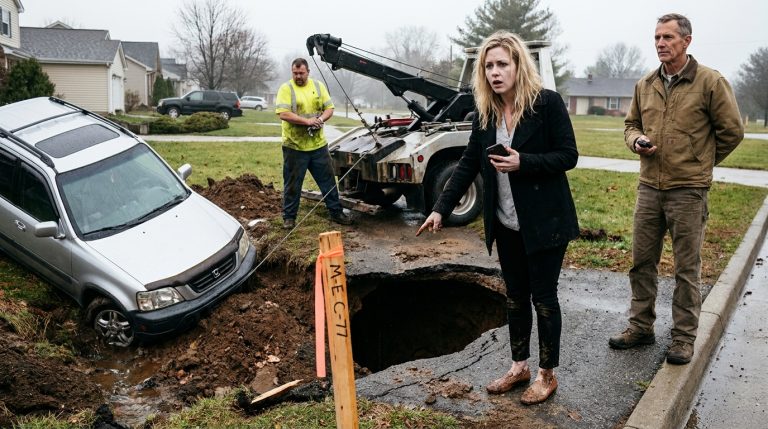
The Iron Grid of Pinewood Springs: A Novel of Suburban Survival
CHAPTER 1: THE STANDOFF ON THE GRAVEL
The scent of dry Colorado pine always carried a metallic edge when the spring wind blew hard off the foothills. I stood on the gravel driveway, my boots grinding against the small gray stones, watching the brass pressure valves of my five-hundred-gallon propane tank catch the glare of the high-altitude sun. The tank was painted forest green, tucked deep into the shadow of the cedar fence, but today it felt as exposed as an open wound.
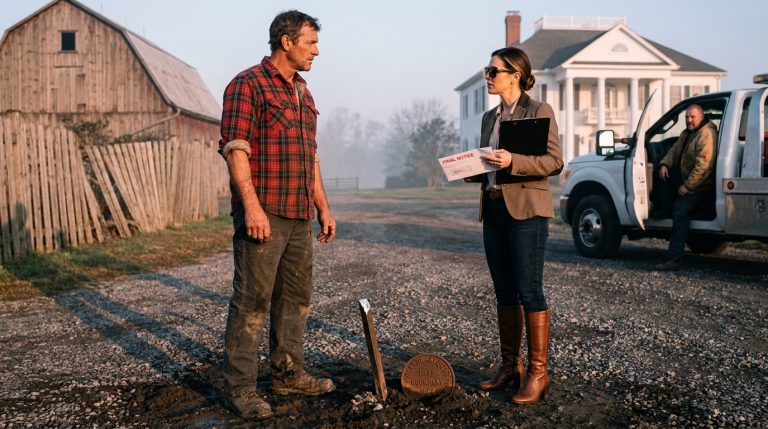
Patricia Danvers didn’t squint against the glare. She stood on the edge of my property, her polished leather flats resting exactly two inches inside the asphalt curb—the neutral zone of the public street. Her navy blazer was immaculate, free of the dust that the wind was whipping up from the empty drainage ditches. In her hands, she held a clipboard with a heavy metal clip, the silver teeth biting down on a stack of bright pink violation notices.
“It’s a matter of uniform standards, Connor,” she said, her voice dropping into that rhythmic, practiced cadence she used at the monthly meetings. “The covenants are the only thing keeping this valley from looking like an unzoned scrap yard. We cannot make exceptions for individual mechanical preferences.”
“It’s not a preference, Patricia. It’s a redundancy system,” I said. My fingers tightened around the cold steel of the adjustable wrench in my pocket. “When the line down the canyon snaps in a blizzard, the telecom node on the ridge dies in three hours. If I don’t feed it back-fed power, half this valley loses dial tone and emergency routing.”
“The utility companies have their own protocols,” she replied, her eyes tracking the service truck idling at the curb. The heavy diesel engine of the propane company’s pump rig sent a low, vibrating shudder through the dry ground. “Your technical responsibilities do not override Section Twelve. The tank has to go.”
The technician, a kid with grease-smudged knuckles and a faded cap, stepped between us. He looked at the heavy brass coupler in his hand, then back to my green tank. “Look, boss, I’m on a schedule. If I’m pumping this dry and hauling it, I need the authorization form signed. I don’t want to get caught in a neighborhood squabble.”
I looked at Patricia. Her face was a mask of polite, unyielding determination—the look of a bureaucrat who had turned the preservation of property values into a holy crusade. Behind her, parked under the shade of a dying cottonwood, her white Lexus sat polished and silent, its tinted windows hiding whatever lay inside.
“Technically,” I said, stepping closer to the fence, “the fence is six inches high to shield the safety valve from the northern wind. Your own guidelines recommend wind barriers for external vessels.”
“A fence variance requires three signatures, Connor. You have none,” she said, her finger tapping the top of her clipboard. “The board has already spoken. We’ve been very patient.”
I took a slow breath, the iron taste of the dust settling in the back of my throat. I couldn’t fight the paper trail—not yet. David had been clear about the cost of a formal injunction. I reached out, took the clipboard from her hand, and scrawled my signature across the bottom of the work order.
Patricia took the paper back, her eyes scanning the ink with a quiet, triumphant satisfaction. “Thank you for your cooperation. It’s for the good of the community.”
She turned, her flats clicking against the pavement as she walked back to her vehicle.
I turned back to the generator chassis, my chest tight with a frustration that felt like swallowed gravel. I reached down to help the technician secure the main line to the valve stem. My fingers brushed the underside of the automatic transfer switch casing—the gray metal box that governed the system’s electrical brain.
My hand stopped.
Embedded behind the rusted corner of the steel mounting plate, where no standard installer would ever place it, was a small, black plastic module. It was wired directly into the main control harness, its tiny green diagnostic light pulsing in a erratic, silent rhythm. Printed across the casing in microscopic white lettering were three words: Property of Verdant Crest Assets.
We didn’t use Verdant Crest hardware in any residential telecom circuit in Denver. In fact, I had never heard of them.
CHAPTER 2: THE FRICTION OF REMOVAL
The plastic under my fingertips was warm. It was a subtle, unnatural heat that had no business radiating from an unpowered, disconnected sheet of steel. I kept my hand flat against the underside of the transfer box, the rough, rusted metal edge biting into the palm of my work glove, while the diesel truck at the curb let out a sharp hiss of pneumatic brakes.
“Hey, boss,” the kid with the grease-smudged cap called out, his boots crunching heavy on the gravel behind me. “We’re down to the vapor barrier. You want me to lock down the main line valves before we winch the tank onto the flatbed, or are we leaving the regulator lines open?”
“Close the regulators,” I said, my voice sounding flat, swallowed instantly by the dry mountain wind. I didn’t look back at him. My eyes were locked on the narrow gap between the junction box and the cedar fence.
I slid my hand slightly to the left, my index finger tracing the wire lead that ran out of the small plastic module. It was thin—twenty-four gauge, jacketed in a high-grade, UV-resistant black polymer—and it didn’t route toward my home’s main panel. Instead, it tunneled downward, running parallel to the copper grounding rod, disappearing straight into the dry, stony Colorado dirt.
The green diagnostic light on the device gave three rapid, irregular blinks. Verdant Crest Assets. The name didn’t belong to any utility provider in the Denver basin, and it certainly wasn’t in the engineering schematics I’d filed with the county.
“Alright, she’s clear,” the kid grunted. A loud, metallic clonk echoed through the yard as he slammed the heavy iron locking collar onto the flatbed’s winch assembly. The green five-hundred-gallon tank—my security, my back-up, the only thing that guaranteed my network stayed online when the grid buckled—began to tilt. The iron skids scraped against the concrete pad I’d poured myself three years ago, a harsh, screeching protest of metal against stone that vibrated up through the soles of my work boots.
I watched the crane arm lift the tank slowly, clearing the top of the fence line. It swung toward the street like a dead weight, casting a long, sweeping shadow across my driveway. Patricia’s Lexus was gone, but the impression of her tires was still fresh in the roadside dust, two clean, dark curves in the gray grit.
“Sign-off is on the dash,” the kid said, wiping his hands on a rag that smelled of solvent and old oil. “Sorry about the hassle, man. HOAs. My sister’s got one down in Littleton. They fined her fifty bucks because her garage door was open for more than twenty minutes while she was unloading groceries.”
“Yeah,” I said, my mind elsewhere. “Thanks.”
He hopped into the cab, the diesel engine roaring as he pulled away. The heavy truck left a cloud of fine, pale dust hanging in the pine-scented air.
I waited until the sound of the engine died down the canyon road before I went back to the generator. The concrete pad looked massive now, empty and clean except for the four rusty ring-bolts anchored into the corners. I knelt down on the gravel, the sharp stones digging through my jeans, and reached back under the transfer case.
With a hard yank, I pried the plastic module off its magnetic mount. The adhesive was fresh, tacky, and smelled faintly of cheap industrial silicone. The black lead wire tautened, pulling against the ground. I reached into my pocket, pulled out my utility knife, and sliced through the thin line. The copper core inside was silver-plated—military or aerospace spec. Not standard residential grade.
I stood up, holding the warm piece of plastic in my palm, and walked toward the side of the house where the crawlspace access hatch sat half-buried behind a bank of dead juniper bushes. The wooden latch was swollen with old moisture, releasing with a dull splintering sound as I forced it open.
I crawled inside, the smell of damp earth and old cedar wrapping around me instantly. The clearance was low, barely three feet of vertical space beneath the floor joists. I pulled my flashlight from my belt and clicked it on, the bright LED beam cutting through the hanging cobwebs and illuminating the gray plastic vapor barrier that lined the ground.
I followed the path of the grounding conduit where it came through the foundation wall. The black wire I had cut outside didn’t just stop at the dirt; it was routed along the structural sill plate, running parallel to a thick, armored bundle of old telecom cables that had been laid down decades ago when the subdivision was first surveyed.
Near the main support pier, the wire entered a heavy, galvanized metal junction box that had no markings. It was bolted directly to the timber, secured with a security-head screw that required a specialized five-lobe bit. Beside the box, tucked into a rotted leather portfolio that had been shoved between the joist and the foundation wall, was a bundle of folded, yellowed blueprints.
I pulled the portfolio down, a shower of dry dirt falling onto my shoulder. I unrolled the top sheet. It wasn’t an HOA plot map. It was a county utility easement survey from 1994, marked with red grease pencil. A thick, diagonal corridor ran directly beneath the main access road of Pinewood Springs—and right through the corner of my property.
I shone the light closer, tracing the red lines. Across the easement corridor, someone had written a single note in tight, blocky handwriting: Void – Sub-surface structural instability. Do not permit.
Beneath that note, stamped in faded black ink, was a corporate logo I recognized from my morning drives down the canyon. It wasn’t the county’s seal. It was the original developer’s holding firm—a name that had dissolved into bankruptcy twenty years ago, only to have its remaining local parcels bought up by a single private entity.
My phone vibrated in my pocket, the sharp buzz startling me in the cramped, silent crawlspace. I pulled it out. It was an automated weather alert from the regional monitoring office.
Severe weather warning. Rotating supercells developing over the Front Range. High winds, heavy precipitation, and localized utility interruptions expected starting at 17:00.
I looked at the black module in my hand, its green light now dead, then down at the old survey map. The air in the crawlspace felt heavy, cold, and smelled of rising groundwater. The storm was coming, my tank was gone, and the ground beneath my feet was mapped with secrets that didn’t belong to the neighborhood.
CHAPTER 3: THE GREAT BLACKOUT
The low-frequency hum of my phone against my thigh was instantly accompanied by a deep, hollow thud that vibrated through the floor joists directly above my head. The air in the crawlspace grew thick, the temperature plunging ten degrees in a matter of seconds as the atmospheric pressure collapsed. My ears popped, a sharp pinch of pain behind my temples that always signaled a rapid Front Range cold front.
Squeezed between the dirt floor and the rough-sawn pine joists, I adjusted my grip on the yellowed blueprints. As the flashlight beam swept across the rotted leather of the portfolio, a second document slipped from the damp folds. It was a single, stiff sheet of green ledger paper, far newer than the 1994 survey. Across the top, written in a sterile, laser-printed font, were the words: Amortization Schedule: Holloway Ledger 09. Beneath the header lay columns of numbers, most of them ending in red-inked deductions, though the sheet was torn cleanly in half, leaving the final balances missing.
Before I could tuck the fragment into my pocket, the first gust of the supercell hit the valley.
The wind didn’t whistle; it roared, a freight-train sound that slammed against the exterior foundation wall next to my shoulder. The wooden access hatch behind me—already swollen and strained—slammed shut with a wet, heavy crack. The rusted steel slide bolt on the exterior must have shaken loose and dropped into the hasp.
Darkness swallowed me, save for the narrow cone of my LED flashlight. The smell of disturbed mountain loam and dry-rot filled my nose, dry and choking.
I rolled onto my stomach, my elbows dragging through the cold, powdery dirt as I began to back out of the crawlspace. The space was a tight, ribs-scraping tunnel. When my boots hit the wooden frame of the hatch, I kicked backward, expecting the swollen wood to give.
It didn’t budge. The slide bolt had dropped clean into the rusted iron eyelet outside. I was locked in.
“Stupid,” I muttered, the word deadening instantly against the exposed fiberglass insulation above me.
I didn’t panic; panic gets you stuck in three feet of clearance. I worked my hand down to my utility belt, my fingers searching past the wire cutters until they found the short, flat-bladed pry bar I used for opening telco pedestals. The metal was cold, smelling faintly of the machine oil I used to keep it from rusting.
Lying flat on my side, my cheek pressed against the damp earth, I wedged the pry bar into the seam where the hatch met the frame. The wood groaned—old, water-logged pine resisting the steel. I threw my weight against the tool. The wood splintered with a sharp, pistol-shot report, and the rusted latch outside tore free from the rotted casing.
The hatch swung open into the gray, wind-whipped light of early evening.
I scrambled out into the dirt, coughing up a mouthful of dry loam, and pulled the hatch closed behind me. The sky had turned an ugly, bruised shade of yellowish-green. Overhead, the clouds were boiling, spinning in tight, dark carpets that scraped the tops of the pine trees on the western ridge. The wind was so violent it was stripping the needles right off the branches, peppering my face with green flecks.
Across the street, the Hendersons’ patio umbrella had sheared off at the aluminum base, tumbling across the asphalt like a broken skeleton.
At exactly 18:47, the light changed.
The green sky didn’t darken—it simply died. Down the canyon, three miles south, a brilliant, blue-white flash illuminated the bellies of the clouds. It was the substation going. A split second later, the deep, mechanical rumble of the valley’s power grid cutting out rolled through the earth. The ambient hum of suburban Denver—the invisible, constant vibration of thousands of refrigerators, air conditioners, and television sets—was snuffed out.
The silence was physical. It felt like a heavy blanket dropping over the neighborhood.
I stood on my gravel driveway, my shirt soaked through with the first freezing drops of rain, watching the houses of Pinewood Springs vanish into the gloom. Beside me, my empty concrete generator pad looked like a gray tombstone in the dark. Without the propane backup, my own house was cold, dead, and quiet.
Then came the flicker.
One mile to the east, through the thrashing branches of the manicured HOA perimeter hedges, a warm, yellow glow blossomed. It grew brighter, steadier, until a sharp, rhythmic chugging sound drifted across the wet asphalt.
It was the steady, heavy thrum of a large-bore industrial diesel engine.
The HOA office was lit up like a billboard on the interstate, its light-flooded windows casting long, golden fingers across the empty, storm-swept parking lot. While the rest of us sat in the dark, watching the temperature in our living rooms begin to drop, Patricia’s empty office was humming with a thousand gallons of fuel, completely untouched by the dark.
CHAPTER 4: THE SHADOW ON THE HEDGES
The distant, rhythmic throb of the HOA’s diesel engine felt like a blunt instrument tapping against my breastbone. Standing on the gravel, water began to seep past the collar of my heavy canvas duster, tracing a freezing line down my spine. The valley was so dark that the glowing windows of the community building a mile away looked like a floating golden raft on a black sea.
I pulled my collar up, the coarse fabric scratching against my jaw, and strode toward my old Ford service truck parked under the overhang of the garage. The driver’s side door gave a stiff, protesting creak as I yanked it open, the interior immediately wrapping me in familiar smells—cold vinyl, copper wire clippings, and the faint, sweet scent of lingering utility-box grease.
I climbed inside and slammed the door, shut away from the worst of the wind. My hands were numb, the skin over my knuckles tight and pale as I fumbled with the ignition. The engine caught with a rough, iron rattle, the headlights cutting two dirty yellow paths through the driving sleet.
Before shifting into drive, I popped the glove box to grab my rugged yellow field multimeter. As I pulled the heavy plastic case out, a stiff manila envelope slid forward, catching on the latch. I reached in to tuck it back, my thumb brushing across a stamped red return address on the corner: The Blackwood Escrow, Denver CO. It was an unopened notice addressed to my neighbor, Mr. Henderson, that had been misdelivered to my box two weeks ago—one I had forgotten to hand over before the storm hit. I shoved it back into the dark compartment, clicked the glove box shut, and engaged the clutch.
The truck crawled down the gravel driveway, the tires crunching over wet shale as I rolled onto the main loop of Pinewood Springs.
Without streetlights, the subdivision had shrunk to the width of my high beams. I kept the truck in second gear, the engine whining low as I navigated the winding road. Every house I passed was a dark silhouette, chimneys pouring gray woodsmoke into the storm. I could see the dim, flickering orange glow of candles behind a few living room windows, but most were completely black. People were already huddling in their basements to escape the dropping temperatures.
At the junction of Crestline Drive, I pulled the truck onto the shoulder, leaving the engine idling.
The neighborhood’s primary telecommunications node—a green, double-doored steel cabinet that fed dial tone and low-band data to eighty homes—sat on a concrete pad right on the boundary line of the HOA office property. I grabbed my flashlight and a pair of insulated lineman’s pliers, stepping back out into the freezing sleet.
The wind nearly tore the flashlight from my grip. I forced my way through the gaps in the manicured privet hedges, my boots sinking into the saturated, pine-needle mulch.
When I reached the node cabinet, the metal doors were slick with a thin sheet of ice. I slid my key into the rusted padlock, applying pressure until the cylinder turned with a dull, crunching snap. I swung the doors open, the yellow beam of my flashlight reflecting off hundreds of neat, color-coded copper pairs punched down into the terminal blocks.
I hooked my field handset to the primary test trunk and held the receiver to my ear.
Nothing. Not even a faint carrier hiss. The remote line cards were dead. The backup batteries housed in the bottom compartment of the cabinet were cold, their digital displays blank. They had drained to zero thirty minutes after the substation failed down-canyon.
I closed the cabinet doors and clicked the padlock shut, my wet leather gloves freezing against the cold steel.
Turning toward the light, I peered through the thick stems of the privet hedge. The HOA office was barely fifty yards away across a manicured lawn that was quickly turning into a swamp. The building’s exterior security floodlights were so bright they turned the falling sleet into a curtain of silver needles.
Behind the utility enclosure at the rear of the office, the massive gray block of their diesel generator was trembling on its concrete mounting pad. A thick plume of white exhaust, smelling strongly of unburnt fuel and sulfur, rose into the dark, torn apart instantly by the gale.
I pulled my phone from my inner pocket, my thumb stiff against the wet screen, and opened the camera app. Keeping my back pressed against the thick, frozen trunk of a wild plum tree, I began recording. I zoomed in on the generator’s vibration dampeners, then panned up to the brilliant, empty interior of the administrative office where the lights blazed over empty desks, unoccupied chairs, and the quiet, dry-cleaned quiet of Patricia’s domain.
A shadow moved across the window.
I lowered the phone, my breath catching in my throat. The office was supposed to be empty; the staff had been sent home at four when the first weather warning issued. But through the glass of the side entrance, a figure in a dark, hooded rain parka was moving.
The door opened an inch, a sliver of warm air escaping into the freezing night, followed by the low, murmuring tone of a voice trying to project over the roar of the diesel engine.
I crouched lower into the shadow of the hedges, my fingers sinking into the freezing, muddy turf, and listened.
CHAPTER 5: THE WHISTLEBLOWERS LENS
The door of the HOA office scraped over a buildup of wet grit, the sharp sound cutting through the rhythmic chug of the diesel generator. I lowered my head, pressing my cheek against the cold, mud-slicked sleeve of my canvas duster. Through the tangled, skeleton-like branches of the privet hedge, the golden glare from the open doorway spilled across the swampy lawn, illuminating the driving sleet like millions of tiny, falling glass shards.
A man stepped out onto the concrete landing. He didn’t wear the neat, local uniform of Pinewood Springs. His heavy wool coat was unbuttoned, and he was holding a ruggedized, military-grade radio to his ear, his fingers gloved in thick, yellow hide.
“We’re pushing seventy-two hours on this cell,” the man said, his voice flat and transaction-oriented, carrying clearly over the wind. “If the county inspectors roll through before the concrete cures over the culvert, we’re exposed. Tell Danvers to keep the compliance pressure high on the perimeter lots. We need those boundaries clear.”
He listened for a moment, his boots shifting on the wet concrete. From my position in the mud, I could see a heavy brass key fob dangling from his coat pocket—stamped with the clean, blocky initials V.C.A.—a physical match to the marking on the plastic module I had ripped from my generator pad.
“I don’t care about his telecom backup,” the man growled into the radio, turning his back to the wind. “If Matthews tries to replant that tank, cite him under the safety hazard clause again. We just need ten more days to clear the Blackwood escrow accounts. Keep him blind.”
The radio crackled with a burst of static, and he stepped back inside, sliding the heavy glass door shut until the latch clicked.
My heart hammered against my ribs, a cold, hard rhythm. The Blackwood Escrow. The same name on the misdelivered envelope sitting in my truck’s glove box. It wasn’t just about an ugly propane tank or local aesthetics. They were systematically freezing me out—and likely others—while something far larger was being quietly buried under the main access road.
I crawled backward out of the briars, my knees sinking into the freezing slush, until I reached the solid, gravelly shoulder where my Ford was idling. The heater was blowing lukewarm, dry air against my face as I climbed back into the cab. I took a deep breath, my hands shaking slightly as I gripped the steering wheel. I couldn’t fight this in the dark anymore. I needed leverage, and I needed it on camera.
By 06:00 the next morning, the storm had passed, leaving behind a sky the color of dirty pewter and a neighborhood buried in cold, heavy silence. I sat at my kitchen table, the screen of my laptop illuminated by a single battery-powered lantern. I had already sent three emails to Melissa Porter at Channel 7, attaching the raw footage of the glowing HOA office, the blueprints of the unstable 1994 easement, and the digital scan of the Holloway Ledger 09 fragment I’d pulled from the crawlspace.
At 08:15, my phone rang. It was Janet from the office.
“Connor, I saw the files you uploaded to the shared drive,” she said, her voice tight with a mixture of worry and professional focus. “The engineering specs on that culvert under the main road don’t match the county land filings. The HOA management firm has been filing private structural waivers for years. I called Melissa. She’s already on her way down the canyon with a camera crew.”
“Are they coming here?” I asked, my thumb tracing the rough, unfinished edge of the pine table.
“Directly to your driveway,” Janet replied. “She wants the contrast, Connor. An empty, frozen sideyard next to a glowing municipal fortress. Be ready.”
I hung up, walked to the window, and looked out at the empty concrete pad where my green tank used to sit. The metal anchor bolts were already rusting, orange streaks bleeding into the gray stone like dried sweat. Beyond my fence, the neighborhood was completely dead—no power, no warmth, just the silent, white exhaust of the HOA office’s diesel generator rising like a monument to hypocrisy in the cold morning air.
I grabbed my duster, stepped out onto the gravel, and waited for the sound of the news van’s tires.
CHAPTER 6: THE VOLCANIC DOOR
The tires of the television news van crunched heavy on the frozen gravel, coming to a halt right alongside the empty concrete pad where my green propane tank had stood. I kept my hands shoved deep into the pockets of my duster, feeling the cold weight of the cut black cable and the paper fragment labeled with the ledger code.
Melissa Porter stepped out of the passenger side, her thick down jacket rustling as she adjusted her scarf against the biting wind. Behind her, a cameraman with a heavy, shoulder-mounted rig immediately began scanning the barren sideyard, the large lens panning across the rusted anchor bolts and freezing in place.
“Connor,” Melissa said, her breath fogging in the frigid air. “Janet sent over the land-use filings and the structural waivers. The contrast is unbelievable. A public-service telecommunications engineer forced to freeze, while fifty yards away, the neighborhood association runs a commercial-grade generator without a single permit. Let’s get this shot.”
“It’s worse than just a permit issue, Melissa,” I said, my teeth wanting to chatter as the raw wind whipped over the ridge. I pointed toward the thick line of privet hedges. “There’s a sinkhole risk under the main access culvert. They’re running a bypass system and hiding the engineering records. The HOA’s generator isn’t just powering their empty office—it’s maintaining a quiet, private utility loop to mask the infrastructure failure while they execute private foreclosures.”
The cameraman leaned in, catching the steam rising from my mouth. Melissa’s eyes sharpened, that professional radar tracking a local scandal that went far deeper than a simple neighborly dispute.
“Let’s walk,” she said, gesturing toward the path cutting through the hedge line. “Let’s ask Patricia Danvers why the rules only bend one way.”
We moved in an unbroken line, our boots sinking into the slush and wet mulch. The sheer volume of the diesel generator’s roar increased with every step, the dense smell of unburnt fuel and sulfur clawing at my throat. As we rounded the corner of the office building, the brilliant fluorescent lights inside glared through the double-pane windows, casting our long, dark shadows across the wet gravel path.
Melissa didn’t hesitate. She stepped onto the concrete landing, her gloved fist pounding hard against the locked glass door.
Inside, the figure in the dark parka—the man I’d seen the night before—was nowhere in sight. But at the front desk, sorting through a tall stack of certified mail envelopes, sat Patricia Danvers.
When she looked up and saw the massive lens of the camera pressed near the glass, her posture went rigid. Her jaw tightened, a visible twitch jumping in her cheek before she could smooth her expression into her customary mask of administrative indifference. She stood up slowly, smoothing the front of her navy blazer, and unlocked the door just enough to speak through a narrow crack.
“This is private community property,” Patricia said, her voice tight and trembling with a cold, controlled fury. “You are trespassing on HOA grounds during an active municipal emergency. I suggest you turn that camera off immediately.”
“Mrs. Danvers, I’m Melissa Porter with Channel Seven,” Melissa said, thrusting the microphone forward into the gap. “Why is Pinewood Springs enforcing a immediate removal of a resident’s essential propane backup system while the HOA operates an unpermitted, thousand-gallon diesel tank that is currently lighting an empty building?”
“The community office is a registered emergency shelter,” Patricia snapped, her hand clamping onto the brass latch of the door until her knuckles turned a bloodless white. “The board acted in strict accordance with Covenant Section Twelve. Any implication of selective enforcement is entirely defamatory.”
“And what about Verdant Crest Assets?” I stepped forward, pulling the small black plastic module from my duster pocket and holding it inches from her face. The green light was dead, but the stamped corporate logo was unmistakable. “Why is a private holding firm monitoring the utility boxes on our properties, Patricia? What is the Blackwood Escrow covering up under our main road?”
Patricia’s volcanic composure cracked. Her eyes darted from the black plastic module to the red recording light on the camera, her chest rising and falling in rapid, shallow breaths.
“You have no idea what you are interfering with, Connor,” she whispered, her voice dropping to a dangerous, venomous hiss that the microphone barely caught over the generator’s roar. “You’re a line-repairman. Stick to fixing wires. If this broadcast airs, your lawyer won’t be able to save your house from the non-compliance liens we will file by noon.”
She slammed the door shut, the heavy latch clicking home with a definitive, hollow sound. Inside, she yanked the heavy vertical blinds shut, cutting off the light and burying her office in a cold, white wall of plastic slats.
Melissa turned back to the camera, her face flush with the thrill of a cornered bureaucrat. “Did you get that? Every single word.”
“Got it,” the cameraman muttered, adjusting his focus on the closed blinds. “The twitch on her face when he showed the black box was priceless.”
As we walked back toward my driveway, the cold rain began to glaze the gravel with a treacherous sheet of clear ice. The storm had passed, but the real pressure was just beginning to mount. My phone vibrated—a single text from an unknown local number.
Check your driveway. You aren’t the only one she’s squeezing.
CHAPTER 7: THE CORRUPTED DRIVE
My thumb hovered over the glowing screen of my phone, the single text message from the unknown sender hanging in the center of the display: Check your driveway. You aren’t the only one she’s squeezing.
Beside me, Melissa Porter was already settling into the passenger seat of the channel seven utility van, the heavy door slamming shut with a dull, insulated thunk. The cameraman gave me a brief, tight nod through the glass before the vehicle began its slow, cautious crawl down my ice-glazed gravel driveway, its tires slipping slightly over the frozen shale before finding traction on the main asphalt of Pinewood Springs.
I turned back toward my old Ford service truck. The wind had dropped to a bitter, whispering draft that smelled of raw pine and coal smoke, but the rain had left a stiff, clear glaze over every exposed surface. As I stepped toward the driver’s side, my boot slipped on a patch of slick road salt. I caught myself on the cold iron of the truck’s side mirror.
That was when I saw it.
Tucked tightly under the frozen rubber of my windshield wiper was a small, thick ziplock bag. Inside was a ruggedized, silver-bodied USB flash drive and a single, folded slip of paper. The ice on the glass had partially sealed the plastic in place, forcing me to peel it away with a sharp, crackling rip that left frozen residue on my bare knuckles.
I climbed inside the cab, the cold vinyl seat stiff beneath me, and slammed the heavy metal door. I unfolded the slip of paper. Written in the same meticulous, pencil-thin ledger style as the sheet I’d recovered from the crawlspace was a single line:
Frank Patton’s basement. 14:00. Use the rear mudroom door. Don’t leave your vehicle in his drive.
I stared at the name. Frank Patton. The retired accountant who had cleared his throat at the last board meeting and quietly said I had a point before Patricia shut him down. He had been on the board for six years before resigning without explanation last autumn.
I turned the silver flash drive over in my hand. Engraved on the side of its aluminum casing was a serial number: HL-09-SEC. My chest tightened. Holloway Ledger 09.
I slotted the key into the Ford’s ignition, the starter letting out a brief, frozen shriek before the heavy V8 engine caught, its vibration rattling the tools in the side bins. I shifted into reverse, backed slowly down the driveway, and navigated the icy loops of the neighborhood toward the older section of Pinewood Springs where the trees were thicker and the houses sat on wider, unpaved lots.
Frank’s house was a modest, gray-shingled ranch with a severely weathered shake roof, tucked behind a screen of overgrown blue spruce. I parked three properties down, letting my truck sit in the deep shadow of an abandoned county utility easement.
Walking through the slush, I slipped through the gap in Frank’s rotting split-rail fence. The mudroom door at the back of his house was unlocked, the brass latch giving way with a soft, oiled click.
“Connor,” a quiet, dry voice called out from the dark interior before I could even clear the threshold. “Close it quick. The wind is stripping what little heat I’ve got left.”
Frank Patton stood at the top of a narrow flight of wooden basement stairs. He was wearing an old, oil-stained insulated vest over a flannel shirt, his thick fingers wrapped around a steaming ceramic mug. His face was deeply lined, his gray eyes steady behind wire-rimmed spectacles.
I stepped inside and eased the door shut, the smell of dust, old newsprint, and gun oil rising from the basement stairwell. “You left this on my windshield, Frank?”
“I did,” he said, turning to walk down the creaking steps. “Because if I kept it in my house another week, the management company’s lawyers would have found a way to seize my property under the emergency maintenance lien clause. They’ve already done it to three families on the lower ridge.”
I followed him down into the concrete basement. A single, low-wattage emergency lamp was plugged into a small portable battery pack on his workbench, casting long, sharp shadows across neat rows of vintage hand tools. In the center of the wooden bench sat a ruggedized laptop, its screen dark.
“That drive contains the complete mirrored backups of the HOA’s monthly financial ledgers from the last three years,” Frank said, gesturing for me to sit on a metal stool. “I was the treasurer until I started asking why our maintenance reserves were being routed through an account held by Verdant Crest Assets. The next day, Patricia presented me with a retroactive violation notice for a structural defect in my foundation. They threatened a ten-thousand-dollar fine and an immediate foreclosure filing if I didn’t resign.”
I pulled the silver drive from my pocket and slid it across the scarred timber of the workbench toward the laptop. “The news crew was just here, Frank. Patricia is panicking. She threatened me with liens by noon.”
“She’s not panicking because of the camera, Connor,” Frank said, his finger tapping the cold casing of the laptop. “She’s panicking because the storm exposed the culvert bypass she’s been paying Holloway’s firm to hide. Once you plug that drive in, you’re going to see where the money actually went.”
I reached out, my fingers cold against the silver metal, and slotted the drive into the USB port. The screen flickered to life, its blue light reflecting off the rusted iron surface of a bench vice behind the computer. A single folder directory opened, its files labeled in neat, chronological order.
My finger pressed the trackpad, selecting the folder marked The Blackwood Escrow.
CHAPTER 8: THE LEDGER CRACK
The mechanical drive inside the ruggedized laptop gave a high-pitched, metallic whine as the folder directory initialized. The screen flickered, casting a stark, pale blue light across Frank’s weather-beaten face and the steel jaws of the bench vice behind the computer. On the screen, a cascade of encrypted spreadsheet files unrolled like cold ribbon.
“Look at the timestamp on the transaction headers,” Frank muttered, his rough hand coming down onto the dusty timber of the workbench. He leaned in closer, his spectacles catching the cold blue glare of the monitor. “They didn’t start routing these funds after the storm hit. This has been running in a continuous cycle for twenty-four months.”
My finger dragged across the trackpad, tracing the vertical columns of the digital ledger. The entry names were repetitive, masked under standard operational labels like Sub-surface Drainage Mitigation and Structural Easement Maintenance. But the recipient account numbers didn’t belong to any local concrete contractors or municipal repair crews. Every single wire transfer—forty thousand dollars at a time, totaling over two hundred thousand—was directed to an offshore routing node labeled Verdant Crest Assets.
“It’s a decoy,” I said, my voice barely a whisper in the quiet basement. “The sinkhole. Patricia’s been using the drainage issue under the main culvert as a cover story. She’s telling the board that the money is going toward secret repairs to prevent a catastrophic county shutdown.”
“But the repairs don’t exist,” Frank said, his thumb brushing his dry lip. “The county records I kept from my time as treasurer show no active engineering permits for that stretch of road. She’s paying off a single inspector to keep the warning flags off the county GIS map.”
“Because if the county steps in and declares the access road structurally compromised, the entire subdivision goes into emergency administrative receivership,” I realized, the cold logic clicking together in my mind. “The properties would be legally flagged as uninhabitable. Property values would tank to zero overnight.”
“And that’s where the escrow accounts come in,” Frank added, pointing a thick finger at the bottom sub-directory labeled The Blackwood Escrow. “Look at the foreclosed lot numbers. Seventeen, thirty-four, forty-two. All of them situated directly over the easement corridor. All of them pushed into foreclosure by the management company for failure to pay arbitrary compliance fines.”
I double-clicked the first PDF file in the sub-directory. It wasn’t a standard foreclosure notice. It was a structured acquisition portfolio. The document detailed how the equity from those foreclosed properties was being quietly consolidated and transferred directly to Verdant Crest Assets under a master liquidation plan.
The sinkhole wasn’t just a physical hazard; it was a financial wedge. By selectively enforcing minor, impossible covenants—like my propane tank or Frank’s foundation—they were creating a paper trail of non-compliance. Once the fines piled high enough, the management company used their priority lien status to force the homeowners out, absorbing the land into their private portfolio before the county ever discovered the rotting infrastructure below.
“They’re draining the community’s equity from both ends,” I said, my chest tightening. “They’re stealing the reserve funds to pay off the inspector and fund their own accounts, while using the threat of the sinkhole to squeeze the vulnerable properties into foreclosure.”
“But they need total control of the board to finalize the transfer of the common area tracts,” Frank said. His gray eyes met mine, cold and dead-serious. “And the special election is this Saturday. If Patricia retains her seat, the remaining escrow contracts close automatically.”
Suddenly, the basement stairs let out a sharp, wooden creak.
I froze, my hand hovering over the trackpad. Frank’s head snapped toward the shadow of the doorway, his arm instinctively reaching toward the heavy iron wrench resting on the edge of the workbench.
The silence stretched, long and thin, until the soft, wet sound of a dog’s paws padding across the mudroom floor above broke the tension. We both let out a slow, ragged breath, the iron smell of gun oil and cold concrete filling the space between us.
“We don’t have until Saturday,” I said, pulling the silver flash drive from the slot. “The television segment airs tonight at six. Once that hits the airwaves, Patricia is going to move to accelerate the lien filings. We have to bring this entire ledger to the community center before she can lock the vault.”
CHAPTER 9: THE STANDINGROOM SIEGE
The small metal drive felt cold and sharp inside the palm of my hand as I yanked it out of the laptop’s port, the metal connector scraping against the plastic slot with a faint, dry click. My heart was still slamming a hard cadence against my ribs. I turned toward Frank Patton, who was already blowing out the single emergency battery lamp, plunging the basement back into a dim, shadow-streaked twilight.
“Let’s move,” Frank muttered, his heavy work boots hitting the wooden stairs with a steady, rhythmic creak. “The community center doors unlock in fifteen minutes. If we aren’t there to present this before she calls the meeting to order, she’ll lock the voting rolls.”
I climbed the narrow steps behind him, my boots scraping the dry pine treads. The scent of motor oil and cold loam faded, replaced instantly by the damp mudroom air and the smell of melting slush on the porch. We didn’t talk. We moved out into the biting Colorado air, our boots crunching down on the gravel shoulder where the melting ice had left a slick, grey porridge. The sky was still the color of wet lead, the low clouds hanging so close to the pine ridges that the entire valley felt like a closed box.
We didn’t take my truck to the community center. We walked the half-mile shortcut through the raw timber easement, our coats brushing the low, ice-crusted pine boughs. The physical strain of the walk kept the cold from settling in, our breaths rising in thick, rhythmic plumes of steam that dissipated against the dark green needles.
When we broke through the trees at the edge of the community center parking lot, the sheer volume of vehicles parked along the road told the story.
The lot was choked with cars—some parked half-on, half-off the frozen grass of the shoulders. Over a hundred residents were already filing through the double glass doors of the low-slung, cedar-sided building. The hum of their collective voices drifted across the wet asphalt, a low, vibrating growl of local frustration that had been building since the first day of the blackout.
Inside, the scuffed linoleum floor was wet with tracked-in grey slush. The air was thick, smelling of damp wool, cheap styrofoam coffee cups, and the dry, metallic heat of the building’s forced-air system. Folding chairs had been set out in neat, uniform rows, but they were already completely filled. Residents stood three-deep along the cinderblock walls, their arms crossed, their faces hardened by a week in the dark.
At the far end of the gymnasium, behind a long folding table, sat Patricia Danvers.
She had her navy blazer zipped to the throat, her pearl earrings catching the harsh glare of the overhead fluorescent tubes. Beside her sat Marcus Holloway, the owner of the management company. His expensive grey wool suit looked out of place against the flannel and canvas jackets of the crowd, his fingers tapping a erratic pattern on a sleek leather portfolio.
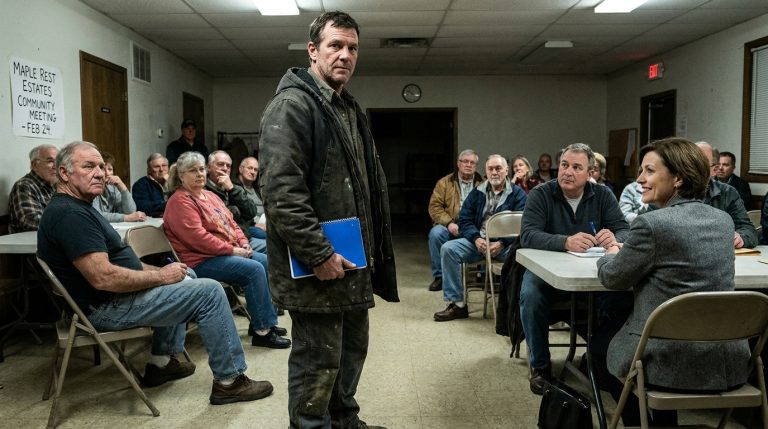
Patricia tapped the microphone, the high-pitched feedback squealing through the gym and causing the crowd to wince. “Please, if everyone could take their seats. We are initiating the special session under emergency covenant protocols. Only registered property owners with accounts in good standing may speak.”
“We’re all in good standing, Patricia!” a voice yelled from the back—it was Henderson, his face red, his hand clutching a crumpled piece of paper that looked exactly like the escrow notices I’d seen on the ledger. “Until your management company invents another sixty-dollar fine to freeze our voting rights!”
A murmur of angry agreement rippled through the standing crowd.
I stepped through the middle aisle, my heavy duster dragging slightly against the backs of the folding chairs. Frank was right behind me, his shoulder acting as a wedge to clear a path through the huddle of bodies.
“The rolls are frozen, Connor,” Patricia said, her eyes locking onto me as I cleared the third row. Her voice was steady, but her hand was gripping the edge of the table so hard her polished nails were turning a bloodless white. “You are currently in active violation of Section Twelve. Your standing has been suspended pending formal review.”
“The violation is a lie, Patricia,” I said, my voice carrying clearly through the gym without the aid of her microphone. I reached the front of the room, my boots leaving two dark, wet prints on the linoleum. I pulled the silver flash drive from my pocket and held it high enough for the first five rows to see. “And this drive holds the reason why.”
Marcus Holloway stood up, his leather portfolio sliding onto the table. “This meeting is out of order. Security, please escort Mr. Matthews—”
“There is no security, Holloway,” Frank Patton’s dry, raspy voice cut through the room as he stepped up beside me. “And there’s no more running the ledger under the table. This drive contains the complete mirrored transaction reports of Holloway Ledger 09 and the master acquisition records for the Blackwood Escrow.”
The room went dead silent. The only sound was the low, mechanical rattle of the heater vents overhead.
Patricia’s face didn’t just pale—it collapsed. The polished, unshakeable facade she had maintained for two years in Pinewood Springs evaporated, leaving her looking small, tired, and cornered behind her microphone.
“We have the wire transfers,” I said, leaning my hands flat on the folding table, feeling the cheap wood grain flex under my weight. I looked directly into her eyes, seeing the tiny, frantic twitch in her left eyelid. “We have the list of properties targeted for forced foreclosure to cover the sinkhole repair funds you embezzled. It’s over.”
Frank stepped toward the podium, reaching out to slide the silver drive directly into the presentation projector’s input block on the side of the stage. The massive, fabric screen on the back wall flickered, and the first spreadsheet unrolled in giant, cold blue characters across the gym.
CHAPTER 10: THE IRON BALANCE
The cold blue glare of the projector screen cut through the stale air of the gymnasium, casting a grid of long, pale shadows across the scuffed linoleum. In the stark light, the first columns of Holloway Ledger 09 stood five feet tall on the white fabric, the numbers showing a direct pipeline of cash flowing from the community’s reserve accounts straight into Verdant Crest Assets.
For three seconds, the room remained absolutely silent, the only sound the high-pitched hum of the projector’s cooling fan.
Then, the gym erupted.
“That’s my lot number,” a voice roared from the back. It was Henderson, his heavy wool sleeve trembling as he pointed a finger at the screen. “Lot Forty-Two. You flagged me for an unapproved woodshed, ran up five thousand dollars in fines, and now my title is sitting in that Blackwood Escrow folder?”
Marcus Holloway didn’t answer. His face had gone the color of skim milk. He reached down with one gloved hand, his fingers hooking the edge of his leather portfolio, and made a sudden, quiet step toward the side exit.
But Frank Patton was already there.
Frank didn’t raise his voice. He simply leaned his heavy, flannel-clad shoulder against the push-bar of the steel fire door, his boots planted firm on the wet floor. “You’ll want to stay for the audit, Marcus. The sheriff’s deputy down-canyon just received the digital mirror of this drive. Sleet’s clearing, and they’ll be climbing the pass in twenty minutes.”
Beside me, Patricia Danvers sat completely motionless behind the folding table. The mic in front of her caught the shallow, ragged rattle of her breathing, projecting it through the gym’s speakers like a dying engine. The legal snare she had built out of fine print and selective enforcement had snapped shut, but it wasn’t on her terms. Under Section Eighteen of the state association bylaws—the very bylaws she had used to police the height of my fence—any board officer executing transactions with a non-disclosed personal interest was held personally liable for the full sum of the common assets.
“We need a motion,” Frank called out from the exit door, his voice flat, steady, and unyielding. “An immediate floor vote to suspend all covenant enforcement and strip the current board of administrative authority pending county receivership.”
“I’ll second that,” Henderson yelled.
A sea of gloved and bare hands went up in the cold, crowded room. The vote wasn’t a landslide; it was a total collapse. I watched Patricia’s hand slowly drop from the edge of the microphone, her fingers trailing across the laminate wood grain of the table before curling into her lap. Her reign over Pinewood Springs had run dry, and the hypocrisy that had kept her lights burning while the valley froze was laid bare on the wall.
By early June, the dry mountain wind had stripped the last of the winter grit from the roadsides, replacing the smell of sulfur and coal smoke with the warm, clean scent of yellow pine and wild sage.
The concrete pad in my sideyard was no longer empty.
The heavy forest-green five-hundred-gallon tank sat bolted back into its original steel ring-anchors. Beside it, the technician from the gas company was kneeling in the gravel, his grease-smudged cap pushed back on his head as he worked a heavy iron pipe wrench. I stood over him, holding a small brass pressure regulator and a roll of white Teflon thread tape.
“I’ll tell you one thing, Connor,” he grunted, muscle straining as he tightened the primary supply valve. “I’ve been hauling fuel in these mountains for fifteen years, and I’ve never seen a community vote unanimously to expedite a propane installation before. You got friends in high places?”
“Just neighbors who like to stay warm,” I said, handing him the regulator.
I knelt down on the dry stones, the sun baking the back of my neck, and opened the gray steel housing of my generator’s transfer switch. I took a wire brush and carefully cleaned the bracket where the Verdant Crest monitoring module had once been taped. With a steady hand, I spliced the military-grade silver lead back into my own residential panel wires, securing the connection with a thick, insulated wire nut and wrapping it in black vulcanized tape.
The physical act of repairing the circuit felt like a quiet restoration of the natural order—not just for my home, but for the entire slope. Patricia’s house on the ridge had a new “For Sale” sign planted in the dry dirt, its red paint already fading under the high-altitude sun. Her condo downtown was a quiet, anonymous concrete box, far away from the valley she had tried to control.
“Alright, turn her on,” the technician called out, stepping back from the tank.
I reached into the transfer switch housing and flipped the heavy black manual breaker.
The generator let out a brief, brassy cough as the starter engaged, then settled into a low, quiet, rhythmic hum that was barely audible over the wind rustling the wild plum bushes. It was a clean, steady vibration that traveled through the soles of my boots and died in the dry earth below.
I closed the steel door of the panel, clicked the padlocked latch shut, and stood up to look down the valley. The road was still dusty, the ditches still rough, but the tension that had hung over Pinewood Springs for years had lifted with the winter ice. There were no more shadow markers on the properties. There was only the quiet, shared work of keeping the lines open.