The Iron Ledger: A Legacy Carved in Dust and Red Ink
CHAPTER 1: THE COLD THRESHOLD
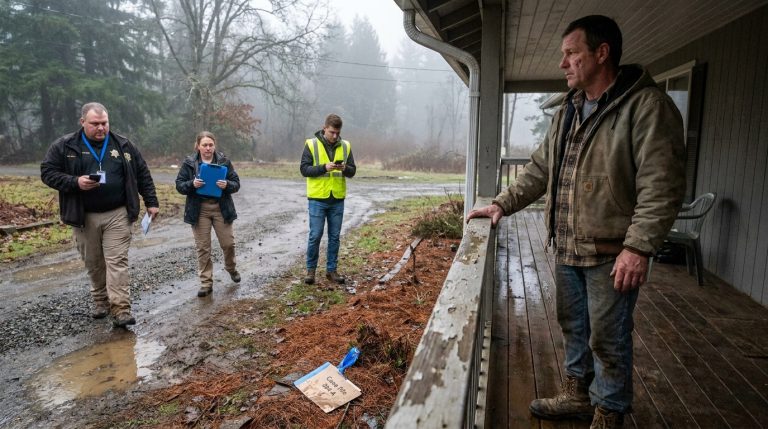
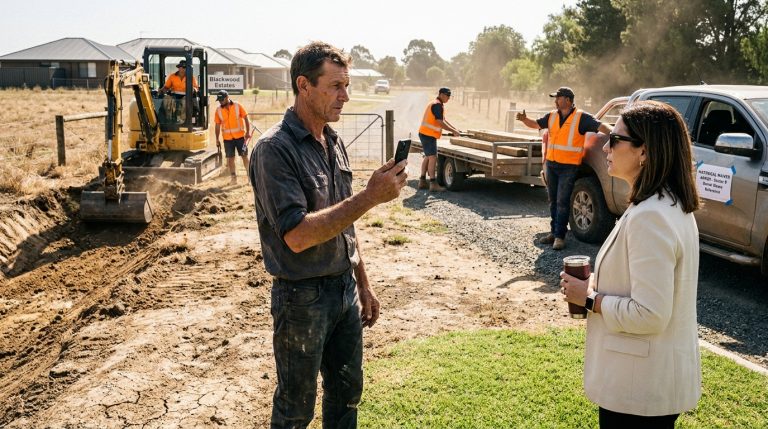
The screwdriver’s flathead scraped against the brass faceplate with a dry, metallic screech that set my teeth on edge. Melissa Hart stood a yard back on the gravel, her clipboard clutched to her chest like a shield of cheap wood and paper. Beside her, the two neighborhood safety volunteers held their phones steady, the plastic lenses tracking every micro-movement of the locksmith’s hands. The air smelled of dry earth, exhaust fumes, and the sharp, hot scent of oxidized iron from the ancient deadbolt.
“Halfway there,” the locksmith muttered. His voice was low, strained with the discomfort of being caught between a hostile homeowner and a woman with a laminated badge.
“Proceed,” Melissa said. Her voice carried that practiced, bright veneer used by people who believe a smile can sanitize a theft. “We are simply securing the asset, as authorized by the board.”
I didn’t move from the threshold. My boots pressed against the worn oak sill, feeling the slight vibration of the lock cylinder shifting inside the wood. “This property is in probate,” I said, keeping my tone as dry as the gravel under Melissa’s heels. “The letters of appointment are on the counter inside. If you turn that screw another quarter-turn, you’re crossing a line your insurance won’t cover.”
The locksmith hesitated, his wrist locking. He glanced over his shoulder, his eyes scanning the yard, landing on the rusted pump jack at the edge of June’s garden. “Ma’am,” he began, looking at Melissa, “she says she’s got the court papers.”
“We have the management advisory,” Gavin Reed stepped forward, his pressed polo shirt spotless despite the dust rising from the driveway. He tapped a finger against a blue folder. “The transition clause is clear, Mr. Vance. The estate has defaulted on the administrative declaration. Proceed.”
But the heavy, rhythmic crunch of tires on gravel cut through the argument. A battered sedan pulled up behind the locksmith’s van, kicking up a small cloud of grey dust. A man in a faded sports coat stepped out, squinting against the harsh glare of the morning sun. He didn’t look like an officer of the court; he looked like a man who spent his life climbing stairs to deliver bad news.
He walked straight up the path, ignoring Melissa’s welcoming tilt of the head, and stopped at the third step. “Melissa Hart?”
“Yes?” The smile on her face didn’t fade—it crystallized.
The man dropped a thick, rubber-banded packet of legal-sized paper directly onto her clipboard. “You’ve been served. Temporary restraining order, signed by Judge Myers. No entry, no lock changes, no interference with the administrator.”
The silence that followed was absolute, broken only by the slow, indifferent tick of the grandfather clock through the open screen door behind me. Melissa’s eyes dropped to the court stamp. The bright, artificial light in her expression extinguished instantly, like a breaker flipping in a dark basement. Her throat twitched.
Gavin leaned over her shoulder, his eyes darting across the text, his posture shrinking by three inches. The two volunteers slowly lowered their phones, the red recording lights suddenly looking like small, useless wounds.
The locksmith didn’t wait for an explanation. He slid his screwdriver back into his canvas belt, picked up his tool bag with a heavy clatter, and backed down the steps. “Work’s done,” he said to the air.
As Melissa stood frozen, her fingers crushing the edge of the paper so hard the white stock buckled, my eyes drifted down to the dry gravel where the locksmith had been working. A yellow slip of carbon paper—a duplicate of the HOA’s work order—lay fluttering in the dry wind near Melissa’s shoe. On the bottom corner, printed in faded purple ink, was a hand-written billing code: Charge to: Vanguard – Parcel 409-B.
My chest tightened. Aunt June’s parcel was 409-A.
CHAPTER 2: AFTERMATH ON GRAVEL
My boot remained pressed against the dry pine needles and loose stones at the edge of the porch, the weight of my heel anchoring me as the dust from the departing vehicles slowly drifted toward the treeline. The sharp scent of raw diesel and heat-stressed rubber hung in the humid air, refusing to dissipate. I kept my eyes fixed on that slip of yellow carbon paper. It fluttered, its torn edge catching on a jagged piece of gray basalt near Melissa’s retreating tire tracks, vibrating like a dry leaf before the wind could claim it entirely.
I stepped down from the porch. The wooden boards groaned beneath my weight—a low, familiar friction that June had never bothered to oil. I reached down, my fingers brushing the grit on the gravel as I pinched the thin paper. It felt cheap, waxy to the touch, and smudged with a greasy thumbprint near the bottom corner.
Charge to: Vanguard – Parcel 409-B.
There was no mistake. The handwriting was hasty, scrawled in the purple ink of a ballpoint pen running dry, but the block letters were heavy enough to leave a deep indentation in the paper. Parcel 409-B was the adjacent fifteen-acre tract, a dense, overgrown stretch of loblolly pines and clay gullies that shared a boundary line with June’s property. The land belonged to a developer whose permits had been stalled in county planning for eighteen months. Why Melissa Hart’s HOA-authorized locksmith was billing a security rekey to a private corporate account on a neighboring parcel was a question that didn’t fit the simple narrative of a neighborhood boundary dispute.
“They won’t stay back for long,” a voice said from the road.
I didn’t startle. I folded the yellow slip, sliding it deep into the pocket of my canvas coat where it pressed flat against the legal packet the process server had left behind. I turned slowly.
Caleb Vance stood by the open side door of his locksmith van, slowly wiping a greasy flathead screwdriver with a rag that smelled of mineral spirits and old oil. His face was weathered, his skin mapped with deep lines from working under the flat glare of the county sun. He wasn’t looking at me; his eyes were fixed on the road where Gavin Reed’s clean sedan had disappeared.
“Melissa’s got a memory like a rusted vice,” Caleb said, tossing the screwdriver into a plastic tray. The metallic clang echoed off the side of June’s barn. “She doesn’t let go of a bone once she’s got her teeth in it. That work order… she didn’t get that from the board. She brought it to my office herself on Saturday morning, bypassin’ the online portal.”
“Why did you take the job, Caleb?” I asked, my voice flat, holding the steady, unyielding rhythm of June’s grandfather clock.
He paused, his hand hovering over a set of brass pins. He looked up, his eyes narrow beneath his stained cap. “My shop’s had the Maplerest service contract since ninety-eight. If I don’t show up when the president calls, Gavin Reed finds a national franchise to take my spot. But I don’t do illegal evictions. When your process server showed up with that judge’s signature, that was my exit ramp.” He stepped into the driver’s seat and pulled the sliding door shut with a heavy, grinding slide of steel on steel. “Check your fences,” he added through the open window. “The surveyor crew for Vanguard was out on 409-B last Thursday. They were putting down orange flagging right up against June’s old well-house.”
The van started with a smoky cough, the tires spitting a few loose stones into the dry grass as he backed out of the drive.
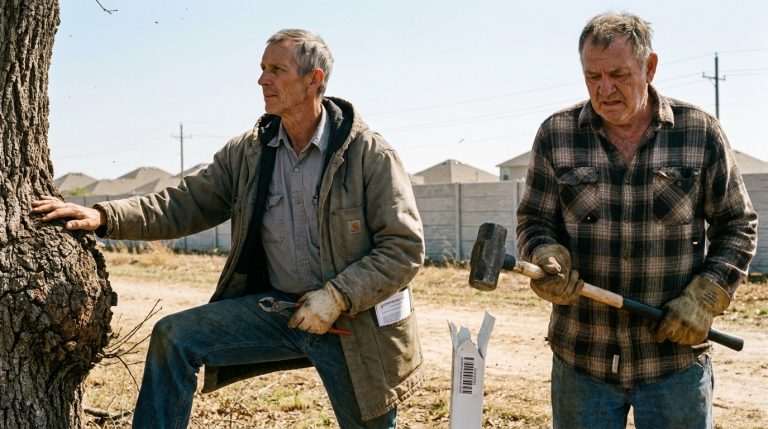
I stood alone in the driveway, the silence of the farm settling back down around me like dust. I walked toward the old well-house, the dry grass crunching beneath my boots with a sound like tearing paper. The structure was small, built of hand-laid fieldstone and topped with a cedar-shingle roof that had grown a thick velvet of green moss. The iron door latch was red with rust, the scale flaking off in my palm as I touched it.
Beyond the well-house, the rusty barbed-wire fence that marked the eastern boundary of June’s land sat submerged in a tangle of wild blackberry briars. On the other side, deep in the shadows of the Vanguard pines, a fresh wooden stake stood driven into the red clay. A strip of neon orange flagging tape danced in the hot breeze, its surface clean and free of dirt.
They hadn’t just surveyed the line. They had placed the stake ten feet inside the briars—well onto June’s side of the ditch.
I pulled my phone out of my pocket, the screen glare harsh in the midday sun. I took a single, high-contrast photograph of the stake, ensuring the rusted wire of our actual fence was visible in the foreground. My hand was steady, but the knot in my stomach was tightening.
A shadow moved near the corner of the barn.
I didn’t turn my head, keeping the phone raised as if still checking the image. Through the reflection of the glass, I saw Mrs. Gable, the neighbor whose small cottage sat just beyond the southern turn of the gravel road. She was standing by her mailbox, her faded floral apron stark against the dusty gray of the gravel. She wasn’t holding any mail. Her hands were tucked into her pockets, her head tilted toward me in a silent, cautious gesture.
She didn’t wave. She didn’t call out. But as I began to walk slowly back toward the house, she stepped back into the shadow of her porch, leaving the mailbox flag down.
Inside the kitchen, the grandfather clock kept its dry, mechanical count. I cleared a space on the wooden table, pushing aside June’s old ceramic salt cellars to lay out the timeline. I took the yellow locksmith slip from my pocket, smoothing out the creases until it lay flat next to the court-stamped TRO.
The ink was dry, but the implication was wet and spreading.
I picked up my pen, my fingers tracing the cold metal of the barrel. Melissa wasn’t trying to absorb this property to protect home values or community standards. She was clearing a path for Vanguard. And June’s farmhouse was sitting directly on the line they needed to cross.
CHAPTER 3: THE PAPER ROAD
My fingers remained anchored to the cold metal of the pen, the yellow duplicate slip resting on the kitchen table alongside the court-stamped papers. The grandfather clock kept its slow, dry mechanical count, its pendulum cutting through the stillness of June’s house. If Vanguard’s survey stake had crossed the fence line, and Melissa’s hand-written work order was billed to their parcel, the answer wasn’t going to crawl out of the dry grass. It was locked inside the county records office, buried in decades of ink and plat maps.
I folded the papers, sliding them back into my canvas pocket. The heavy key to my old pickup felt cold as I pulled it from the counter hook. Outside, the midday heat hit like a physical weight, baking the scent of wild onions and dry pine needles out of the red dirt. The truck engine caught with a throaty, metallic rattle, the vibration hummed through the worn steering wheel as I backed down the gravel drive, watching the dust swell in my rearview mirror until it swallowed the front porch.
The drive into town was eight miles of desaturated asphalt, the tires singing a low, dry song against the heat-softened tar. Every mile marker was a reminder of how June’s land had been surrounded. On the left, the manicured, stucco entrance to Maplerest stood like a garrison, its white-painted gates gleaming under the flat glare of the sun. On the right, the overgrown pine-break of Parcel 409-B began, marked by a faded corporate sign post with peeled vinyl lettering: Vanguard Environmental – Authorized Personnel Only.
I didn’t stop. I kept my foot steady on the pedal until the pines gave way to the low brick facades of the county seat.
The county records building was a squat, limestone relic that smelled of damp basement and ammonia. My boots clicked against the worn linoleum as I walked past the empty security desk toward the back, where the deed registry sat under flickering fluorescent tubes. Behind the high counter, a clerk with thick glasses and a faded cardigan didn’t look up from her monitor. Her nametag read Martha.
“Need a deed search?” she asked, her voice as flat and dry as the files behind her.
“June Keller’s estate,” I said. “And the adjacent tract, Parcel 409-B.”
She gestured toward a row of heavy, iron-bound ledger books and two ancient computer terminals with green-screen monitors. “The digital indexing only goes back to ninety-five. Anything older is in the stacks. Book and page are on the card index.”
It took forty minutes of sorting through yellowed card stock to find the coordinates. The dust from the paper boxes clung to my skin, smelling of old wood and dead mold. I hauled three massive, leather-bound books to the scarred oak table, their rusted iron hinges groaning as I forced them open.
I started with June’s property. The original land patent from 1922 was clean, transferred down through three generations of Kellers with clear boundaries. But as I flipped toward the recent entries from the last five years, the paper changed. The thick, high-rag stock gave way to cheap, photocopied paper bound with heavy metal staples.
There was a deed rider filed in 2021.
I leaned in closer, my eyes tracing the small, dense legal print. The document was titled Covenant Annexation Rider. It claimed that June Keller had voluntarily petitioned to have her parcel annexed into the Maplerest Homeowners Association’s maintenance district, submitting her land to their architectural control. Below the text was a signature line.
June Keller.
The ink of the signature was dark, almost blue, but the stroke was wrong. June had suffered from severe arthritis in her right hand during her final years; her actual signature on the 2023 trust documents was a series of shaky, fragmented lines. This signature was smooth, fluid, and continuous, written with the bold confidence of someone who didn’t have to struggle to hold a pen.
More importantly, the notary stamp at the bottom of the page didn’t belong to a neutral legal witness. It belonged to Gavin Reed, Public Notary, State of Maryland.
“Can I help you find something?”
The voice came from behind me, quiet and sharp as a razor.
I didn’t turn around immediately. I slowly laid my hand flat over the page, feeling the texture of the staples beneath my palm. Only then did I look back. Gavin Reed was standing three feet away, his leather planner tucked under his arm, his eyes locked onto the open ledger.
CHAPTER 4: THE SILENT SIEGE
My muscles locked under my canvas coat, but I didn’t pull my hand back from the ledger. The texture of the cheap photocopied paper was rough under my palm, the metal staples biting slightly into the pad of my index finger. The air in the record stacks felt stagnant, thick with the smell of moldering paper and the chemical tang of the old copier fluid.
“I’m just reviewing the public filings,” I said. My voice was level, matching the slow, dry rhythm of the ceiling fan spinning overhead. “My aunt’s property has some interesting riders.”
Gavin didn’t step closer. He stood near the edge of the oak table, his fingers tapping a rhythmic, hollow pattern against the leather cover of his planner. His clean, white polo shirt looked stark against the desaturated gray limestone of the basement walls, but his shoulder was tense, a tiny muscle twitching near his collarbone. “Public records are open to everyone,” he said, his tone carrying the polite, empty tone of a corporate representative. “But looking backward doesn’t change the present. The association’s filing is recorded, stamped, and active.”
“Only if the signature is genuine, Gavin,” I replied.
I slowly turned the ledger book so it faced him, pointing to the smooth, unhesitating strokes of June Keller’s name. “My aunt couldn’t sign a grocery receipt without her wrist locking up. But this line is as clean as a fresh survey. And your notary stamp is right beneath it.”
Gavin’s gaze dropped to the page. For a fraction of a second, his eyes widened, the dark pupils dilating slightly in the dim, green-tinted light of the terminal screen behind us. Then, his face went perfectly smooth, like a mask of dry clay. He took a slow breath, his chest expanding under his ironed shirt. “I don’t verify medical histories,” he said quietly. “I verify identities. The woman who sat across from my desk had the ID, the deed, and the intent. If you want to challenge a five-year-old filing in probate court, you’re welcome to spend the estate’s remaining liquidity on billable hours.”
He checked his watch, a heavy, stainless-steel piece that caught the yellow light of the overhead tube. “We have a board meeting at six. If you’ll excuse me, I have copies to pull.”
He reached past me, his arm brushing my shoulder as he picked up a thin file jacket from the counter—one labeled with the township’s water district code. As he pulled it back, a tiny, torn strip of white paper slipped from the folder, fluttering silently to the floor near the leg of the table. Gavin didn’t notice. He tucked his planner under his arm and walked toward the linoleum hallway, his leather shoes clicking with a rapid, calculated cadence that faded into the lobby.
I waited until the sound of his footsteps died out completely.
I knelt, my knees pressing against the grit on the linoleum floor, and picked up the paper strip. It was a receipt for an off-site archive withdrawal. The printed line at the top was faded but entirely legible: Item: Soil Assessment & Runoff Grid (2021). Archive Box: Vanguard-ENV-09. Below it, in the same bold, blue-ink handwriting that had forged June’s name on the deed rider, was a handwritten file code: Cadwell Report.
I stood up, my fingers smoothing the paper. The pieces were shifting, but they weren’t falling into place yet. Vanguard Environmental was digging on Parcel 409-B. Melissa and Gavin were trying to seize June’s farm under a fraudulent HOA boundary rider. And somewhere in the county’s archives, a report about soil and runoff had been systematically pulled from the record.
The drive back to the farm was silent. The heat of the late afternoon had baked the air inside the truck cabin to a dry, metallic crisp, the dashboard smelling of hot vinyl and old dust. I turned off the state road onto the gravel, the truck bouncing over the washboard ruts that June had never paid to level.
As I pulled into the yard, the shadow of the barn stretched long and dark across the dry grass, pointing toward the porch like a black finger. The house was quiet, but the air felt different. It was the subtle shift of things out of place—the screen door was unlatched, swinging an inch open in the dry breeze, its rusted spring giving a faint, metallic hiss as the wind caught it.
I didn’t enter through the front. I slipped my hand into my coat, my fingers wrapping around the cold iron handle of the tire iron I kept under the driver’s seat.
I walked along the gravel path toward the side door of the kitchen, my boots silent on the grass. The lock on the kitchen door was intact, but near the mudroom window, a small pile of dry cedar shavings lay scattered on the stone step. Someone had used a slim hand-tool to pry at the sash, leaving two deep, raw gouges in the old pine frame.
The wood was dry, splintered, and pale against the weathered gray paint of the house.
I stood in the shadow of the eaves, my chest rising and falling in steady, controlled breaths. Through the dusty glass of the window, the kitchen was still. The grandfather clock kept its dry, mechanical count, its tick-tock echoing against the empty pine cabinets. They weren’t just using the courts anymore. The temporary restraining order had blocked their legal lock-change, so they were looking for another way inside. They wanted the files. They wanted the paper June had kept.
And they were willing to break the wood to get it.
CHAPTER 5: THE DECOY UNEARTHED
My thumb pressed against the cold, hexagonal steel of the tire iron, my knuckles white against the dark metal. I didn’t breathe. I stood on the stone step, my eyes tracking the pale cedar shavings that lay scattered across the gray flagstone like dead moths. The wood was raw, wet with sap that had only just begun to bead in the humid air.
With my free hand, I slowly reached out and pushed the door. It didn’t screech; the old iron hinges had been worn smooth by eighty years of June’s quiet coming and going. The door swung inward, revealing the dim utility closet and the narrow hallway leading to the kitchen.
A sudden gust of wind swept across the yard, rattling the loose corrugated tin on the barn roof with a violent, metallic shudder. The dry soil from the driveway swirled up, stinging my neck and carrying the heavy, pre-storm scent of dry ozone and hot iron. I stepped over the threshold, pulling the door shut behind me until the latch clicked into its strike plate with a heavy, hollow thud.
The house was empty. The intruder had fled, but the air inside was still unsettled, thick with the smell of disturbed dust and the faint, bitter scent of cheap cigarette smoke that didn’t belong to June.
I moved through the kitchen, my boots silent on the linoleum. On the counter, the timeline stack remained untouched, but the wooden cabinet doors beneath the sink hung wide open. A blue plastic binder—June’s old file of property tax receipts—lay on its side on the floor, its metal rings popped open, several white pages spilled across the floorboards. They hadn’t been looking for jewelry. They had been looking for the original survey maps.
I knelt, gathering the stray tax sheets with one hand while keeping my eyes on the dark hallway. I didn’t have time to clean. I needed to get to Norah Klene before the storm broke and before Melissa realized I had found the paper trail in the archives. I stuffed the tax papers back into the binder, shoved it into my canvas bag, and locked the kitchen door from the inside using the heavy brass deadbolt.
The journey back to my truck was a battle against the rising wind. Grit stung my eyes as I climbed into the cab. The engine cranked, coughing once before settling into a low, vibrating rumble that shook the rusted quarter-panels. I backed out of the drive, the tires grinding hard against the gravel, and headed toward the county line.
The eight miles to Norah’s office felt longer under the bruised, purple sky. The storm was holding its breath, the air thick and dark. I drove past the entrance to Maplerest, where the streetlights had already flickered on, casting a pale, sickly yellow glow over the manicured hedges.
Norah’s office was located in a converted brick carriage house behind the old feed mill. The sign on the door was faded gold leaf on frosted glass: Klene Title & Escrow.
Inside, the air was cool and smelled of parchment and cold tea. Norah sat behind a desk piled high with blue-backed title binders. She didn’t look up when I entered, her thin fingers continuing to slide a plastic magnifying sheet over an old plat map.
“You look like you ran through a dust storm,” she said, her voice dry and gravelly.
“Gavin Reed forged June’s signature on an HOA annexation rider five years ago,” I said, dropping my canvas bag onto the wooden chair opposite her. I pulled out the folded photocopies from the record office and the paper strip I had retrieved from the basement floor. “He notarized it himself.”
Norah stopped her magnifying glass. She slowly lifted her head, her sharp, gray eyes narrowing behind her wire-rimmed spectacles. She reached out, her dry skin rustling against the photocopies as she pulled them toward her. She studied the signature for three long minutes, her thumb tracing the printed notary seal of Gavin Reed.
“This is a forgery,” she murmured, her voice dropping an octave. “And a clumsy one at that. But you’re looking at the wrong hand, kid.”
She turned the page over, pointing to a small, single-spaced paragraph buried under the standard boilerplate language of the annexation agreement. It was a section labeled Section 12: Administrative Reversion of Title.
“This isn’t a standard boundary amendment,” Norah said, her fingernail tapping the dense print. “It’s a decoy. They didn’t forge this just to collect HOA dues from June. Look at the trigger clause. It states that if the parcel is declared ‘unoccupied’ or ‘unauthorized for habitation’ for a continuous period of ninety days during a probate transition, the title automatically reverts to the covenant holder—the Maplerest Association—for immediate liquidation.”
The grandfather clock in her corner gave a heavy, dull chime.
“The lockout,” I whispered, the cold reality settling into my chest. “The locksmith, the welfare checks, the social media posts. They weren’t trying to win a legal title dispute. They were trying to manufacture a ninety-day vacancy. If they lock me out, and the court probate drags on, they get the land automatically.”
“Precisely,” Norah said, folding her hands over the ledger. “Once they have the title, they can sell it or dissolve the boundary lines. It’s an elegant piece of administrative theft.”
“But why?” I asked, my mind racing back to the yellow slip. “Why would a residential HOA risk a criminal forgery charge just to seize fifteen acres of scrub pine and a ninety-year-old farmhouse?”
Norah’s face remained neutral, but her fingers tightened against each other. “That’s the part that isn’t in my books. But whatever it is, they’re moving faster than your restraining order. Look at the date on this stamp.”
She slid another document across the desk—a printout from the county court registry dated just two hours ago. It was an emergency motion to dissolve my temporary restraining order, signed by Melissa Hart’s attorney. Attached to it was an affidavit from Gavin Reed, claiming the property was currently a public safety hazard due to structural instability and unauthorized trespassers.
The front door of the carriage house rattled as the first heavy drops of rain began to pelt the glass.
CHAPTER 6: THE CADWELL CONNECTION
The heavy splat of the first raindrops flattened against the frosted glass of Norah’s window with a sound like throwing gravel. I kept my hand flat on the court printout, my thumb resting over Gavin Reed’s signature on the motion to dissolve. The paper felt thin, damp from the humidity rising off my coat.
“They’re moving the hearing to tomorrow morning,” I said. The words came out slow, dry as the limestone dust in the cellar. “They want the TRO dead before I can file the forgery defense.”
Norah didn’t look at the window. She took her magnifying sheet and slid it back into her desk drawer, the wooden slider squeaking with a short, sharp friction. “They don’t need the hearing to go their way if they can get a physical inspector to condemn the well-house first. If Gavin’s got a county health proxy, he can declare the water unsafe. That triggers the ninety-day vacancy clock immediately. The legal fight won’t matter if the house is locked down by the state.”
I pulled the documents off her desk and slid them into my inner coat pocket. “The well is fine. June drank from it until last month.”
“Then find out why they’re targeting the water,” Norah said. She stood up, her small frame casting a long, fragile shadow across the floorboards. “The old county surveyor, Donald Cadwell, had his office in the metal shack near the creek road, right where June’s line meets 409-B. He handled the municipal watershed before Vanguard bought the option on the pine tract. If there’s a record of what’s in that ground, it’s in his old field books.”
I didn’t answer. I pulled my collar up, turned, and pushed through the heavy wooden door of the carriage house.
The rain was coming down in thick, vertical sheets now, turning the red clay parking lot into a slick paste that clung to my boots. The old truck cab was freezing when I climbed in, the steering wheel cold as a well pipe. The starter groaned, the belt squealing against the moisture before the engine finally roared to life, shaking the rust-scaled quarter-panels. I rammed the shifter into gear and turned onto the blacktop, the wiper blades dragging dry across the glass before clearing a narrow, blurred arc through the downpour.
The drive to the creek road was four miles of gray-out. Every ditch was running full, brown water swirling over the gravel shoulders. On my right, the dense pine canopy of Parcel 409-B looked black under the storm clouds, the branches thrashing like wet hair.
I turned off the blacktop onto the dirt path that led to the old surveyor’s shack. The truck slid, the rear tires spinning for a second in the red mud before the tread caught, spitting wet clay against the underside of the bed. I killed the lights a hundred yards before the gate.
The surveyor’s office was a low, corrugated-iron building that had rusted to the color of dried blood. It sat in a clearing of sweetgum trees, surrounded by old steel drums and rotting surveyor stakes.
I got out of the truck, the rain instantly soaking through my canvas shoulders. I walked up to the iron gate. The chain was secured by a heavy brass padlock, but as I touched it, my fingers came away wet with clean grease. I lifted the lock.
The shackle had been sheared through, the cut raw and bright, the un-rusted silver of the steel exposed beneath the snap. Someone had cut it within the last hour.
I slid the chain free, the links clinking softly against the iron pipe. I kept my hand on the tire iron in my deep pocket as I walked toward the building’s single door. The padlock on the door had been pried loose, the wood of the jamb splintered and fresh.
I pushed the door open, the hinges giving a high, wet whine.
The air inside smelled of damp paper, motor oil, and wet wool. Shelves of green canvas field books lined the walls, but most of them had been swept onto the floor, their pages swollen with moisture. A metal filing cabinet in the corner had its drawers pulled out, the green hanging folders scattered like dead leaves.
I moved to the back desk, my boots squelching on the wet linoleum.
On the desk lay a single, heavy leather ledger that had been spared the floor. The cover was stamped: Cadwell & Associates – Watershed Platting (2018-2022). I flipped it open, my fingers tracing the hand-ruled columns of water-table levels.
Halfway through the book, under the section marked Section 4 – Parcel 409-B, the pages had been neatly sliced out with a razor blade. Only the white paper stubs remained in the binding, their edges sharp and straight.
But the person who took them had been in a hurry. In the gutter of the binding, a small, triangular piece of the original map had been missed by the blade. It showed the boundary line of June’s property, and right at the junction of the old well-house, a hand-drawn circle in red ink was labeled: Plume – Vanguard Industrial Runoff (Cadwell Report Annex C).
The sound of a car engine idling cut through the roar of the rain on the tin roof.
I froze, my hand still on the leather ledger. Through the cracked window of the shack, two headlights cut through the gray downpour, their beams illuminating the wet pine trunks at the edge of the clearing. A white utility truck with a green logo on the door had pulled up behind my pickup, blocking the only exit.
The logo on the door was a stylized ‘V’ inside a green circle: Vanguard Environmental.
The driver’s door opened, and a man in a black rain slicker stepped out into the mud. He wasn’t carrying a clipboard. He had a heavy, yellow-cased field scanner in one hand and a long iron pry-bar in the other. He didn’t look like an inspector. He looked like someone who had come to finish the job they started at my window frame.
My legal paper trail, the TRO, the forgery defense—none of it would keep the well-house standing if they destroyed the physical evidence of the contamination before the morning hearing. Layer 1 was broken. This wasn’t an HOA dispute anymore.
I gripped the tire iron in my pocket, my boots shifting on the wet floorboards as the slicker-clad figure began to walk toward the open door.
CHAPTER 7: THE LEVERAGE PLAY
The sole of a heavy, mud-slicked rubber boot came down on the splintered threshold of the shack. The man in the black slicker halted, his shoulders blocking the grey daylight. Water poured from the rim of his hood, dripping onto the yellow-cased field scanner in his hand with a steady, tapping hiss. Under the dark vinyl of his hood, his eyes darted from the ransacked filing cabinets to the leather ledger clutched against my ribs.
“This is private corporate property,” the man said. His voice was low, strained, and muffled by the rain. He raised the iron pry-bar an inch, his forearm tightening inside the wet sleeve. “You’re trespassing on a closed assessment site.”
“The gate was cut before I got here,” I said, my hand remaining buried in my canvas pocket, my fingers locked around the cold, heavy hexagonal shaft of the tire iron. I didn’t pull it out. I didn’t need to. “And Donald Cadwell’s field books belong to the county registry, not Vanguard Environmental. You’re an hour too late to clean this drawer.”
He took one step forward, the floorboards groaning under his weight. “Give me the ledger. It’s proprietary survey data.”
“It’s a crime scene,” I said, keeping my posture solid, my back braced against the heavy oak desk. “Your company’s industrial runoff plume is sitting right under June Keller’s well-house on Parcel 409-B. Cadwell mapped the migration of the benzene leak five years ago. That’s why Gavin Reed forged the annexation rider. If you can force a ninety-day vacancy under the HOA reversion clause, Vanguard buys the deed from the association for pennies, caps the well, and buries the Cadwell Report forever.”
The man’s chest rose and fell in a sharp, ragged pattern. He looked at the leather book, then at my pocketed hand. The rain thundered on the corrugated roof above us, a deafening drumbeat that filled the small room with a metallic vibration. He was calculating the risk of a physical struggle in a ruined shack against a personal representative who had nothing left to lose.
“I’m just a field technician,” he muttered, his grip on the pry-bar loosening by a fraction. “I don’t know anything about a forged deed.”
“Then don’t carry their prison sentence for them,” I said, my voice cutting through the damp air like a cold blade. “The second I entered this clearing, my phone initiated a continuous cloud upload of the Cadwell page. My attorney, Tessa Monroe, has the red-inked map. If anything happens to this ledger, or to me, the EPA gets the file before the county courthouse opens tomorrow morning.”
I held his gaze. The silence between us was heavy, loaded with the real-time realization of a corporate cover-up falling apart in the mud. He didn’t speak. He slowly lowered the pry-bar until the iron tip rested against his boot.
He stepped back, returning to the driving rain. “The truck’s key is in the ignition,” he said, his voice barely carrying over the storm. “I’m clearing my gear. You do what you want with the paper.”
I didn’t run. I walked out of the shack with measured, deliberate steps, keeping the heavy leather book pressed flat under my coat. The wind whipped the rain into my face, but the air tasted clean, stripped of the ozone-burn of the earlier tension. I climbed into my pickup, the engine catching instantly with its familiar, rusty roar. The white Vanguard truck backed slowly out of the clearing, its red tail-lights disappearing into the black pines of Parcel 409-B.
I put the truck in reverse, my tires cutting deep grooves into the slick red clay as I backed out toward the road.
By the time I reached the county highway, the rain had settled into a steady, grey drizzle. I pulled into a gravel turn-out three miles from the farm and dialed Tessa. She answered on the second ring, her voice crisp and free of the static of the storm.
“I have the connection, Tessa,” I said, resting my forehead against the damp steering wheel. “It’s not a land-grab for home values. It’s a mitigation bypass. Vanguard contaminated the shared aquifer on 409-B. If they have to buy the farmhouse under market value or face clean-up costs, it’ll ruin them. Gavin and Melissa were promised a payout through the association’s liquidation clause.”
A long pause stretched over the line. I could hear the faint, dry rustle of paper on her end. “A forged annexation rider to trigger an administrative reversion of title is class-one fraud, especially when linked to environmental cover-up,” Tessa said. “We don’t need to fight the dissolution of the TRO tomorrow. We’re filing an immediate civil racketeering countersuit against Maplerest and Vanguard. I’m drafting the injunction now.”
“Don’t wait for the court,” I said, watching the gray mist rise off the asphalt. “Melissa and Gavin have a board meeting at six. They think they’ve won because they filed the safety hazard claim. I want the papers served in the middle of their floor.”
“I’ll have the process server meet you at the Maplerest clubhouse at five-forty-five,” Tessa replied, her tone turning cold and professional. “Make sure you have the physical ledger in a secure place. It’s our anchor.”
I hung up. I looked down at the leather book on the passenger seat, its worn edges smelling of seventy years of county dust and wet pine. The rusted iron hinges were still intact, holding the truth of June’s land together. The HOA had spent months trying to turn the neighborhood into a cage of reputation and paper.
Now, the paper was turning on them.
CHAPTER 8: THE DUST SETTLES
The dashboard clock ticked toward five-forty-two as I jammed the gear shift back into drive. The old truck tires spit wet gravel against the wheel wells with a sharp, metallic rattle, but I didn’t ease off the throttle. Every mile of wet blacktop was a countdown. The grey mist hung low over the fields, blurring the headlights of the oncoming commuters who were heading home to the very developments built on top of this county’s buried secrets.
I turned into the entrance of Maplerest at five-fifty. The white gates were wide open, their pristine vinyl surfaces slick with rainwater. Ahead, the neighborhood clubhouse sat like a mock-manor house, its oversized portico glowing with warm, artificial light that spilled out onto the brick-paved courtyard. Several luxury SUVs were parked in a neat semicircle near the double oak doors.
I killed the ignition, grabbed the heavy leather ledger from the passenger seat, and slid my phone into my pocket.
The weight of the tire iron was gone from my coat—left under the truck seat where it belonged—but my pocket held something far heavier now. I walked up the stone steps, my boots leaving wet, red-clay smudges on the clean concrete. Just as my hand reached for the brass handle, a figure stepped out from the shadow of the columns.
It was Tessa’s process server, a quiet woman in a dark windbreaker, holding a manila folder with a court-stamped registry number printed in bold black ink. She didn’t say a word. She simply gave me a brief, methodical nod and pushed the door open.
Inside, the clubhouse smelled of expensive floor wax, damp wool, and stale coffee. The boardroom doors at the end of the long hallway were cracked open, a low hum of voices drifting through the gap. Melissa Hart’s voice was unmistakable—sharp, measured, and projecting the sterile authority of someone who believed she had already secured the perimeter.
We walked down the carpeted hallway, our footsteps silent. I pushed the double doors wide.
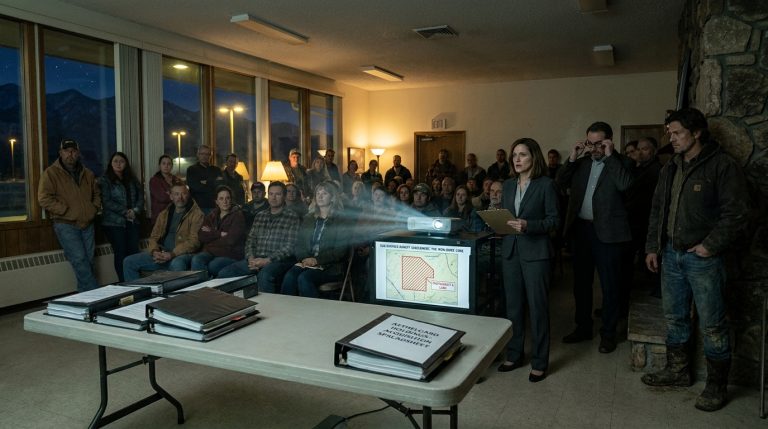
The room froze. A dozen residents sat in padded chairs around a long mahogany table. Gavin Reed was at the center, a digital projector casting a slide labeled Nuisance Reclassification & Safety Transition: Parcel 409-A onto the far wall. Melissa stood next to him, her clipboard raised, her fingers resting against the polished wood.
“The public comment portion of this meeting is closed,” Melissa said, her eyes narrowing as she took in my muddy boots and the heavy, soil-stained book under my arm. “And this property is currently subject to a safety review. You are not authorized—”
“You’re served,” the process server interrupted, her voice dry and perfectly professional. She stepped forward, sliding two separate packets of legal-sized documents across the polished table. One stopped directly in front of Gavin; the other landed on Melissa’s clipboard, right over her safety slides.
“What is this?” Gavin’s throat twitched. He didn’t pick up the paper, his eyes locked on the court seal.
“It’s a civil racketeering and environmental cover-up suit, Gavin,” I said, stepping up to the foot of the table. I laid the heavy leather ledger down with a solid, dull thud that rattled the plastic coffee cups. “And the county sheriff has already been notified of the broken lock at the surveyor’s shack. The pages you hired Vanguard to carve out of this book didn’t make it to the shredder.”
Melissa’s face turned the color of dry limestone. “This is a municipal safety matter. The HOA has a right—”
“The HOA has a forged annexation rider,” I said. I opened the ledger to the stub pages, pointing to the small, triangular remnant showing the red-inked plume mapping. “And you have an illegal liability diversion scheme. You forged my aunt’s name to trigger a ninety-day vacancy reversion, all to help Vanguard Environmental cap June’s well-house before the county registered the benzene contamination from Parcel 409-B. The Cadwell Report is officially in the hands of the EPA.”
A low murmur rippled through the residents in the back. One of the safety volunteers who had recorded me on Monday slowly lowered his head, his fingers nervously rolling a pen across the table.
Gavin looked at the ledger, then at the court papers, and finally at the projector screen, which was still displaying the artificial safety slides. His hand shook slightly as he reached up and turned off the projector. The room went dark, save for the gray evening light bleeding through the high windows.
“We were trying to protect the development’s asset value,” Gavin whispered, his voice stripped of its corporate polish, leaving only the raw, dry panic of a man who realized the floor had vanished beneath him. “If that plume went public, the whole subdivision…”
“You don’t protect a community by poisoning its water and stealing its land,” I said.
Melissa didn’t scream. She didn’t break down. She stood at the end of the table, her fingers gripping the served papers so tightly her knuckles went white, her eyes boring into mine with a silent, useless venom. But her stage was gone. The residents were already standing up, whispering in hurried, frightened tones, their eyes shifting from Melissa to the door.
I didn’t wait for them to adjourn. I picked up June’s ledger, turned my back on the mahogany table, and walked out of the clubhouse into the cool, quiet air.
The rain had stopped by the time I reached the farm.
The gray clouds were breaking in the west, letting a sliver of pale, watery gold slide across the wet gravel of the driveway. The air was cold, smelling of clean pine needles and wet earth, the heavy pressure of the storm finally lifting from the valley.
I didn’t go inside the house immediately. I walked over to the old well-house. The rusted iron door was still there, but the latch had been loose since June’s passing. I went into the barn, found a rusted can of 3-in-One oil on the workbench, and a set of clean brass screws.
I knelt in the damp grass by the well-house door. Slowly, methodically, I cleaned the old hinges, scraping away the red rust scale until the dark metal beneath was smooth. I oiled the joint, watching the dark liquid soak into the dry iron, and tightened the latch until it caught with a solid, silent click. It was a small thing, but it was straight, and it was secure.
Inside the kitchen, the grandfather clock kept its steady, unimpressed count. The house had settled back into its own quiet, the silence no longer feeling like a siege, but a shield.
I laid the ledger on the clean wooden table next to the tea set. Tomorrow, the lawyers and the state inspectors would arrive with their test kits and their court orders, and the long, slow work of cleaning the clay would begin. But tonight, the dirt was quiet.
I stood by the window, watching the last of the sunlight fade behind the black pines of the ridge. The gravel road was empty, the tire marks from Melissa’s confidence completely washed away by the rain. I turned back to the room, pulled up June’s favorite wooden chair, and let the quiet do its job.