The Weight of Silence: A Former Sniper Finds Purpose in the Quiet Rhythms of Fort Witmore
CHAPTER 1: The Fragile Geometry of Morning
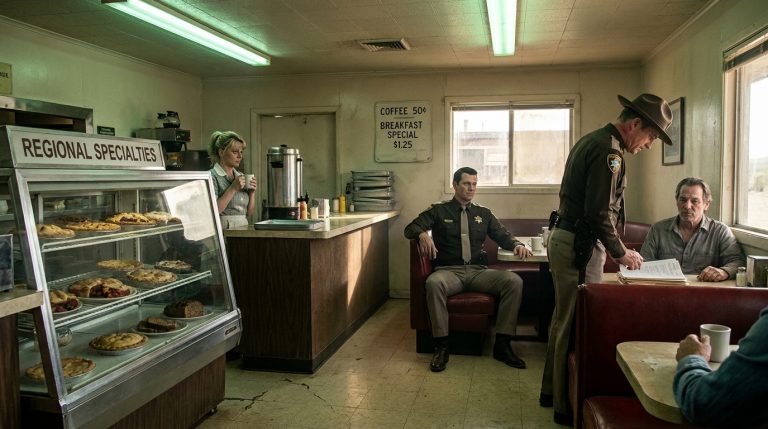
The coffee was too thin. Gerald adjusted the dial on the industrial brewer, his movements automatic, the kind of economy of motion that saved seconds he no longer had a reason to count. In the quiet of the mess hall, the sound of his own breathing felt like a violation of the silence he had curated for eleven years.
He shifted his weight, favoring the left side, as he pulled a tray of eggs from the oven. The scent of powdered egg and industrial cleaner was a tether to his current reality—a tether he had pulled tight until it was the only thing holding him to the ground.
He looked at the counter. The coin was still there. A challenge coin, minted in a unit he didn’t recognize, its edges smoothed by too much thumbing. He didn’t pick it up. To touch it would be to acknowledge the change, and Gerald was not ready for the change.
The main door groaned, the hinges complaining in the cold morning air. A young recruit, the same one who had jammed his rifle three times the day before, stepped in. His face was pale, his eyes darting toward Gerald before settling on the floor.
“I’m sorry,” the boy said, his voice cracking. It wasn’t about the toast. It was about the marksmanship, the shame of the range, and the terrifying realization that the man behind the counter was not the man they had mocked.
Gerald didn’t stop moving. He grabbed a pair of tongs, his grip steady, deliberate. “Breathing,” Gerald said, his voice as neutral as a stone. “You’re trying to force the trigger. If you force it, you lose the shot. You have to let the rifle tell you when it’s ready.”
The boy looked up, startled by the lack of reproach. “How do you know?”
Gerald looked at the boy, then past him, toward the darkened window where the silhouette of the range targets stood like headstones in the dimming twilight. “I’ve spent a long time watching things break,” Gerald said, placing a serving of eggs on a plastic tray. “Sometimes, the only way to fix them is to understand why they gave up in the first place.”
He pushed the tray forward. His hand lingered for a fraction of a second, the slight tremor in his fingers caught by the kitchen light. He saw the boy notice it—the subtle, involuntary vibration of a hand that had once held the lives of an entire convoy.
The boy hesitated, his fingers brushing the tray, but his eyes were locked on Gerald’s hand. He didn’t thank him. He just took the tray and walked away, his steps measured, slower than they had been yesterday.
Gerald watched him go, the peace of his morning shattered by the weight of a gaze that was no longer indifferent. He turned back to the stove, but as he reached for the next tray, he stopped. Underneath the edge of the prep table, taped to the metal, was a small, torn photograph he had kept for over a decade—a view of a dusty street corner in Kandahar. It was gone.
The tape was still there, adhesive glistening, but the photo was missing. And sitting on the counter, right where the photo had been, was a smudge of fresh, black grease—a sign that someone had been here, in his private space, while the kitchen was locked.
CHAPTER 2: The Unseen Observer
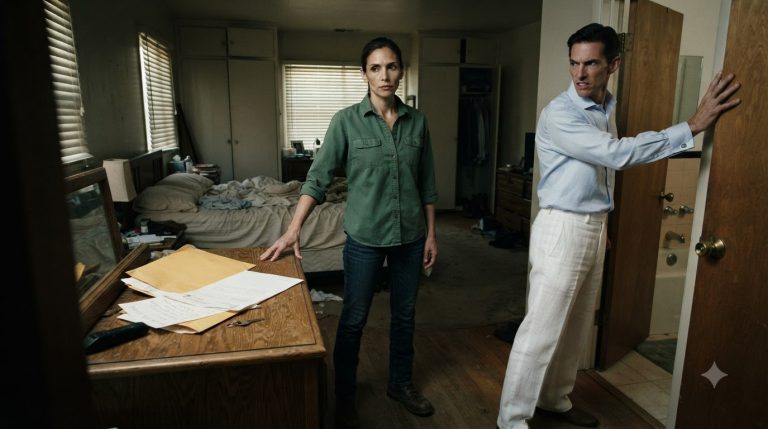
The silence in the mess hall was different now. It had shifted from the comfortable, static hum of morning preparations into something sharp and diagnostic. Gerald stared at the smear of grease. It wasn’t the kind of oil used for the grills; it was dark, viscous, and possessed the specific chemical bite of firearm lubricant. Someone had been here. Someone who knew exactly where he kept the fragments of his past.
He did not scrub it away. Instead, he reached out with a thumb, dragging it through the residue, feeling the slick, abrasive grit of a high-end weapon cleaning kit. This was not the work of a recruit playing a prank. It was the mark of a professional, someone who knew how to handle a weapon but had chosen to enter his domain with stealth rather than steel.
The heavy steel door at the rear of the kitchen swung inward. Gerald didn’t turn around. He leaned against the prep table, his posture deceptively relaxed, the limp in his leg providing a perfect excuse for his stillness. He heard the rhythmic click of heels on linoleum—not the heavy, thudding boot-fall of a soldier, but the precise, calculated gait of an administrator.
“It’s early, Sergeant Mackey,” a voice said. It was Colonel Vivien Hail, though her tone held none of the warmth she had displayed on the range the day before.
Gerald turned slowly, his eyes dropping to her hands. They were empty, manicured, and terrifyingly clean. “Coffee’s not ready, Colonel. Give me five minutes.”
“I’m not here for coffee,” she replied, her eyes scanning the room, landing momentarily on the smudge of grease before drifting to the spot on the table where the photograph had been taped. She didn’t look surprised. “I’m here because your files came back from the archives. The ones we didn’t think existed.”
Gerald felt the shift in the air—the atmospheric pressure dropping as it did before a storm. He reached for a stack of trays, his movements fluid, hiding the fact that his pulse had remained completely unchanged. “Archives are often wrong, ma’am. Especially regarding veterans who’d prefer to be left out of them.”
“Your record shows a commendation that doesn’t exist,” she pressed, stepping into his space. She smelled of cedar and cold, sterile office air. “And a discharge date that conflicts with the deployment logs in Helman. You weren’t just a sniper, Gerald. You were a ghost. The base is buzzing, and the Inspector General is already asking questions about why a ‘civilian cook’ was demonstrating Tier-1 ballistics on a standard training range.”
Gerald finally looked at her. He didn’t offer a defense. He didn’t offer an explanation. He simply pulled a bag of flour from the shelf and began to portion it out, the fine, white dust coating his hands in a way that mimicked the pallor of ash. “I make breakfast, Colonel. That’s what I do. If the base is talking, it’s because they’re bored. Maybe if they spent more time on the range and less time in the archives, they’d be hitting their marks.”
“Don’t give me the ‘simple soldier’ routine,” she snapped, though her voice remained low, contained. “You’ve spent eleven years being invisible. Now you’re the most talked-about man on this installation. If you’re hiding something, it’s going to come out. The Pentagon doesn’t like loose ends, and right now, you look very much like a fraying thread.”
“Then cut it,” Gerald said, his voice quiet, steady, and devoid of fear.
Hail paused, the confrontation stalling in the face of his utter, calm refusal to be intimidated. She looked at the grease on the counter, then back to his eyes, searching for the crack in the armor. She found none.
“I can’t cut a legend, Gerald. But I can make sure you’re placed under observation. Starting today, you’ll have a shadow. Not a recruit, not a friend. A security officer.”
Gerald finished packing the trays, the rhythm of his work never faltering. He knew the cost of this—the eyes, the constant monitoring, the end of the quiet. The grease smudge was a warning, a deliberate provocation meant to rattle the cage. He wondered who had sent it: the Colonel, or someone higher up in the chain of command, someone who knew that once a sniper is spotted, the entire game changes.
“I’ll have the coffee ready by 0400,” Gerald said, turning his back to her.
“Enjoy your breakfast, Sergeant,” she said, her voice sharp as glass. “I suspect it’s the last quiet meal you’ll ever serve.”
As she walked away, the door clicking shut behind her, Gerald stood alone in the dark. He looked at the spot where his photograph had been. His hand, once steady, began to tremble—a faint, rhythmic oscillation. He closed his fist, turning the tremor into a vice-like grip, and turned toward the window. Outside, in the pre-dawn shadows of the range, he saw a flickering movement near the target line. Someone was out there, checking the distance, measuring the range.
The game had begun.
CHAPTER 3: The Weight of Shadows
The mess hall light felt harsher than usual, a cold, fluorescent hum that stripped the warmth from the room. Gerald stood by the bain-marie, the ladle in his right hand feeling uncharacteristically heavy. The threat the Colonel had left behind—the promise of a shadow—wasn’t just a figure of speech. Standing near the entrance, leaning against the vending machines with his arms folded and his eyes tracking every movement, was Corporal Stein. The same man who had inspected the targets and wept on the range.
The irony was not lost on Gerald. Stein wasn’t here to keep him safe; he was here to keep the world safe from the possibility of what Gerald represented.
“Morning, Sergeant,” Stein said, his voice clipped, professional. The hero-worship of the previous day had been replaced by a strained, defensive formality. He was a good soldier, doing what he had been told, even if he didn’t like it.
“Morning, Corporal,” Gerald replied. He didn’t look up, focusing instead on the line of recruits forming at the door. He began the familiar, rhythmic motion of serving oatmeal. It was the same process he had performed thousands of times, but now, every scoop was a calibration. He could feel Stein’s gaze on the back of his neck, assessing his posture, his limp, the way his hands shook.
The recruits filed in, their usual chatter dampened. Word had traveled. The man who had been a joke was now a mystery, a puzzle piece that didn’t fit the landscape of Fort Witmore. Some greeted him with hesitant respect; others, influenced by the rumors of the archives and the Colonel’s sudden interest, watched him with a wary, predatory curiosity.
Gerald remained motionless, a stone in the stream. He served the breakfast, took the questions, and deflected the praise with short, neutral nods. He was waiting for a signal, for the moment the “shadow” would make his move. He knew the archives were a decoy—they were the “official” conflict, a bureaucratic trap meant to pull his focus toward the past. But the smear of grease on the counter, the figure at the range… those were real. Those were the threads of a different story.
“You’re working slow, Sergeant,” Stein noted, stepping closer. He was trying to provoke a reaction, to see if the legendary marksman would slip into a defensive rhythm.
“Breakfast takes as long as it takes, Corporal,” Gerald said, placing a bowl on the tray of a young recruit. “If you’re hungry, get in line.”
The recruit took the tray, his eyes wide. He hesitated, looking between the veteran and the guard. “Sergeant Mackey? Could… could you show me that grip again? The one you used yesterday?”
Stein stepped forward, his hand hovering near his belt. “Move it along, recruit. No coaching in the mess hall.”
The boy flushed and retreated, but he didn’t look at Stein. He looked at Gerald.
Gerald caught the boy’s eye—a brief, microscopic exchange of understanding. The boy wasn’t asking about the rifle. He was asking about the stillness. He was asking how to survive the noise.
Gerald turned back to the industrial sinks, his movements heavy. The weight of his own history was becoming a tangible physical presence, a ghost that occupied the space beside him. He reached for a stack of pans, his hands brushing against the underside of the stainless-steel counter where he had hidden a small, iron key—a remnant of a life before the VA, before the apron, before the silence.
He didn’t need to look at it to know it was still there. But the realization that he was being watched meant he could no longer move it. He was tethered, pinned by the very institution he had once served with such singular, devastating devotion.
“You’re off duty in ten,” Stein remarked, his voice losing some of its edge, replaced by a dull, aching confusion. “The Colonel says you’re to report to the range at 0500. No detours.”
Gerald nodded, the motion slow. He looked around the room, at the peeling paint on the walls, the mismatched chairs, the desperate, hollow eyes of the young men who were learning how to be soldiers. He had wanted nothing more than to feed them and disappear. Now, he was the center of a storm he had spent a decade trying to outrun.
As the last of the recruits cleared the mess, Gerald turned to the prep area. He saw the grease smudge again. He picked up a rag and began to scrub, but he didn’t wipe it away completely. He left a faint, dark ghost of the stain—a secret mark, a reminder that even when the light was strongest, there was always something hiding in the shadows. He didn’t know what he was looking for, only that when he reached the range, the truth wouldn’t be found in the targets. It would be found in the distance between the shooter and the lie.
CHAPTER 4: The Paper Trail
The archive basement was a labyrinth of steel shelving and dying light, a place where the air tasted of desiccation and lost intent. Gerald walked down the center aisle, his boots creating a rhythmic, hollow sound against the concrete. Corporal Stein followed a step behind, his shadow stretching long and distorted across the boxes of retired personnel files. The corporal was trying to maintain a tactical distance, but in the tight confines of the rows, the proximity felt suffocating.
Gerald stopped at the section marked 2004-2006. His hands, still faintly smelling of the industrial cleaner he had used in the mess hall, hovered over the spines of the binders. He was looking for the discrepancy the Colonel had mentioned—the ghost in the machine.
“You’ve got fifteen minutes, Sergeant,” Stein said, his hand resting on his radio. “That’s what the Colonel ordered.”
Gerald didn’t answer. He pulled a file, its edges fraying, the paper turned a brittle, acidic yellow. As he opened it, a sudden draft caught the pages, scattering a cloud of dust that shimmered in the fluorescent light. The smell—a sharp, metallic tang of aging paper mixed with mildew—hit him with the force of a physical blow. It was the exact scent of the village clinic in Kandahar, the one where they had taken cover during the ambush.
For a heartbeat, the archives vanished. He saw the dust motes dancing in the light of an RPG fire. He heard the sudden, deafening silence of a spent magazine. His heart rate, disciplined and constant for a decade, spiked. He gripped the edge of the shelving unit, the metal cold and biting against his palm, forcing himself to ground his focus in the present. The archives. The files. The lie.
He turned the pages. The documents were official, typed on standard government forms, but they were wrong. They listed his unit, his deployments, and his commendations, but there were redactions—heavy, black bars that swallowed whole paragraphs. He scanned the entries. There was no mention of the rooftop in 2004. There was no mention of the extraction protocol he had pioneered. Instead, there was a series of incident reports detailing a ‘logistic error’ in Helman province—an error that resulted in the complete erasure of his primary team.
He realized then that the decoy wasn’t just his service record. The decoy was the entire narrative of his service. He wasn’t being investigated for being a hero; he was being investigated for being a witness.
“Find what you’re looking for?” Stein asked, peering over his shoulder.
Gerald closed the file, the sound like a gunshot in the dead air. “Just paper, Corporal. Nothing that hasn’t already been forgotten.”
“The Colonel thinks otherwise,” Stein countered. “She thinks you’re keeping a secondary cache of documents. Something that explains why your discharge was processed in a black-site office in Virginia instead of at the base.”
Gerald shifted his gaze, observing the way Stein stood—his weight evenly distributed, his fingers slightly curved. The corporal was searching for a weapon, or a piece of leverage. Gerald walked further down the row, his limp pronounced, dragging his foot across the floor. He stopped at a box near the baseboard, tucked behind a stack of rusted supply manuals. It wasn’t his file. It was a maintenance log for the range, dated from the same year as the Kandahar incident.
He knelt, the movement painful, and opened the log. His breath hitched. Taped to the back cover was a photograph—not the one that had been stolen from his kitchen, but a duplicate. In the picture, the Colonel—Colonel Hail—stood in the background, a young lieutenant with a rifle slung over her shoulder, watching him from the edge of the rooftop.
He had never seen this photograph. He had never known she was there.
He looked up, finding Stein staring at the photograph as well. The corporal’s face went pale. The “discrepancy” wasn’t a bureaucratic error; it was a shared history that the base commander had spent a decade trying to bury under the guise of an administrative clean-up.
“You weren’t supposed to see that,” Stein whispered, his hand moving to his sidearm.
Gerald didn’t move. He kept his hand on the photograph, the paper rough and grainy under his fingertips. He felt the shift in the room—the sudden, terrifying realization that the shadow following him wasn’t there to watch him. It was there to make sure he didn’t remember the one person who knew the truth about the rooftop.
“Put it back, Sergeant,” Stein ordered, his voice no longer professional. It was desperate. “That file never existed.”
Gerald stood up, his body tensing, the old, familiar weight of the field returning. He looked at Stein, then back at the photograph. The silence in the basement wasn’t empty anymore; it was full of the ghosts of everyone who had died to keep that secret.
“Everything exists,” Gerald said, his voice a low, gravelly whisper. “You just have to know where to look.”
He tucked the photograph into his apron pocket. The paper felt like a live coal against his thigh. He knew that when he walked out of this basement, the dynamic would change completely. He was no longer a cook under scrutiny; he was a liability that the commander herself had personally authorized for termination. And he still had to serve breakfast.
CHAPTER 5: The Friction of Truth
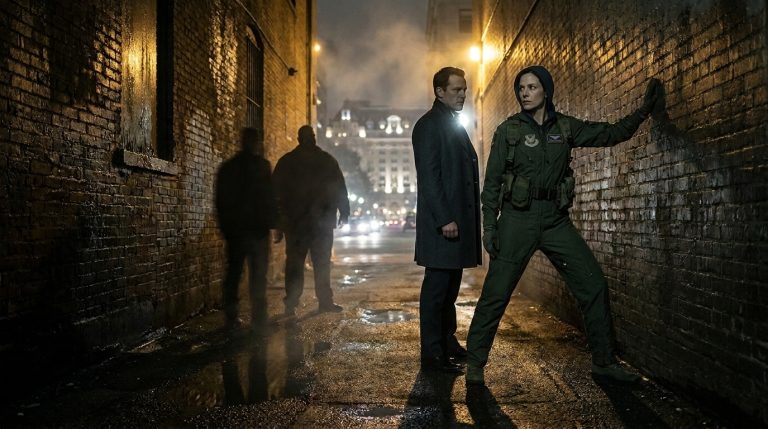
The exit of the archive basement deposited Gerald into the biting cold of the base’s secondary courtyard. The transition was abrupt—the air outside was sharp, carrying the metallic scent of rain on dry, cracked earth. Stein was right behind him, his gait now frantic, his eyes constantly scanning the barracks windows that loomed above them like judging sentinels.
Gerald didn’t head toward the mess hall. He stopped. He turned to face the corporal, his back to the brick wall of the archive building. He pulled the photograph from his apron pocket, not to look at it, but to show Stein the reality of the situation.
“You’re shaking, Corporal,” Gerald said. His voice was calm, a stark contrast to the turbulent energy radiating from the younger man. “That’s a bad sign. If you’re going to be a shadow, you need to learn how to move without casting one.”
Stein wiped sweat from his upper lip despite the freezing temperature. “You don’t understand, Sergeant. That photo… if the Colonel knows you found it, she won’t just file another report. She’ll burn the archive to the ground to keep it from surfacing.”
“Why?” Gerald asked. He leaned against the brick, the cold leaching into his spine. “What happened on that rooftop that’s worth burning a legacy for?”
“It wasn’t just an ambush,” Stein said, his voice dropping to a jagged, desperate whisper. He looked around, checking the perimeter. The courtyard was empty, but the feeling of being watched was absolute. “The lead vehicle didn’t just hit an IED. It was an extraction that went wrong because someone gave the order to leave the local informants behind. The Colonel was the one who signed off on it. You were the only one who didn’t follow that order.”
The revelation landed with a dull, heavy thud. It wasn’t the heroic story he had hidden from the world; it was a narrative of cowardice and abandonment that he had personally defied. He hadn’t been hiding his bravery; he had been hiding the shame of his superiors.
Gerald tucked the photograph away. His hands were still trembling, but the oscillation was gone, replaced by a cold, singular focus. The “discrepancy” in his records wasn’t a mistake—it was an erasure. They had scrubbed his presence from the mission reports to ensure that no one would ever know he had gone back for the people the Lieutenant had abandoned.
“We need to move,” Stein urged, his hand twitching toward his belt again. “If we stay here, we’re targets.”
“Targets for whom?” Gerald asked, stepping forward, his limp momentarily forgotten. He closed the distance between them, his presence suddenly massive, the quiet cook eclipsed by the sniper who had once held the line alone. “Are you going to do it, Stein? Are you going to be the one to finish what the Colonel started?”
Stein backed away, his heels hitting the curb. “I have my orders, Sergeant.”
“Orders are just words until they’re tested by a bullet,” Gerald said. He walked past the corporal, heading toward the perimeter fence that bordered the training range. He didn’t look back to see if Stein was following. He didn’t need to. He knew that the corporal was caught in the same vacuum as the recruits—torn between the safety of the institution and the gravity of the truth.
They reached the perimeter fence, the rusted metal vibrating in the wind. Gerald placed a hand on the wire. The electric hum of the security system was a dull vibration against his palm—a rhythmic, warning thrum. Beyond the fence, the range targets stood like silent witnesses to his past.
He realized then that the photograph wasn’t just a piece of evidence; it was a lure. The Colonel had left it there, waiting for someone to find it. He was being funneled toward the climax, toward a confrontation that had been ten years in the making.
“She wants me to look for the rest of the files, doesn’t she?” Gerald asked, looking at the fence. “She knows the archives are a dead end. She’s leading me to the off-site facility.”
Stein finally caught up, his face ashen. “She knows you’ll go there. She knows you can’t leave it alone. That’s the trap, Sergeant. You’re not investigating. You’re being collected.”
Gerald didn’t respond. He looked down at his hands. The grease smudge from the mess hall was still faintly visible under his nails. He had spent eleven years trying to scrub away the identity of a killer, only to find that the system had never stopped seeing him as one. He had to decide: would he be the cook who went to the slaughter, or the ghost who returned to finish the mission?
He pushed off the fence, his decision made. He wouldn’t run. He wouldn’t hide. He would go to the range, and he would show them that when you back a man into a corner, you don’t just get a fight—you get a reckoning.
CHAPTER 6: The Mechanics of Betrayal
The wind at the qualification range didn’t just blow; it scoured, stripping away the thin veneer of warmth from Gerald’s skin. He stood on the firing line, his posture as still as the earth beneath his feet, while a dozen recruits cycled through their drills. Corporal Stein remained five paces back, his hand resting habitually on his holster, a silent, tethered reminder that the base was no longer a home, but a cage.
One of the younger recruits, a private named Miller, jammed his rifle. The sound—a sharp, metallic crunch of steel grinding against steel—echoed across the range like a gunshot. Miller cursed, fumbling with the bolt carrier group, his hands slick with sweat and nerves.
Gerald walked over, his stride measured. He didn’t look at Stein; he looked at the mechanism. As he pulled the charging handle, he felt the familiar, jarring resistance of a misaligned spring—a mechanical failure he had encountered in Kandahar, one that had been caused by inferior, diverted parts. It was a physical manifestation of the lie he had been living.
“The spring is pinned,” Gerald said, his voice cutting through the wind. He took the rifle, his fingers moving with an economy of motion that belied the age in his bones. He stripped the upper receiver in seconds, exposing the guts of the weapon. “It’s not just a jam, Miller. It’s a flaw in the feed ramp. You were trained to trust the hardware, but the hardware is failing you.”
“I don’t understand, Sergeant,” Miller stammered, his eyes wide. “They told us the gear was top-tier.”
“They told you a lot of things,” Gerald replied, his voice a low, resonant hum. He locked eyes with the boy, and for a moment, the barrier between mentor and recruit dissolved. He reached into his own pocket and pulled out a small, steel pin he had carried for years—a tool he had used to field-strip weapons in the desert. He dropped it into the mechanism, the click of metal-on-metal final and absolute. “Trust the rifle, but never trust the supply line.”
As he handed the rifle back, Gerald looked up to see Colonel Hail standing at the edge of the observation deck. She was watching him, her figure a dark, sharp silhouette against the pale sky. She wasn’t holding a clipboard. She was holding a manila folder—the original, unredacted records of the Helman province extraction.
The air grew heavy. Stein stiffened behind him, his radio crackling with an incoming transmission he didn’t dare answer. Gerald didn’t look back. He felt the cold iron of the fence at his back and the impending weight of the confrontation. He knew that the moment he had touched the rifle, he had revealed more than his knowledge of ballistics; he had revealed his knowledge of the system’s rot.
“Sergeant Mackey,” the Colonel’s voice carried clearly across the gravel, stripped of all artifice. “A word.”
Gerald stood, his hands empty, his apron stained with the dust of the range. He knew the protocol. He knew that if he walked toward her, he was walking into a trap—a final, engineered resolution designed to discredit him once and for all. But if he stayed, he was simply waiting to be discarded.
“Corporal,” Gerald said, his voice flat, “stay here. If anything happens, make sure these recruits know that breathing is more important than the bullet.”
Stein hesitated, his eyes darting toward the Colonel, then back to the old cook. “I can’t let you do that, Gerald.”
“You already have,” Gerald said. He stepped forward, his limp almost imperceptible now, his body coiled with the latent, terrifying potential of a man who had nothing left to lose.
He walked the distance to the observation deck, each step a deliberate strike against the earth. He was no longer the cook. He was no longer the mentor. He was the ghost of the rooftop, come back to settle the ledger. The wind picked up, swirling the dust into miniature funnels that obscured his path, but Gerald didn’t need to see the ground. He knew where he was going.
He reached the stairs and climbed, the metal ringing under his boots. Colonel Hail didn’t move as he approached. She stood at the railing, the folder gripped tightly in her hand, her knuckles white. She looked at him with a mixture of fear and something darker—a longing for the silence he had kept for so long.
“You should have stayed in the kitchen, Gerald,” she said, her voice trembling just enough to be heard. “You had a life. You had respect. Why bring it all back to the surface?”
“Because it never left, Colonel,” Gerald replied, stopping just out of reach. “You built a wall around the truth, but walls don’t stop the wind. They only hold it until it breaks them.”
He looked at the folder in her hand. He knew the secrets inside weren’t just about the mission; they were about the chain of command that had ordered the abandonment. They were the evidence that would shatter the Colonel’s career, and in doing so, they would tear the base apart. He had come here to protect the recruits, but he realized now that he had to be the one to show them that truth, no matter how heavy, was the only thing worth holding.
CHAPTER 7: The Alarms Resonance
The alarm was not a siren; it was a rhythmic, guttural stutter of low-frequency sound that vibrated through the floorboards of the observation deck, rattling the teeth in Gerald’s jaw. The Colonel’s calm disintegrated instantly. She lunged for the folder, but Gerald was faster—not with the speed of a young man, but with the calculated, preemptive economy of a veteran who had predicted this exact escalation.
He stepped inside her guard, his hand closing over the folder. The friction of the manila paper against his calloused skin felt like a declaration of war.
“You don’t want to do this, Gerald,” the Colonel hissed, her hand diving into her waistband for a weapon she clearly wasn’t prepared to use.
“I didn’t start this,” Gerald said, his voice low, drowned out by the rising cadence of the alarm. “I just finished it.”
He didn’t strike her. He simply pivoted, his limp forgotten as he used the momentum of his own weight to propel himself toward the stairs. A squad of security personnel poured onto the range below, their boots thundering against the gravel. They weren’t looking for a cook; they were looking for a threat.
“Stop him!” Hail shouted, her voice shrill. “Dead or alive, I want that folder!”
Gerald descended the stairs two at a time, the railing biting into his palm. He hit the gravel with a jarring impact, the shock traveling up his knee, but he kept moving. He didn’t head for the main gate; that was where they expected him to go. He headed for the low-voltage maintenance tunnel that ran beneath the range—the same one he had used to hide his tools years ago.
He heard the crack of a warning shot, the bullet kicking up a spray of dirt inches from his boot. He didn’t flinch. He didn’t look back. He threw himself into the narrow, dark opening of the tunnel, the smell of damp earth and rotting copper wire greeting him like an old friend.
Behind him, he could hear the chaos escalating. The recruits were shouting, confusion rippling through the firing line as the security team began to lock down the area. He crawled, his breath coming in steady, controlled bursts, his heart rate stabilized by the familiar darkness. He had transitioned from the hunter to the hunted, but in the dark, the advantage had shifted back to him.
He reached the midpoint of the tunnel, where the light from the surface was a faint, blue haze filtering through the ventilation grates. He stopped, pressing himself against the cold, wet concrete. He pulled the folder from his shirt, the edges damp with sweat. He opened it, not to read the words, but to look at the names.
The list was there. Every soldier who had been left behind on the Kandahar mission. Names he had recited in his prayers for a decade. The Colonel hadn’t just abandoned them; she had systematically erased them from the rolls to protect her own advancement. The betrayal wasn’t a bureaucratic error—it was a cold-blooded tactical sacrifice.
He heard footsteps above him—heavy, deliberate. Stein.
“Gerald,” the corporal’s voice echoed down the ventilation shaft, muffled but unmistakable. “I know you’re in the tunnels. The Colonel has authorized lethal force. You have to give me the folder. If you give it to me, I can tell them you were forced. I can save you.”
Gerald closed his eyes. The trap was complete. The “choice” he was being offered—between survival and his legacy—was the same one he had faced ten years ago. He looked at the names in the folder. He realized that the legacy wasn’t the folder itself; it was the fact that someone had finally remembered them.
“Corporal,” Gerald called back, his voice steady, resonant in the confined space. “You’re looking for a soldier. But you’re talking to a man who’s already buried.”
He didn’t wait for Stein’s response. He pulled a heavy, rusted pipe from the wall, the friction of the metal against his hands giving him the leverage he needed. He smashed the ventilation grate, the metal screaming as it gave way.
He climbed out, not onto the range, but into the thick, overgrown scrubland behind the perimeter fence. He was outside the wire. He was free. But as he looked back at the lights of the base, he knew the final act wasn’t an escape. It was a choice of where he would take his final stand. He wouldn’t run further. He would wait at the one place they couldn’t ignore: the front gate of the Command Center.
He checked his pocket. He still had the steel pin he had used to fix Miller’s rifle. It was the only weapon he had, but it was enough. He began the walk, his limp fading as the cold air cleared the last of his hesitation. The storm was coming, and he was the eye of it.
CHAPTER 8: The Final Reckoning
The command center was a tomb of polished marble and sterile, high-end electronics. The silence inside was thick, pressurized, contrasting sharply with the chaotic wind howling outside. Gerald walked through the lobby, his boots leaving faint, damp tracks on the white stone. He didn’t rush. He didn’t hide. He moved with the heavy, deliberate precision of a man who had already accounted for every variable.
Security alarms still chirped in the distance, but the lobby itself was eerily deserted. It was a staged calm, a vacuum meant to isolate him before the final encounter.
Colonel Hail stood in the center of the atrium, her uniform immaculate, her expression a fragile mask of professional composure. She had dismissed her detail. She wanted this to be a private execution of the narrative. Behind her, a massive wall-mounted display flickered with the live feeds of the base—the range, the mess hall, the barracks. The surveillance state she had built to monitor him was now the stage for his final act.
“You’re out of time, Gerald,” she said, her voice echoing in the vast space. “The board is already convening. By tomorrow, your entire service history will be purged, and you’ll be an anomaly on the payroll. No one will believe a cook who went mad.”
Gerald stopped ten paces from her. He placed the folder on the reception desk—a heavy, resonant sound that broke the silence of the room. He didn’t speak. He reached into his pocket and produced the steel pin he had used to fix the rifle. He held it up, a tiny, unassuming piece of metal that had once been part of a weapon’s lifeblood.
“They won’t have to believe me,” Gerald said, his voice steady, carrying the weight of a decade of hidden grief. “Because I’m not the only witness. Stein is outside. The recruits are waiting for the results of their qualification. And the records I have here? They don’t just prove you abandoned your team. They prove you authorized the strike that caused the ‘logistical error’ in Helman.”
The mask cracked. The Colonel’s eyes darted to the folder, then to the cameras mounted in the corners of the room. She was panicking, her mind frantically calculating the loss of control. “You think anyone cares about a few ghosts from Kandahar? This base has a mission, Gerald. I’m the only thing holding that mission together. Without me, this place falls into chaos.”
“It’s already falling,” Gerald said. He stepped forward, his limp gone, replaced by the lethal, fluid grace of the scout sniper he had been before the world tried to turn him into a relic. “You’ve spent years protecting a mission that was built on a foundation of betrayal. You think you’re a protector, Colonel? You’re just a scavenger, feeding on the people you promised to save.”
She reached for the sidearm at her hip, but before her fingers could touch the leather, the sound of boots echoed from the lobby entrance. A dozen personnel, led by the base’s legal officer—a man who had been kept in the dark for years—stepped into the atrium. Behind them was Stein, his face grim, his posture that of a man who had finally made his choice.
The Colonel froze. She looked at the faces of her staff, at the cameras, and then finally back at Gerald. She realized then that he had anticipated everything. He hadn’t just brought the files; he had brought the accountability. He had turned the very surveillance system she used to control the base into the mechanism of her undoing.
She let her hands fall to her sides. The transformation was instantaneous—the steel-spined commander slumped, the weight of the truth finally collapsing the facade she had meticulously constructed. She didn’t fight. She didn’t monologue. She simply stared at Gerald, her eyes reflecting the ruin of everything she had built.
The legal officer walked forward, his expression grave as he looked at the folder on the desk. “Colonel Hail,” he began, his voice devoid of emotion, “you are relieved of command, effective immediately.”
Gerald turned away. He didn’t watch the arrest. He didn’t watch the Colonel being led toward the doors, the shadow of her authority stripped away in the harsh light of the atrium. He walked toward the exit, his focus shifting back to the small, mundane reality he had chosen long ago.
The cool-down of the aftermath was silent. He walked back to the mess hall, the base’s frantic energy beginning to settle into a stunned, heavy atmosphere of change. He passed the range, where the recruits were standing in a line, watching him with a new kind of awareness. He didn’t offer a salute. He simply nodded—a quiet, singular acknowledgment of their shared reality.
Inside the kitchen, he returned to the stove. He took the apron he had folded so neatly in the morning and tied it back around his waist. He picked up a cloth and finished wiping the counter, clearing away the last of the grease and the dust.
He found the steel pin lying on the floor where he had dropped it—or perhaps where it had fallen during the long, winding path to this moment. He picked it up and placed it in the small, iron box under the counter. The Symbolic Closure. The tool that had fixed the rifle and broken the lie was finally at rest.
He brewed a fresh pot of coffee, the aroma filling the room, thick and comforting. The weight in his chest, the heavy, constant presence of the Kandahar ghosts, had dissipated, leaving behind a profound, settled peace. He wasn’t a hero, and he wasn’t a relic. He was just a man who had finally finished his shift. As the sun began to break over the horizon, casting a warm, golden light across the stainless steel, Gerald stood in the silence, listening to the morning birds finally begin to sing.