The Legacy at Lake Norman: How a Quiet Woman Reclaimed Her Father’s Land
CHAPTER 1: THE SHATTERED SHORELINE
The gravel dust hadn’t even settled around my tires before I saw the red convertible parked crooked near the boathouse.
My fingers tightened around the chipped ceramic handle of my travel mug, the black coffee inside long gone cold. On the dock my father built out of Brazilian teak, Andre stood in pristine white linen pants, looking out over the gray water of Lake Norman like a man inspecting an estate he had already paid for. Beside him, Kendra tilted her head, shielding her eyes under the worn straw brim of my mother’s garden hat—the one with the faint water stain from the 2003 August storm.
On the porch, my mother-in-law, Monique, rocked slowly in my grandmother’s chair, sipping sweet tea from a glass etched with my mother’s initial.
“You don’t need to be here, Joselyn,” Andre said, his voice carrying clearly across the quiet cove without him even turning around. “You’re nothing to me now.”
Across the water, our neighbor paused his outboard motor repair, turning his head toward the dock. Near the tool shed, Calvin Dixon stopped his saw mid-cut, his weathered hands resting flat against the pine workbench.
I didn’t yell. I didn’t drop my mug. I stepped past the red convertible, my boots crunching rhythmically against the wet gravel, and walked straight toward the porch steps where the open suitcases were stacked.
“The divorce paperwork is moving,” Andre said, stepping up onto the lawn to cut off my path, his hand resting casually on his hip. “Don’t make this embarrassing for yourself in front of people.”
Kendra let out a soft, practiced laugh, adjusting the brim of the straw hat. “We’re just trying to get the measurements for the new patio set, Joselyn.”
I didn’t look at her. I reached into my coat pocket, my fingers brushing the heavy, cold brass of the original house key my father had stamped thirty years ago, and stepped toward the heavy oak front door.
CHAPTER 2: THE DEADBOLT DECISION
The frame groaned, but the brass latch held.
Outside, Andre’s knuckles rattled the thick wood three times in sharp, erratic bursts. “Joselyn, open the damn door! Stop acting like a child in front of my family!”
I didn’t answer. I set my travel mug on the hall table—the cold black coffee sloshing over the chipped rim—and slid the lower brass chain into place with a dry clink. Through the leaded glass window beside the frame, I saw Monique sitting motionless in the rocking chair, her fingers resting on my mother’s sweet tea glass like a threat.
“She’s locking us out, Andre!” Kendra’s voice piped up from the porch, loud enough to ring across the water. “Is she serious? The furniture movers are right behind us!”
I turned my back on the door and walked into the kitchen, my boots leaving damp prints on the heart-pine floorboards my father had sanded by hand. The house was cold, smelling of stale pine needle air and old wool.
The front door took another heavy hit, harder this time. Andre’s shadow blocked the light through the hallway window. “You don’t own this place outright, Joselyn! We’re married—it’s a joint asset! Call off whatever crazy game you’re playing or I swear to God—”
I opened the junk drawer next to the stove. It screeched along its runner, sticking halfway the way it always did when the damp air rolled off the lake.
Inside sat the usual clutter: a roll of jute twine, rusted brass screws, a half-used tube of wood glue, and an old iron key without teeth on its lower edge. In the far back corner, wedged under a box of yellowed brass tacks, rested a thick Manila envelope, its edges stiff and brittle with age.
I pulled it free, my thumbs dusting off a fine layer of sawdust.
Written on the front in my father’s precise, carpenter’s block print was a single line: If the day ever comes he dares tell you you’re nothing.
My fingers hesitated over the flap. Outside, Andre walked off the porch, his dress shoes crunching furiously on the gravel path as he made his way toward the sliding glass doors on the lake-side deck.
I unfolded the single sheet of paper inside. The ink was faded, but the handwriting was unmistakable.
Joselyn,
If you’re reading this inside a locked house, you already know what kind of man you married. Don’t waste your breath arguing with him through a door. There’s a second copy of the trust in the floor safe under the master bed, along with every tax statement showing he tried to appraise this shoreline behind your back.
He thinks loud words create ownership. They don’t. Hold the line. Lock the door. Let him burn his own ground.
A dull thud echoed from the back deck as Andre kicked the base of the heavy sliding glass frame. “I know you can hear me, Joselyn! I’ve got three investors coming to look at this property on Tuesday! You’re ruining a five-million-dollar deal over a personal grudge!”
I walked to the kitchen window and looked out toward the tool shed. Calvin was standing by his workbench, holding an iron crowbar, his shoulders set like granite. He didn’t move toward the deck, but his eyes never left Andre’s back.
I picked up the landline receiver from the wall mount, bypassing the cell phone entirely. I dialed Gabrielle Lawson’s direct office line in downtown Charlotte.
“Gabrielle,” I said, my voice flat and steady as Andre’s fists hammered against the rear glass. “He brought a contractor and a mistress to the dock. He thinks he’s moving in.”
“Is the door locked?” Gabrielle asked, her pen already clicking on the other end of the line.
“Yes.”
“Keep it locked. Do not engage. I’m pulling up the 1988 trust filings right now.”
I looked down at the junk drawer, my eyes fixing on the toothless brass key sitting in the dust near the tacks. A strange anomaly for a carpenter’s drawer.
CHAPTER 3: THE BOARDROOM SIEGE
Fluorescent light hummed overhead, reflecting off the glossy architectural boards Andre had set up on aluminum easels. The digital renderings showed turquoise infinity pools and glass-walled cabanas perched right where my mother used to boil peaches every August.
In the second row sat three men in dark charcoal suits, their leather briefcases resting on the linoleum floor—Andre’s financial backers.
“This project represents forty million dollars in commercial infrastructure for the cove,” Andre said, his voice smooth, echoing over the public address speakers as he gestured toward the board. “We’re simply consolidating the shoreline access to maximize property value for the entire district.”
Kendra stood by the podium, holding a stack of glossy color brochures, her lips set in a tight, professional smile. When her eyes caught mine, her fingers tightened on the cardstock, crumpling the corner slightly.
“The board will now open the floor for public comment,” the chairman said, tapping his pen against a yellow legal pad. “Five minutes per speaker.”
I walked to the podium. My boots sounded heavy on the wooden steps, every step echoing in the quiet room. I set my travel mug on the ledge—the blue paint chipped down to the bare ceramic—and laid two flat sheets of paper beside the microphone.
“My name is Joselyn Banks,” I said, my voice cutting through the rustle of folding chairs. “I am the sole trustee of the Banks Family Land Trust.”
Andre stepped forward instantly, his hand cutting through the air. “Mr. Chairman, my wife is currently involved in personal marital proceedings. She has no standing to speak on commercial zoning.”
“I hold the primary deed,” I said, ignoring him completely as I looked straight at the three investors in the second row. “And page nine of the 1988 trust instrument explicitly states that no shoreline easement, access path, or commercial tie-in can be granted without three-quarters written consent from the primary trustee.”
The lead investor in the front row—a man with graying temples and a gold watch—frowned, leaning down to open his briefcase.
“That trust was drafted thirty-eight years ago,” Andre snapped, his voice dropping an octave as he moved closer to my side of the stage. “It’s obsolete. We have a signed intent agreement from four adjacent parcel owners.”
“You have intent from adjacent parcels,” I replied, sliding my father’s map across the podium surface toward the town board. “But you don’t have the forty feet of deep-water access that sits between the highway cut and the dock. Without that forty-foot strip, your luxury marina has no legal right-of-way to the main channel.”
The room went completely still. The chairman picked up his reading glasses, squinting down at the survey map I had provided.
Behind me, the lead investor snapped his briefcase shut with two sharp, metallic clicks. He stood up without saying a word, buttoned his jacket, and motioned to the two men beside him.
“Andre,” the investor said, his voice carrying clearly over the dead air of the microphone. “You told us the access rights were fully cleared three months ago.”
“They are cleared!” Andre’s voice cracked, a rare, sharp fracture in his polished delivery as he took two fast steps toward the investor. “It’s a technicality! We’re handling it in probate!”
“We don’t fund technicalities,” the man said, turning his back on the stage and walking straight out the double doors.
Kendra’s hand dropped, letting the stack of brochures slide off her arm and scatter across the floorboards.
CHAPTER 4: THE GATEHOUSE RECKONING
Three weeks later, the November wind was cutting sharp across Lake Norman, turning the water the color of wet slate.
I stood in the kitchen, my thumbs tracing the worn ceramic handle of my cold coffee mug, watching the gate camera feed on my tablet. A single sedan idling on the gravel road outside the property line—no red convertible, no luxury SUVs, no crowd of movers.
My phone chimed on the pine table. Calvin’s name lit up the screen.
“He’s been sitting at the iron gate for two minutes,” Calvin said, his voice coming through low and even over the speaker. “Just him. No lawyers, no family.”
“I’m walking down,” I said.
“I’m by the tool shed,” Calvin replied flatly. “I’ll keep the crowbar in my hand.”
I pulled my coat tight around my collar and stepped out onto the gravel path. The cold air caught in my chest, smelling of wet leaves and lake silt. Fifty yards ahead, Andre stood on the far side of the iron bars, his shoulders hunched inside a plain gray wool jacket that looked two sizes too large for him.
His pristine white linen was gone. His posture lacked the practiced, tall arrogance he’d worn on the dock three weeks ago.
“The board denied the rezoning permit on Monday,” Andre said through the bars, his hands gripping the cold iron. His knuckles were raw and red from the wind. “The firm placed me on uncompensated leave this morning.”
I stopped ten feet back from the gate, keeping my hands deep in my coat pockets. “I know.”
“I spent eight years setting up that development structure, Joselyn,” he said, his voice dropping into a raspy, unpolished edge I hadn’t heard since we were twenty-nine. “My mother told me if I occupied the house first, you’d cave to protect the family name. She said a locked door opens if you just apply enough weight.”
He paused, a involuntary tremor running through his jaw as the wind whipped across the drive.
“I listened to her,” he muttered, looking down at his leather dress shoes, now caked in wet Carolina mud. “I was wrong. The investors pulled out completely.”
“You didn’t want the house, Andre,” I said softly, the words hanging like frost in the still air. “You wanted the leverage. You looked at my father’s land like an appraisal statement, not a home.”
“I need you to sign a waiver on the access easement,” he pleaded, his fingers tightening until the iron hinges creaked. “Just the easement. If I can hand the board a limited right-of-way, I can salvage my position at the firm.”
“No,” I said.
“Joselyn—”
“My father built this shore board by board so nobody could ever make his family feel small,” I said, turning my back on the gate. “The lock stays on.”
Behind me, the iron bars rattled once, but Andre didn’t call out my name again.
CHAPTER 5: THE FINAL TRAP
The sound tore through the quiet evening air—a sharp, grinding screech of hardened steel biting into iron chain.
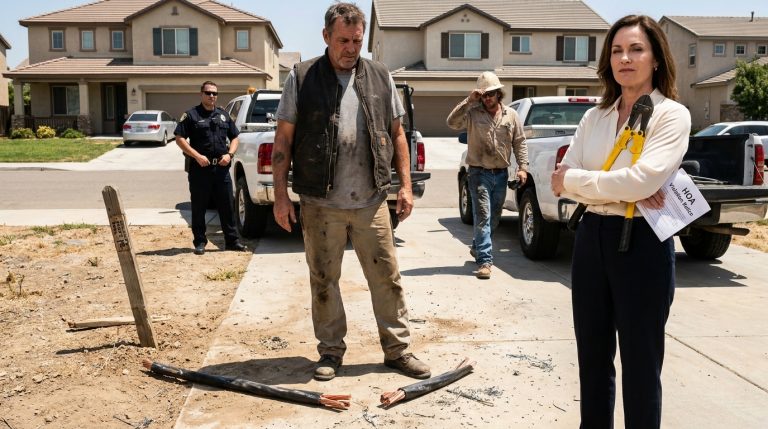
I spun around. Andre was through the gate, a pair of heavy yellow bolt cutters slung low in his right hand. His expensive dress shoes sank deep into the pine-needle mud, but his jaw was locked with a frantic, unhinged energy. Behind him, Monique stood near the sedan’s open passenger door, clutching her purse against her chest while Kendra watched from the idling car.
“You think a piece of paper stops a land-use claim?” Andre shouted, his voice cracking as he stumbled over a exposed tree root, his eyes bloodshot. “I filed an emergency injunction at the county court forty minutes ago! Adverse possession! Continuous improvement! I spent two years paying for the utility line maintenance on this easement!”
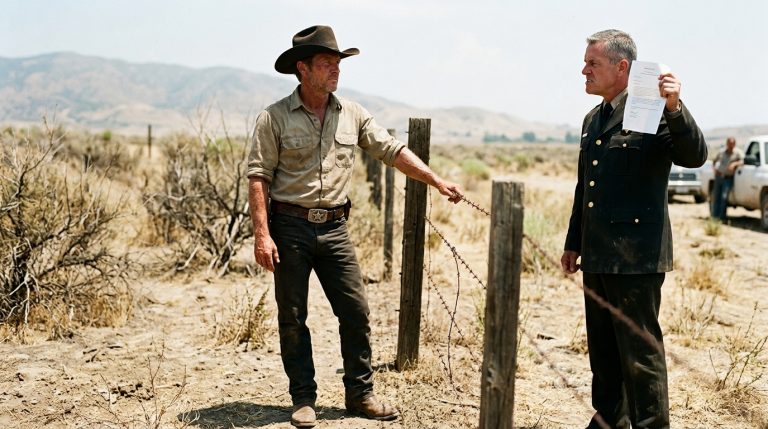
He raised the bolt cutters, pointing the heavy steel jaw straight at the property line marker. “I’m cutting the boundary fence down tonight. Once the access point is cleared and surveyed as open passage, your trust clause triggers an administrative audit that freezes this land for three years!”
He swung the heavy tool into the chain-link boundary post, steel clanging deafeningly against rusted iron.
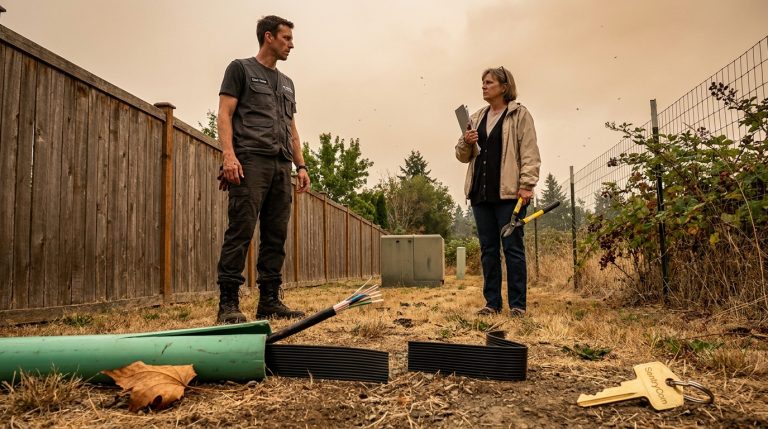
I didn’t run. I reached down to the pocket of my coat and pulled out the old toothless brass key I’d taken from the kitchen drawer—the one my father had left buried under the box of brass tacks.
“Go ahead, Andre,” I said, my voice cutting through the ringing steel. “Cut the fence.”
He paused, the heavy jaw of the bolt cutters clamped around the boundary tension wire, sweat dripping off his chin onto his jacket collar. “You think I’m bluffing? I have nothing left to lose, Joselyn!”
“My father knew you’d try the boundary clause,” I said, holding up the toothless key so the dim dusk light caught its flat, unnotched edge. “This isn’t a key to a padlock, Andre. It’s the alignment key for the original 1988 property survey vault at the register of deeds.”
Andre’s brow furrowed, his grip on the rubber handles slackening just half an inch. “What are you talking about?”
“When my father established the Banks Land Trust, he included a self-executing forfeiture deed,” I said, taking two steps toward the boundary line. “The moment any non-trustee executes a forced physical breach on the northern easement, the entire forty-foot waterfront strip automatically reverts to a protected state environmental preserve.”
I pointed at the camera mounted above the gatepost. “The feed is recording. The property line is marked. The moment that wire snaps, you don’t get the easement, Andre. You strip the entire waterfront parcel of commercial zoning forever. Your investors won’t just walk—they’ll sue you for fraudulent misrepresentation on every contract you signed.”
Monique let out a sharp gasp from the car, taking a fast step forward. “Andre! Stop! Put it down!”
Andre stared at the wire, his arms trembling violently under the strain of holding the heavy tool. The arrogant composure was completely gone, replaced by the sheer, terrifying realization that every move he made only tightened the knot around his own neck.
“You planned this,” he whispered, his knuckles turning white as he fought against the weight of the steel in his hands. “Your father… he set this up before I even signed the marriage license.”
“He didn’t trap you, Andre,” I said softly. “You trapped yourself the moment you decided everything had a price.”
CHAPTER 6: THE QUIET NORMAL
The spring sun came up soft over Lake Norman, turning the water into a flat, silver mirror.
A small crowd gathered near the edge of the lawn—neighbors in folding chairs, Calvin in his cleanest dark button-down shirt, and Cory standing by the new wooden sign covered in a simple white canvas sheet.
I sat on the edge of the dock my father built out of Brazilian teak, dipping my fingers into the cool water. Beside me, my chipped ceramic mug rested on the wood, the morning steam rising slowly into the quiet air.
Cory walked down the dock steps, his boots making a familiar, steady rhythm against the boards. He sat beside me, slumping his shoulders with a quiet sigh as he looked out across the cove.
“Dad signed the final relinquishment papers yesterday,” Cory said, his voice steady, carrying no anger or grief—just the calm weight of a settled truth. “He’s moving to Atlanta next month. No more appeals.”
“I know,” I said.
Cory reached down, picking up a flat pebble from the shallow shore, skipping it twice across the silver water before it sank. “I used to think granddad built this place just to hold onto something old. I didn’t realize he built it so we’d have somewhere solid to stand when things fell apart.”
“He knew land isn’t about owning people,” I replied, turning my mug in my hands, feeling the rough edge of the chipped rim where the paint had worn away years ago. “It’s about having a place where nobody can tell you you’re nothing.”
Up on the lawn, Calvin pulled the cord on the canvas cover. The dark wood sign underneath caught the morning light, carved deep with clean, simple block letters: Micah & Camille Banks Land Preserve.
There were no speeches, no loudspeakers, no cameras. Just the quiet rustle of pine needles in the breeze and the steady lapping of water against the dock pilings.
I picked up my mug, took a slow sip of hot coffee, and watched my son smile as he walked back up the path toward Calvin. For eighteen years I thought staying meant giving pieces of myself away until there was nothing left.
The door I locked didn’t just keep an entitled man out. It kept my father’s memory, my mother’s legacy, and my own life right where they belonged.
I stood up, walked up the steps to the house, and left the front door unlocked.