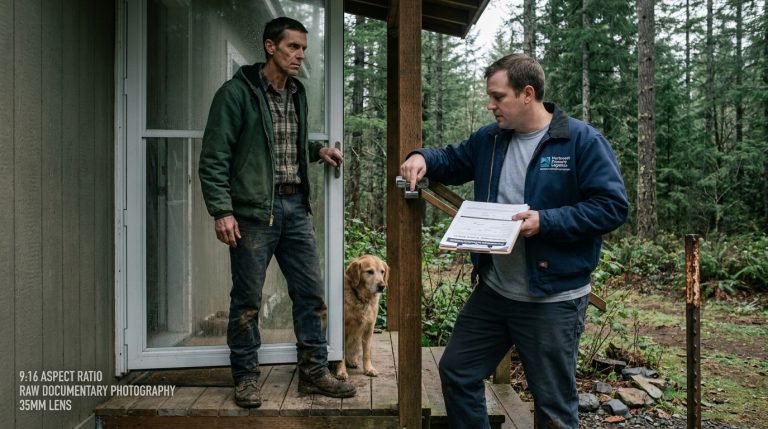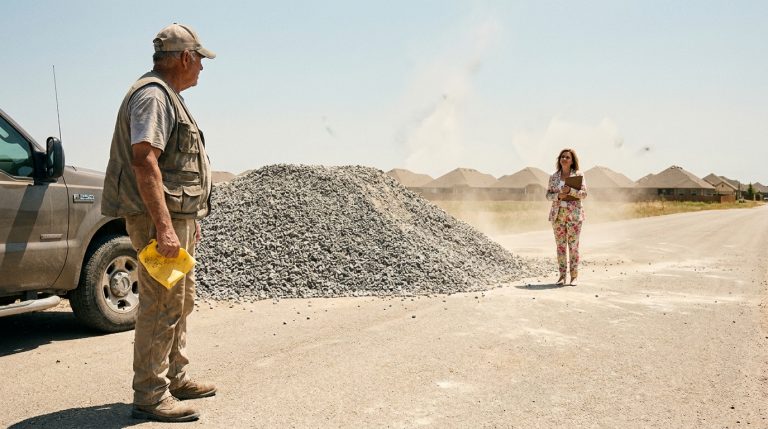
The Weight of a Silent Word: How an Everyday Driver Defied a Ballroom of Elites to Protect a Child
CHAPTER 1: THE TIGHT COLLAR
The dashboard clock of Route 12 hummed with its familiar, dull vibration against the predawn chill. Outside, the streetlights of Maple Street flickered out against a slate-gray morning sky that looked like wet concrete.
I turned the key, letting the heavy diesel engine cough twice before settling into a rhythmic, grinding rattle that shook the loose change in the cup holder.
My fingers still ached from where I had gripped the edge of that service door back in the ballroom, holding on to nothing at all except my own stubborn common sense.
The kids would be at their corners in twenty minutes, stamping their boots against the frost and breathing plumes of white vapor into the wind.
They didn’t care about charity galas or three-hundred-thousand-dollar endowments or the way high society whispered behind gloved hands when a working man walked away from a golden ticket.
To them, I was just the engine noise that meant they didn’t have to walk a mile through the freezing mud to get to homeroom.
I reached up to adjust the sun visor, my knuckles brushing against the small, folded square of yellow paper Sam had drawn for me months ago.
The ink had faded just a fraction around the edges where the morning sun hit it through the windshield, showing a clumsy yellow bus parked right beside a brown dog with legs like matchsticks.
It hadn’t moved an inch since the day he handed it to me.
A sharp rap on the driver-side glass made me blink away the memory.
Pilar stood on the sidewalk, her breath pluming white in the half-light, pulling her heavy wool coat tight against her chest while she waited for me to pop the air brakes.
She didn’t look like a high-priced employee right then; she looked like an exhausted woman who had spent forty-eight hours answering phone calls from journalists who had somehow sniffed out the chaos of the gala.
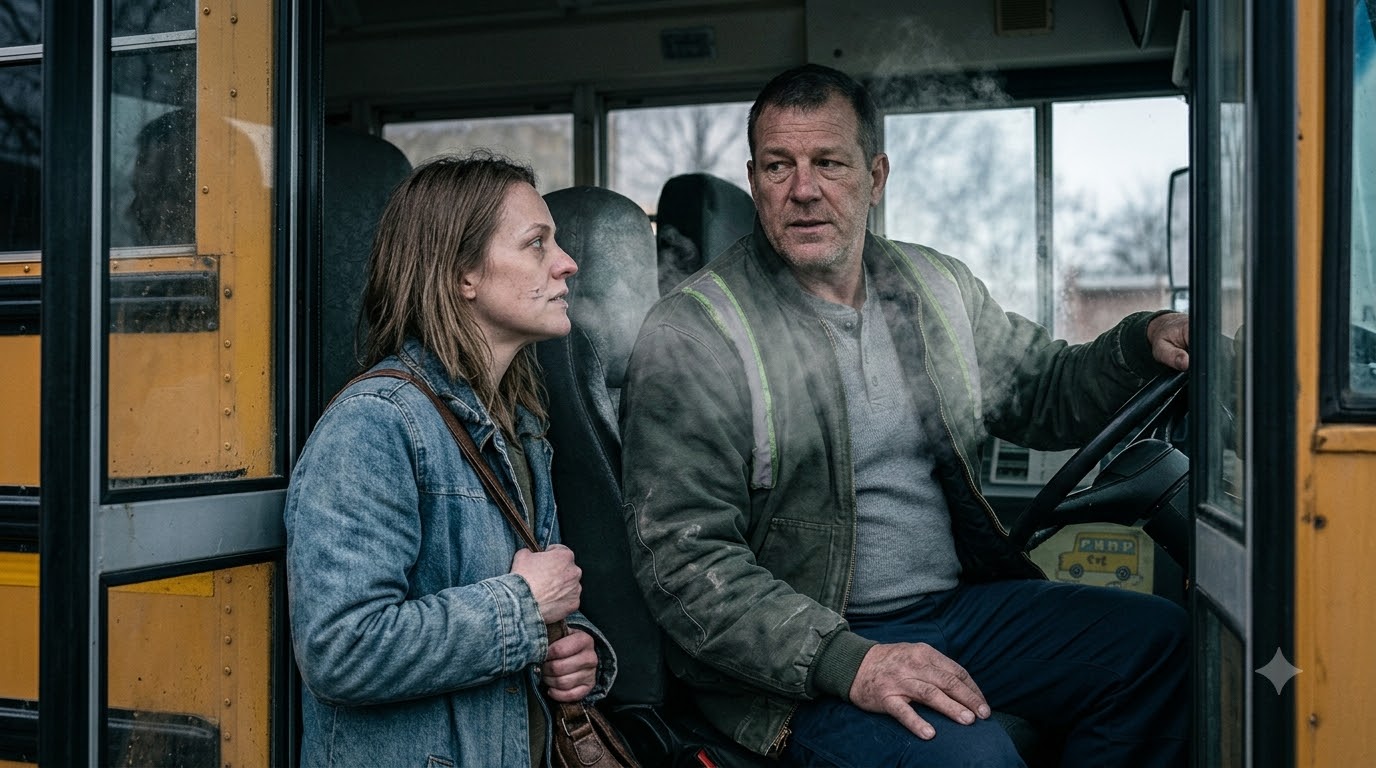
I reached down and yanked the heavy brass lever, hissing air filling the stairwell as the rubber-trimmed door swung wide open.
“Morning, Theo,” she said, stepping up onto the first tread with a quiet, bone-weary sigh that told me she hadn’t slept a wink.
“Morning, Pilar,” I said, keeping my hands steady on the steering wheel. “Cold one today.”
She didn’t move past the coin box right away, just stood there in the narrow aisle with her eyes fixed on the windshield, her fingers nervously twisting the strap of her leather bag.
“The phones haven’t stopped ringing since midnight,” she said softly, her voice barely louder than the hum of the heater. “Every reporter in the state thinks you’re playing a long game, Theo. They think walking away was just the opening bid.”
I shifted the gear selector into first, feeling the transmission catch with a heavy, metallic thud.
“They can think whatever keeps them warm at night,” I said, looking out past her shoulder toward the empty street where Sam would be standing in another ten minutes. “I drive a bus. I don’t play cards.”
Pilar let out a short, dry breath that sounded almost like a laugh, though there wasn’t an ounce of humor in it.
“She’s coming down to the route this afternoon,” Pilar said, her eyes dropping to the floor mats. “Adeline. She told me she has to see for herself if you’re actually as stubborn as you looked standing by those service doors.”
I didn’t answer right away.
I let the engine idle, watching the frost on the side mirror slowly turn to tiny, glittering beads of condensation as the defroster finally kicked in.
“Tell her she doesn’t need to,” I said, my voice flat and even. “The stop is right out in the open. Anyone’s welcome to stand on the sidewalk.”
CHAPTER 2: THE COLD BUS STOP
The amber flashers beat a steady, rhythmic pulse against the bare, skeletal branches of the maples.
I pushed the air brake forward with a heavy sigh, watching the frosty air billow off the rubber seals of the door.
A few feet away from the yellow sign, a figure stood completely still against the biting wind.
She wasn’t wearing an evening gown or a tailored designer jacket today.
Adeline Frost wore a faded, oversized denim coat with the collar turned up high against her ears, her hands jammed deep into the pockets.
She looked less like a billionaire CEO and more like any other tired mother standing in the freezing mud, waiting for a school bus to show up on a bleak Tuesday morning.
The door hissed open, and the cold draft swept straight up the metal steps.
Sam climbed on first, his head down, his small blue backpack slung over one shoulder.
He didn’t speak, but as he reached the third row, his small fingers brushed the back of the seat before he slid into his usual spot against the frosted glass window.
He didn’t look out at the dog’s yard yet; he just sat there, quiet and heavy with the weight of his own world.
Adeline stepped up behind him, her boots clicking sharply against the ribbed rubber of the floor mat.
She stopped right beside the driver’s well, her breath catching in the warm air of the cabin as she looked up at me.
“You didn’t have to wait out in the wind, ma’am,” I said, keeping my hands resting lightly on the black rubber of the steering wheel.
“I wanted to see the route,” she answered, her voice steady despite the chill biting at her cheeks. “Pilar said you wouldn’t take the call last night. She said you don’t do business over the phone.”
I didn’t invite her to sit, and she didn’t ask.
We stayed right there in the narrow bottleneck of the bus entrance, the engine rumbling a low, steady bass note beneath our feet.
“I don’t have any business to transact,” I said, my gaze shifting past her toward the empty street ahead. “Route 12 runs from seven-fifteen to eight every morning. That’s all this is.”
She reached into the deep pocket of her faded coat, her fingers brushing against something rigid and metallic before she pulled her hand back out.
“Every man who has walked into my office in the last two years has brought a ledger,” she said, her eyes locking onto mine with a sharp, exhausted intensity. “They bring portfolios, proposals, angles. You walked away from three hundred witnesses and a headline that could have bought you anything you wanted.”
“I didn’t walk away from a headline,” I said, my jaw tightening as I dropped the transmission into gear. “I walked away from a setup that used a six-year-old boy as a bargaining chip. There’s a difference.”
She didn’t flinch.
Instead, a thin, bitter line appeared at the corner of her mouth, stripped of all corporate polish.
“You think I planned that?” she asked, her voice dropping an octave so it barely carried over the diesel rattle. “You think I wanted three hundred vultures circling my son while he finally found his voice?”
“I don’t know what you wanted,” I said, releasing the brake with a sharp hiss. “I only know what I saw.”
The bus lurched forward, rolling heavily down Maple Street toward the golden retriever’s yard.
CHAPTER 3: THE UNSPOKEN AUDIT
The murmur at the hardware store counter stopped dead the moment I walked in to pick up a box of replacement wiper blades.
Old man Henderson didn’t even bother pretending to look down at his ledger; he just stared straight over the rim of his spectacles with that narrow, appraising squint common to folks who had lived thirty years in a town where nothing ever stayed private.
“Heard you had quite the audience down on Maple Street this morning, Theo,” Henderson rasped, his thumb rhythmically tapping a grease-stained ballpoint pen against the Formica counter. “Town gossip travels faster than a school bus on a downhill grade.”
I tossed the heavy cardboard box of blades onto the counter, letting the metal staples smack the surface with a sharp rattle.
“People have entirely too much time on their hands if they’re watching bus stops before sunrise,” I said, keeping my voice flat and unbothered.
Henderson let out a dry, rattling cough that sounded like gravel shifting in a tin can.
“Well, when a woman with enough money to buy the county courthouse starts standing out in the frost waiting for Route 12, folks are bound to wonder if the driver is cashing in or just stubborn,” he muttered, sliding the receipt book toward me.
“She’s a parent waiting for her kid’s ride,” I said, dropping a twenty-dollar bill onto the counter. “Nothing more to audit.”
He didn’t pick up the money right away, instead leaning his weight forward on his forearms, his eyes sharp and probing.
“Just make sure you know which side of the fence you’re standing on, son,” Henderson said quietly. ” Billionaires don’t come out to country bus stops just to admire the scenery.”
I grabbed my change off the counter, the coins cold and heavy in my palm.
“Keep the change,” I said, turning my back on him before he could answer.
CHAPTER 4: THE CRACKED WATCH
The kitchen table was littered with a stack of seventh-grade math worksheets and a half-empty mug of lukewarm coffee when Adeline sat down across from me that evening.
She didn’t look like a woman who commanded boardrooms or signed multi-million-dollar endowments; she looked tired, her shoulders bowed under a weight that had nothing to do with corporate ledgers.
“Henderson talks too much,” I said, setting a fresh mug of black coffee down in front of her.
Adeline wrapped her cold fingers around the ceramic, soaking up the heat without drinking.
“Everyone in this county thinks they know the price of a person,” she said quietly, her eyes tracing the grain of the worn wooden table. “They look at the address, the bank accounts, the charity galas, and they assume every single step is calculated.”
“People are used to transactions,” I replied, sitting down opposite her and resting my arms on the edge of the table. “They aren’t used to a parent just trying to keep a kid safe from the noise.”
She reached into her coat pocket, her movements slow and deliberate, and placed a small, unbranded silver object onto the scarred wood between us.
It was an old pocket watch, its glass face split right across the center by a jagged, spiderweb crack that caught the overhead light.
“My husband carried this every day until the accident,” she said, her voice dropping to a near-whisper that barely cut through the hum of the refrigerator. “After he died, the people who came around didn’t see a grieving family. They saw an empire that needed managing, a vacancy that needed filling.”
I looked at the cracked glass, recognizing the heavy, silent isolation sitting right there in the metal.
“Sam saw it before any of us did,” I said. “Six years old, sitting by that bus window, watching people perform for his mother instead of just being human.”
Adeline lifted her gaze, her eyes shining with unshed tears that she refused to let fall.
“That’s why he ran across that ballroom to you,” she whispered. “Because you were the only person in his entire world who didn’t want anything from either of us.”
CHAPTER 5: THE GUARDED THRESHOLD
The morning chill bit hard into the pavement of Maple Street as Route 12 rolled to its usual stop, but the air inside the bus felt entirely different.
Sam didn’t head straight for his seat in the third row today.
Instead, he paused by the driver’s well, holding a thick, spiral-bound sketchbook tightly against his chest with both arms.
He looked up at me, his eyes wide and serious, before pulling a folded piece of heavy drawing paper from the front pocket of the book.
“For the dashboard,” he said, his voice small but clear in the quiet aisle.
I reached down and took the paper, unfolding it to reveal a crayon drawing of a big golden retriever standing side by side with a yellow school bus beneath a bright blue sky.
“It’s a good one, partner,” I said, my throat tightening just a fraction as I slid it right beside the older drawing on the sun visor.
Sam gave one solemn nod, turned on his heel, and finally took his usual seat by the window.
Adeline stood on the sidewalk just outside the open door, watching the exchange with a quiet, steady intensity that cut through the noise of the morning traffic.
“He hasn’t drawn anything for anyone else in two years,” she said, her voice dropping as she stepped up onto the first tread of the bus.
“He’s not performing for an audience anymore,” I replied, keeping my hands steady on the steering wheel. “That makes all the difference.”
Before she could answer, the sharp crunch of gravel echoed from behind her down the empty sidewalk.
A sleek, dark sedan pulled up illegally right against the red curb, blocking the bus lane entirely.
The driver’s door swung open with an expensive click, and a man in a sharply tailored charcoal suit stepped out into the frost, his face twisted into a mask of arrogant urgency.
“Adeline, this is absurd,” Julian Vance called out, striding toward the open bus door with his hands shoved deep into his pockets. “Hiding out at a rural school bus stop while your board room is upside down? The press is having a field day with this working-class stunt.”
CHAPTER 6: THE RUSTED GATE
Julian didn’t look at Sam; he looked straight past the open door, his eyes fixed on Adeline with a desperate, furious edge.
“This circus has gone far enough, Adeline,” Julian snapped, his voice tight and loud enough to wake every house on the block. “You’re embarrassing the board, you’re ruining the share price, and you’re standing in a mud puddle talking to a bus driver who doesn’t even know what century he’s living in.”
I kept both hands resting flat on the black rubber of the steering wheel, my posture loose and entirely unbothered.
“The bus lane is marked red, Mr. Vance,” I said, my voice carrying a flat, heavy county cadence. “Move your car before the county tow truck gets out here.”
Julian spun around on his heel, his face flushing a mottled crimson as he pointed a trembling finger right at my chest.
“You keep your mouth shut, employee,” Julian snarled, his composure completely shattering under the weight of his own public humiliation. “You think because you pulled some cheap stunt at the gala that you’re part of this family? You’re nothing. A hired hand driving a glorified tin can.”
Adeline didn’t flinch, nor did she step back toward him.
Instead, she slowly turned away from the luxury sedan and walked fully up the metal steps, standing right beside the driver’s well where Sam was quietly watching.
“Julian,” Adeline said, her voice cutting through his tirade with absolute, freezing stillness. “If you ever speak to Theo like that again, I will personally strip every voting share you hold before the markets open tomorrow morning.”
Julian froze, his mouth opening and closing as he stared at her in sheer disbelief.
“You’re throwing everything away over a—over a driver?” he stammered, his voice cracking with panic.
“I’m finally keeping what matters,” Adeline said, and she reached out, her fingers lightly touching the edge of the yellow school bus drawing taped to the sun visor.
I pulled the gear selector down into drive, the heavy transmission engaging with a solid, reassuring thud that shook the floorboards.
“Doors closing,” I said, and I yanked the brass lever back.
The heavy rubber-trimmed seal slid shut with a definitive hiss, cutting off Julian’s desperate shouting against the glass as Route 12 rolled slowly forward down Maple Street, leaving the polished sedan and all its noise far behind in the frost.