The Bitter Taste of Rusted Water and the Silent War for Silverthorn Cove
CHAPTER 1: THE WEIGHT OF COLD METAL
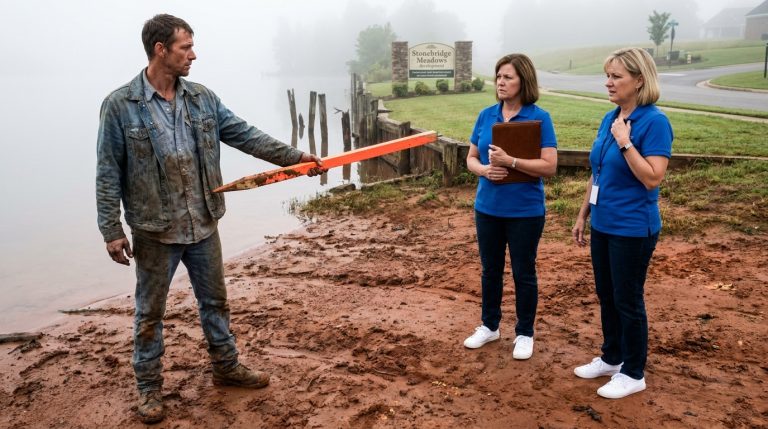
The cold iron hook of the flatbed bit into the plastic hull of my orange kayak with a dry, grinding shriek that cut straight through the lake fog.
I stood on the porch of the cabin, the ceramic mug in my hand offering the only warmth within three miles. The coffee inside was black, tasting faintly of the well water’s metallic bite—the same iron that bled into the soil of Silverthorn Cove and turned the bottom of my dock a deep, permanent orange.
Down at the shoreline, the tow truck’s diesel engine rumbled, a heavy, wet vibration that rattled the windowpanes behind me. Its tires had torn deep, black ruts into the wild rye grass my grandfather had planted to keep the bank from sliding into the water. Every rotation of the wheels spat wet silt against the birch trunks.
“You’re on private property, driver,” I said. My voice wasn’t loud, but the fog held it, carrying it across the flat water of the cove.
The driver didn’t look up from his winch. He was a thick-necked kid with a grease-smeared cap, his hands tucked into stiff leather gloves that squeaked with every movement. But Karen Bloom did.
She was standing on the gravel path just beyond my property line, wearing a neon-orange sash that looked absurdly clean against the gray morning. She held a clipboard clamped under her arm like armor, her fingers wrapped around a plastic tumbler of cucumber water. She didn’t look angry; she looked efficient. That was the most dangerous thing about her.
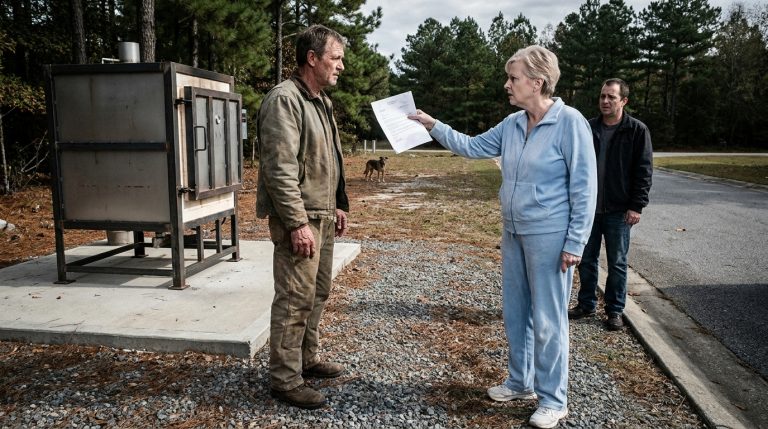
“The dock is within the common easement, Eli,” Karen said, her voice carrying that thin, practiced neighborliness she used when she was about to fine someone. “Section four of the revised lake guidelines. No unapproved recreational vessels on the water after November first.”
“My grandfather built this dock in seventy-two,” I said, stepping off the porch. My slippers soaked through instantly, the cold lake water biting through the wool to find my skin. “The county line ends at the road. You’re sixty feet inside my boundary.”
“The lake is a shared asset,” she replied, her eyes tracking the driver as he secured the second kayak. The plastic groaned under the nylon strap. “And we are standardizing the shoreline. If you want them back, you can settle the storage fee at the office.”
She turned, her boots crunching cleanly on the gravel as she walked toward her white SUV. The driver hopped into the cab, the truck’s air brakes releasing with a sharp hiss that smelled of hot oil and cheap rubber.
I didn’t run after them. I walked down to the edge of the dock where the timber was wet and soft underfoot. The wood was gray, splintered by thirty years of ice and sun. Near the corner bolt—a massive iron pin my grandfather had forged himself—something glinted in the mud.
I knelt, my fingers sinking into the cold, rotten silt. It wasn’t a standard strap buckle. It was a heavy brass cylinder, the size of a shotgun shell, stamped with a serial number and a logo I’d never seen before: Vanguard-9. A thin, yellow wire had been sheared clean at its base, dripping a strange, chemically sweet synthetic grease onto the wild rye grass.
They hadn’t just come for the kayaks.
CHAPTER 2: THE PAPERWORK PARLOR
The sweet, synthetic grease of the cylinder lingered on my thumb, a stubborn film that water wouldn’t wash off as I climbed back up the wet timber of the dock. It smelled of heavy machinery and laboratory-grade solvents—not the simple motor oil or transmission fluid you’d find in a local mechanic’s garage.
I pocketed the brass cylinder, the cold metal dragging heavy against the lining of my coat pocket. My boots squeaked with every step up the gravel path, still carrying the dark, gritty silt from the shoreline. I didn’t stop to change my shoes. I didn’t return to the cabin to let my socks dry. The heat from my anger was the only thing keeping the chill from settling into my joints, and if I let that cool down, the momentum would go with it.
I walked straight past my truck. Driving would make too much noise, announce my arrival before I could get a look at how they operated when they thought they were alone. Instead, I took the narrow right-of-way trail that cut through the pines along the property line, my feet sinking into the dead needles and soft earth. The air here was thicker, smelling of damp mold and rotting pine cones, but as I neared the south end development, the scent shifted. It became clean. Too clean. The sharp, artificial smell of freshly laid blacktop and chemically treated lawn fertilizer began to choke out the lake.
The HOA management office sat at the edge of the new asphalt perimeter, a pristine, white-clapboard building designed to look like a historic boathouse but built with synthetic vinyl that would never rot and never hold a soul. The sign out front read Silverthorn Cove Community Association, the gold lettering catching the weak morning light.
I pushed the heavy glass door open. Inside, the transition was like stepping into a different climate. The air-conditioning hummed a low, sterile note, smelling of lemon-scented floor wax and cheap carpet fibers. The heat of the morning fog evaporated off my face, replaced by a dry, artificial chill that made my damp socks feel twice as cold.
Sheila was behind the counter, her fingers tapping against the keys of a sleek, silver computer. She wore a pastel blue cardigan that matched the paint on the walls, but her face didn’t hold the same softness. When she saw the mud on my boots, her hands froze over the keyboard.
“Eli,” she said, her voice dropping into a register that was meant to sound welcoming but felt like a fence. “If you’re here about the kayaks, Karen is in the back. But I should warn you, the board’s decision on the common easement is final.”
“I’m not here to debate the easement, Sheila,” I said. My hand went into my pocket, my fingers brushing the cold, grease-coated edge of the brass cylinder. “I’m here to see the log of the contractors you had on my dock this morning.”
A door behind the counter clicked open, and Karen Bloom stepped out. She had shed the neon-orange sash, but she still held the clipboard, its aluminum edge reflecting the harsh glare of the fluorescent tubes overhead. The silver-rimmed glasses resting on the bridge of her nose made her eyes look larger, more clinical.
“There is no contractor log for public viewing, Eli,” Karen said, her voice flat, devoid of the neighborly tone she had used on the shoreline. “And those kayaks were removed by the authority of the Lake Use Task Force. It was a standardized enforcement action.”
As she spoke, I noticed a stack of glossy, bound booklets sitting on the edge of her desk through the open door behind her. They were fresh from a printer, still smelling of warm ink. The title page didn’t mention lake guidelines or kayak storage. In bold, dark lettering across the top, it read: Project Ironwood: Standardized Ecological Zoning Initiative. Beneath it, a small, gray logo depicted a stylized compass rose—the exact same layout I had seen on the Vanguard-9 cylinder currently sitting in my pocket.
My grandfather’s voice echoed in my head, a phantom memory from twenty years ago when we’d sit at the kitchen table with the old, hand-drawn land surveys. The people who want to change the land always start with the names, Eli. If they can rename the dirt, they can rewrite who owns it.
“Project Ironwood,” I read aloud, my eyes staying locked on the stack of booklets.
Karen’s posture went rigid. She stepped sideways, blocking my view of the inner office, her fingers tightening around the clipboard until her knuckles turned the color of the cheap vinyl siding outside. “That is private board business. If you don’t have official business here, I’m going to have to ask you to leave the office. The mud on your boots is ruining the linoleum.”
I took a slow step backward, the wet soles of my shoes leaving a dark, double crescent on the clean floor. “The mud washes off, Karen,” I said, keeping my voice quiet, transactional. “Some things don’t.”
I turned and walked out, the glass door clicking shut behind me, sealing the lemon scent inside. The cold, wet air of the lake hit me like a slap, but the grease on my fingers felt warmer now, a physical clue that told me the fight wasn’t about two orange kayaks. It was about the ground beneath them.
CHAPTER 3: THE VAULT OF CABIN DIRT
The glass door of the HOA office rattled behind me, and the humid dampness of the cove pressed back against my face like a heavy wool blanket. On the gravel path, the cold morning air seemed to collect the scent of pine needles and stagnant lake water, drawing them deep into my lungs. My boots, still bearing the fresh stains of dark silt, crunched rhythmically against the stone as I walked away from the sterile vinyl siding and back toward the narrow road leading to my property.
I kept my hand inside my coat pocket, fingers wrapped around the brass cylinder. The chemically sweet grease had rubbed off onto my fingertips, slick and smelling of industrial engines. Karen’s immediate, sharp defense of the stack of booklets had confirmed what I suspected: the kayaks weren’t just a petty violation. They were a smoke screen to keep me occupied while something far larger was set in motion along the southern edge of the shore.
I turned off the main gravel road, the gravel giving way to the soft, giving earth of my own path. The forest floor here was carpeted with decaying pine needles and fallen leaves from previous seasons, absorbing the sound of my footsteps. Up ahead, my grandfather’s cabin sat tucked beneath the towering hemlocks, its cedar shakes weathered to a dull charcoal gray. It looked small, almost fragile against the massive backdrop of the trees, but it had stood there since before the roads were even paved.
I walked up the three wooden steps of the porch, the old planks giving a familiar, deep groan under my weight. Pushing the heavy oak door open, I stepped into the dim, quiet interior. The air inside smelled of woodsmoke, dry spruce, and the faint, sweet tang of linseed oil. I kicked off my wet boots, leaving them on the rug by the door, and walked across the pine floorboards in my damp socks to the corner of the living room where my grandfather’s heavy iron stove stood cold.
Behind the stove, half-hidden by a woodbox made of old shipping crates, was a loose floorboard. I knelt, the fabric of my trousers straining against my knees. I dug my fingers into the seam between the planks, lifting the board to expose the dark, dry dirt of the crawlspace beneath the cabin. Resting on the joist was a heavy steel lockbox, its green paint chipped and rusted at the hinges. It had belonged to him, a surplus military chest from some long-forgotten supply depot.
The lock was a simple, heavy brass padlock. I reached into my pocket, pulling out the brass valve key that lived on my keyring. It slipped into the lock’s keyway with a dry, metallic scrape. I turned it, and the internal spring released with a dull, heavy clack.
Inside the box, the air was dry, smelling of old parchment and decaying twine. There were hand-drawn blueprints of the lake’s water channels, ancient yellowed receipts for gravel delivery, and a thick, leather-bound folder tied with a rotting cord. I pulled the folder out, laying it flat on the pine floorboards, and slid the knot loose.
My fingers turned the yellowed pages carefully, the paper dry and stiff. These were the original conservation agreements, dated forty years back, co-signed by the state environmental commission and my grandfather. The legal descriptions were precise, written in the dry, rhythmic language of property law. They established our family’s permanent easement over the southern half of the cove, granting us the sole right to maintain the shoreline, regulate sediment flow, and—most importantly—control the main floodgate valve.
As I turned the final page, a small slip of carbon paper fell out from between the sheets. It was a faded, purple-inked blueprint of a regional survey, dated five years ago. I smoothed it out with the palm of my hand. Near the top corner, a bold, red stamp had been placed over the official county seal.
The stamp read: Proposed Realignment Study – Bypass 42-B.
My breath caught slightly in my throat. The proposed line for the highway bypass didn’t circle the mountain to the west as the county had announced years ago. On this map, the dotted red line cut straight through the southern marshlands of Silverthorn Cove, right where Karen’s contractors had been quietly dropping gravel and moving concrete blocks. If the bypass came through here, the entire wetland would be filled, draining the cove into a shallow, mud-choked ditch.
And tucked into the legend of the map, listed as the primary surveyor and environmental assessor for the proposed corridor, was the name: Vanguard Marina Group.
The pieces began to slide into place, heavy and cold. The strict lake guidelines, the towed kayaks, the sudden concern over easement rights—it was all designed to clear the water of private docks and local claims before the state took the land. They wanted the shoreline cleared of any legal resistance, and Karen was the one holding the broom.
I sat back on my heels, the cool metal of the brass cylinder in my hand suddenly feeling like a weapon. They thought they had the authority because they had the clipboards. But they had forgotten about the old valves beneath the dirt.
CHAPTER 4: BREAKING THE SEAL
The yellowed survey paper remained flat on the pine floorboards, the purplish outline of Bypass 42-B burning itself into my memory. My fingers tightened around the brass key still resting in the padlock of the green lockbox. I didn’t let myself hesitate. If Karen’s people were already dropping gravel and using unauthorized sensors, the window to act before the physical landscape changed permanently was shrinking by the hour.
I stood up, my knees cracking in the silence of the cabin. Leaving the papers secured back inside the floorboard’s secret joist, I slid the brass key off my ring and shoved my cold, damp feet back into my heavy work boots. The leather was still stiff, the laces stiffened by the lake water, but I pulled them tight, tying them off with a hard double knot. I grabbed a flashlight and a can of penetrating lubricant from the workbench by the door.
When I stepped outside, the autumn wind had picked up, sweeping across the open water of the cove and rattling the dry branches of the birch trees. The temperature was dropping. I walked down the slope of the property, steering clear of the gravel trail to avoid any casual eyes from the development. My path was a direct line through the dense hazel brush toward the concrete valve hut at the water’s edge.
The hut was a small, windowless block of poured concrete, half-swallowed by climbing ivy and wild blackberries. My grandfather had built it to house the floodgate regulators, a mechanical bypass that could siphon off the cove’s headwaters directly into the county creek system. To the average resident, it looked like an abandoned utility shed, but to the county, it was a registered ecological valve.
As I reached the thick pine door, my flashlight beam cut through the graying light, illuminating the heavy iron clasp. I froze.
The brass padlock hanging from the iron latch wasn’t mine. Or rather, it was mine, but someone had recently tried to force it. The weathered green oxidation on the lock body had been brightened by fresh, silver scratches, and a smear of dark, synthetic grease—identical to the sweet-smelling substance on the Vanguard-9 cylinder—was rubbed across the keyway. Someone had tried to pick or sheer the lock within the last forty-eight hours and failed.
My jaw tightened. I wiped the greasy residue away with my sleeve, inserted my grandfather’s key, and turned it. The tumblers inside were stiff with age, but with a heavy, grinding crunch, the lock popped open.
The hinges of the thick door screamed as I forced it back against the encroaching ivy. Inside, the air was freezing, thick with the smell of wet concrete, stagnant river silt, and ancient iron. The floor was covered in a thin skin of dark, seepage water. In the center of the small space stood the regulator: a massive, vertical iron column connected to a horizontal pipe that disappeared through the concrete wall toward the lakebed. At the top of the column was a cast-iron wheel, three feet in diameter, coated in a thick crust of red rust.
I stepped onto the wet concrete floor, the water pooling around the soles of my work boots. I laid the flashlight on a dry ledge, pointing the beam directly at the center axle of the wheel.
“Time to see if you still have teeth,” I muttered to myself.
I shook the can of lubricant, spraying a generous stream into the spindle threads. The liquid hissed against the dry rust, bubbling slightly as it sank into the seized metal. I grabbed the wheel with both hands, my leather gloves biting into the rough, pitted iron.
I leaned my weight into it, pushing with my legs. The wheel didn’t budge. The iron felt like a solid extension of the concrete floor.
I took a deep breath, adjusted my footing on the wet concrete, and drove my shoulder against the rim, pulling with my left hand and pushing with my right. I could hear my own breathing, loud and ragged in the enclosed space. The rust began to flake off in small, red showers, drifting down into the standing water below.
Then, with a sharp, resonant crack that sounded like a rifle shot inside the small concrete room, the seal broke.
The wheel turned a fraction of an inch. A low, subterranean gurgle vibrated through the pipe beneath my feet. I adjusted my grip and pushed again. This time, the motion was smoother, a heavy, grinding rotation that groaned as the internal screw lifted the heavy sluice gate deep under the water of Silverthorn Cove.
With every full rotation, the subterranean roar grew louder. The sound of rushing water, deep and hollow, began to echo through the concrete hut as the lake level started its slow, calculated descent.
CHAPTER 5: THE RECEDING BASIN
The heavy, subterranean roar of the water rushing through the bypass pipe vibrated through the soles of my boots, a low-frequency hum that seemed to shake the very concrete walls of the hut. I didn’t linger in the damp darkness. Gripping my flashlight, I stepped out into the biting wind, leaving the heavy pine door ajar just enough to monitor the steady, mechanical groan of the opened valve.
Outside, the transition was already beginning. The relentless suction of the siphon was pulling the cove’s headwaters down, inch by agonizing inch. I walked along the shoreline, my boots sinking into the newly exposed perimeter where the water had retreated. The familiar gravel was gone, replaced by a wide, glistening collar of black silt that smelled intensely of decaying lake weed, sulfur, and cold, dead organic matter.
The lake was giving up its secrets. Up on the south end, the shift was immediate and ungraceful. Through the graying mist, I watched the HOA’s pristine, floating docks tilt at a sharp, awkward angle as the water beneath them vanished, the plastic flotation drums groaning against their anchor pylons.
I walked farther down the emerging mudline, the suction of the wet silt pulling hard against my boots with every step, requiring a conscious, exhausting effort to drag my feet forward. My flashlight beam swept over the wet expanse, reflecting off discarded soda cans, old fishing lures, and the tangled, slimy roots of the water lilies.
Then, twenty yards out from my own dock line, the light caught a strange, unnatural shape half-buried in the black muck.
I paused, balancing myself against the cold wind, and waded deeper into the mire. The silt climbed up to my shins, cold and unyielding. I reached down, my gloved hand closing around a heavy, tubular object. With a wet, sucking sound, I pulled it free from the mud.
It was a cylindrical plastic canister, roughly two feet long, heavily corroded and caked in dark weeds. I wiped the layer of slime off with my sleeve. The plastic underneath was a military-grade gray, stamped with a serial number and the bold, block letters: VANGUARD-9 INDUSTRIAL MONITOR. A slow, steady drip of chemically sweet, amber grease leaked from a cracked seal at its base, contaminating the dark pool of water at my feet.
This wasn’t a standard water-testing kit. It was an industrial telemetry unit used to measure sediment density and substrate stability—the kind of hardware required before heavy machinery could lay concrete pilings for a massive roadway.
I looked up from the canister, my eyes tracing the direct line from this point across the marshlands toward the highway on the western horizon. If the Bypass 42-B project went through, this exact spot would be the center lane of a four-lane asphalt deck. The “Project Ironwood” booklets I had seen in Karen’s office weren’t a local zoning plan; they were the local face of an industrial buyout designed to hide the preliminary surveying work.
Suddenly, a sharp, metallic beam of light cut through the pine branches from the direction of the road, scanning the mudbanks.
I crouched, dropping my weight into the shadow of a decaying willow trunk. The heavy mud held me fast, my breathing shallow as I squeezed the cold cylinder against my chest. The flashlight beam swept over the empty water, then traced the line of the receding shore, moving closer and closer to where I stood in the dark.
Someone was out here, checking the damage. And they were looking for the valve.
CHAPTER 6: MIDNIGHT IN THE SLUDGE
The white beam of the flashlight swept across the exposed mudbanks, skimming the skeletal, gray limbs of the fallen willow just inches above my head. I pressed deeper into the hollow of the trunk, my knees buried in the freezing, waterlogged silt. The heavy gray canister of the Vanguard-9 monitor was cold against my ribs, smelling faintly of synthetic oil and old rot.
A shadow lengthened across the muck. Footsteps approached, heavy and uneven, accompanied by the wet, sucking sound of boots fighting the marsh.
“I know what you’re doing, Eli,” a voice called out. It was Karen. But the sharp, pristine authority she wore like a shield in the daytime had fractured. Her voice was thin, raspy, and carried an edge of pure, desperate panic that the wind whipped away almost instantly.
I didn’t move. My chest rose and fell in slow, silent increments. Through the tangled roots, I watched her struggle through the newly formed shoreline. She wasn’t wearing her pristine board sash or her clinical glasses. She was dressed in dark, muddy activewear, her breath coming in ragged plumes of steam. In her gloved hand, she carried a heavy pipe wrench and a pair of bolt cutters.
She stopped ten feet from the concrete valve shed, her flashlight beam shaking as she aimed it at the open door. “You think you’re saving this place,” she whispered to the empty air, her teeth clicking from the chill. “You’re destroying it. If you don’t let them have the easement, they’ll take everything. The whole cove.”
She took two steps toward the threshold of the hut, her boot slipping on a slick patch of clay. She stumbled, her arm flailing, the heavy iron wrench clattering against a stone.
“It’s not an easement, Karen,” I said, stepping out from the shadow of the willow.
She gasped, her flashlight whipping toward my face, blinding me for a split second. I didn’t flinch. I kept my boots planted in the silt, the gray Vanguard-9 unit held low.
“It’s a pre-construction sweep for Bypass 42-B,” I continued, my voice steady, carrying across the empty basin of the cove. “Project Ironwood isn’t a conservation plan. It’s a localized clearance protocol to hand these wetlands over to Vanguard so they can lay the foundations for a highway bypass.”
Karen’s flashlight beam wavered, dropping down to illuminate the muddy cylinder in my arms. Her face went pale under the harsh LED glare, her chest heaving under her dark jacket.
“We had no choice,” she hissed, her voice cracking as she stepped backward, her boots sinking deeper into the mire. “The county was going to use eminent domain to seize the entire south shore anyway. If we standardized the zoning under the HOA first—if we classified the cove as an active commercial development zone under Project Ironwood—we could force them to lease the basin instead of draining it. We were going to save the north-end houses!”
“By burying the south-end wetlands in four feet of concrete?” I walked forward, the mud clinging to my legs, matching her step for step. “By letting Vanguard-9 telemetry units quietly map my grandfather’s shoreline for demolition? You took my property to clear the docks so their surveyors wouldn’t have to navigate around local claims.”
“It was the only way to preserve the community’s value,” she cried, raising her wrench like a shield, her eyes darting toward the valve shed. “If we shut that floodgate, the water levels rise back up, the surveys fail, and the lease is voided. They’ll pull the funding! I won’t let you ruin this!”
She lunged toward the open door of the shed, her boots churning the black sludge. But the mud was an unforgiving floor. Her foot caught on a submerged root, her momentum carrying her forward. With a wet, heavy splash, she went face-first into the thick, black silt at the entrance of the valve hut.
The wrench flew from her hand, disappearing into the dark muck. She scrambled to her knees, coughing, her face caked in the foul-smelling black sludge of the lakebed. She looked up at me, her eyes wide with a mixture of cold fury and absolute defeat, the dark grease of the cove staining her clothes, her hands, and her authority.
I didn’t offer her a hand. I stood there, the cold wind blowing the scent of ancient iron and fresh mud between us, and watched her realize that the ground she had tried to control had finally claimed her.
CHAPTER 7: THE RUSTED ACCORD
The black silt clung to Karen’s face in thick, cold clumps, dripping slowly from her chin onto the concrete step of the valve hut. She didn’t try to stand. She sat there in the mud, her hands trembling as they pressed into the wet clay behind her, her knuckles stained dark by the very earth she had spent months trying to pave over. The heavy pipe wrench she had carried lay half-submerged in the puddle between her boots, its red handle slowly disappearing beneath the rising water.
“It’s over, Karen,” I said, my voice low and flat against the rhythmic, heavy gurgle of the valve behind me. I set the gray Vanguard-9 telemetry cylinder down on the concrete ledge of the hut, its cracked seal still slow-dripping that chemically sweet grease onto the stone. “The county environmental office already has the filing. Lupe didn’t just submit a maintenance permit. She submitted the full survey of these wetlands, including the coordinates of every unpermitted industrial sensor your contractors dropped.”
Karen looked up, her breathing shallow and ragged, her chest heaving under her wet jacket. The LED beam of my flashlight caught the wet tracks of tears cutting through the mud on her cheeks. “You don’t understand,” she whispered, her voice rough with cold. “The state… the state funding for Bypass 42-B was already approved. If we didn’t align with Vanguard, they were going to claim the entire shoreline under eminent domain. I was trying to negotiate a private lease option through Project Ironwood to keep the northern houses from being demolished.”
“You were going to let them bury the south cove in six feet of gravel so you could save your own backyard,” I replied, looking down at her. “You thought if you hid the survey behind HOA zoning guidelines and towed away any private docks that interfered with the baseline measurements, nobody would notice the highway until the concrete was poured.”
The sound of headlights flickered through the pine trees behind us, sweeping over the wet hazel brush. Two vehicles came to a stop at the end of my access road, their engines dieseling down to a quiet hum. A car door slammed, followed by the heavy, steady crunch of boots walking down the trail.
It wasn’t the police, and it wasn’t Vanguard’s contractors.
Greg stepped into the clearing first, wearing a thick flannel jacket and carrying a heavy wool blanket. Behind him was Walter, his prosthetic leg sinking slightly into the soft pine needles, but his posture straight and unyielding. They didn’t yell. They didn’t make speeches. They just looked at Karen, then at the open door of the concrete hut where the lake water was steadily draining into the creek.
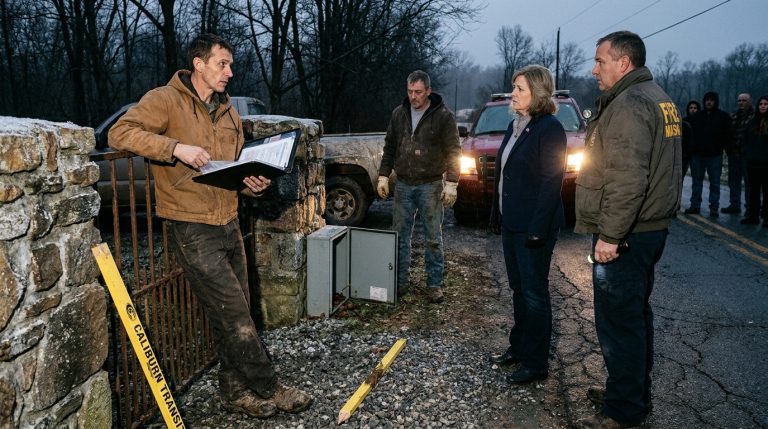
“We found the corporate registry filings for Project Ironwood in the HOA database, Karen,” Greg said quietly, stepping forward and dropping the wool blanket over her shivering shoulders. “You signed the development waiver on behalf of the board without a community vote. The county sheriff is already reviewing the unauthorized dredging footage Eli’s cameras caught.”
Karen closed her eyes, her head dropping forward into her hands. The fight had drained out of her, leaving only the cold reality of the wet silt and the heavy, inescapable weight of her own paperwork. Walter walked over to her side, his hand reaching down to pick up the abandoned pipe wrench from the mud. He handed it to me, his eyes catching mine in a silent, steady gaze that said more than any words could.
“Let’s get her inside,” Walter said.
The next few hours moved with the slow, deliberate pace of a world resetting itself. By the time the county inspector arrived at dawn, the wind had died down, leaving the cove cloaked in a thick, silent mist. The inspector took one look at the Vanguard-9 cylinder, documented the unpermitted gravel deposits along the southern bank, and issued an immediate environmental cease-and-desist order to the state transit authority. Bypass 42-B would have to be rerouted around the mountain after all. The wetlands were legally protected, anchored by the forty-year-old conservation agreement my grandfather had signed.
By afternoon, the tension that had hung over Silverthorn Cove for months began to evaporate like the morning fog. The board held an emergency session in Greg’s garage, voting unanimously to dissolve the Lake Use Task Force and rescind every fine Karen had issued.
Two days later, the air was crisp, smelling of wet earth and fresh pine. I sat on the edge of my wooden dock, the sun warming the gray, weathered planks beneath my palms. Next to me lay the two orange kayaks. Their plastic hulls were scarred, bearing deep, ugly white gouges where the tow truck’s iron hook had bitten into them.
I picked up the plastic welding iron, its copper tip whistling slightly as it heated. Beside me was a strip of bright orange polyethylene repair rod. I pressed the hot tip against the deepest gouge, feeling the heat radiate up my sleeve as the plastic softened, turning into a thick, glowing pool of liquid color.
Slowly, methodically, I filled the wound, smoothing the melted polymer with the flat of the iron until the scarred hull was solid once more. It wasn’t perfect—there would always be a dark, raised seam where the metal had torn it—but the structural integrity was back. It was whole.
I turned off the iron and let it cool on a scrap of iron plate.
“Looks like they’ll float,” a voice said.
I looked up to see Walter walking down the gravel path, his grandchildren running ahead of him toward the water’s edge. He carried a pair of lightweight aluminum paddles, their blades scraping gently against the wild rye grass.
“Only one way to find out,” I said, standing up and sliding the first kayak into the cool, clear water of the cove. The lake had risen back to its natural level, the water lapping gently against the green-oxidized brass bolts of the dock my grandfather had built.
I helped Walter lower himself into the cockpit, his hands steady against the gunwales as he adjusted his prosthetic leg inside the hull. He gripped the paddle, his eyes reflecting the deep gold of the late afternoon sun setting over the western pines.
With a single, smooth stroke, he pushed off from the dock. The orange kayak slid silently across the water, cutting a clean, v-shaped wake through the reflection of the trees. His youngest grandkid sat up front, pointing at a great blue heron that had landed on the newly restored reeds near the valve hut.
I stood on the dock, the smell of warm pine and wet silt filling my lungs, watching them paddle out into the quiet center of the cove. The lake didn’t belong to Karen, and it didn’t belong to Vanguard. It belonged to the water, the reeds, and the people who knew how to protect it without trying to own it.
I took a slow sip of black coffee from my mug, the iron-tasting water finally feeling like home again.