The Soft Earth Beneath Our Feet: A Story of Cracks, Community, and the Fragile Foundations of Home
CHAPTER 1: THE COLLAPSE
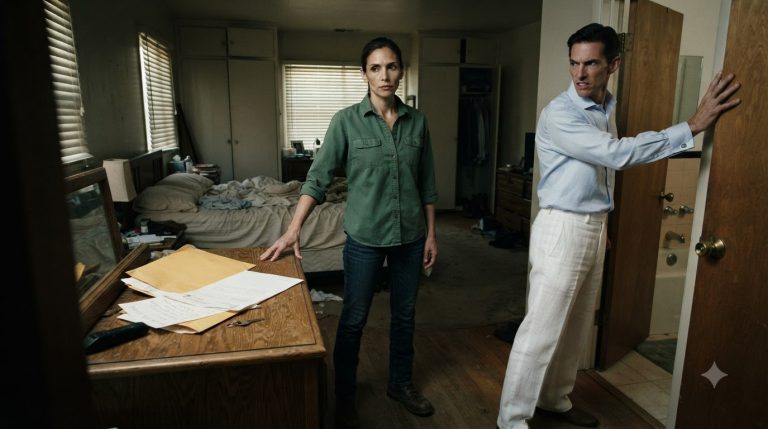
The ceramic mug was warm against my palms, its chipped blue glaze a small comfort in the chilly autumn air. I took a slow sip, watching the weak morning light play across the frayed edges of my porch steps. I had moved to Maple Brook Estates seeking a quiet life of soft mornings and gentle silence. Instead, I was staring at two and a half tons of polished black metal parked directly on my grass. The unstable ground beneath Maple Brook Estates. Source: Michael Warren / Getty Images
Cynthia Hargrove stood beside her luxury SUV, her sunglasses catching the flat, desaturated glare of the overcast sky. Her clipboard was tucked under her arm like a shield.
“Mr. Reeves,” she said, her voice sharp enough to cut through the quiet morning mist, “your lawn is once again in violation of HOA height guidelines.”
“I trimmed it yesterday, Cynthia,” I replied, my voice low and calm. I let my gaze drift to the heavy tires of her vehicle, which were already sinking into the dark, damp turf. “Would you mind moving your vehicle off my property?”
She sighed, a heavy, theatrical sound that seemed to carry the weight of the entire neighborhood’s expectations. “The bylaws allow inspection when necessary. We must maintain standards, Daniel. Without structure, this community falls apart.”
She didn’t move. She didn’t turn off the engine, which hummed with a low, oppressive vibration. A few neighbors had stopped on the sidewalk, their eyes fixed on us, sensing the quiet storm brewing on my front lawn. They didn’t know about the hollow space beneath the grass. A few weeks ago, a landscaping foreman had warned me that an old, defunct irrigation line had collapsed underneath, leaving a fragile cavity. It looked like solid earth, but it was nothing more than a thin crust of green over empty space.
“Cynthia,” I said, taking a step down. “You really need to move your car. The ground is soft.”
“I am conducting an official—”
She was cut off by a dull, hollow groan from the earth. It was a sound of old wood and shifting clay giving up.
The front tires of her SUV suddenly dipped half an inch. Cynthia froze, her sunglasses slipping slightly down her nose. The hum of the engine changed pitch as the vehicle tilted forward.
“Did you do something to this yard?” she demanded, her voice cracking with a sudden, uncharacteristic panic.
“It’s always been soft,” I murmured.
Then came the crunch. It wasn’t loud, but it was deep. The ground simply parted. Slowly, almost gracefully, the front end of the luxury SUV plunged downward into the earth, the immaculate black bumper dipping into the dark mud as if the soil itself were reclaiming it.
The clipboard slipped from Cynthia’s hand, clattering against the damp pavement. A collective gasp rose from the small crowd on the sidewalk. But as I looked down into the newly opened cavity, my heart stopped.
Wedged tightly in the collapsed earth, directly beneath where her front tire had rested, was a half-buried, decaying leather folder. The gold lettering on the waterlogged cover had faded, but it was still legible: Crestview Alliance Property – Confidential Vesper-9.
CHAPTER 2: THE SEED IN THE MUD
The damp leather of the folder clung to my fingers like cold, decaying leaves. I didn’t pull it free immediately. Instead, I let my hand rest on the waterlogged edge, feeling the grit of the shifted earth grinding against my skin. Behind me, the hum of the luxury SUV’s dying air conditioning hissed a thin stream of steam into the chilly air. The front bumper remained stubbornly wedged in the dark, gaping maw of my lawn, a monument of heavy steel bowing to gravity.
“Daniel?”
Cynthia’s voice was barely a whisper, stripped of the clipped authority she usually carried like armor. She had stepped closer, her heels sinking slightly into the soft, unruined grass near the driveway. Her eyes, normally hidden behind the dark tint of her sunglasses, were wide, fixed not on her ruined vehicle, but on my hand resting in the mud.
I pulled the folder free. The earth let go of it with a wet, sucking sound. Clods of gray clay fell away, revealing more of the gold lettering. Crestview Alliance Property – Confidential Vesper-9. The paper inside was bloated, swollen with decades of groundwater, the edges stained a dark, rusted iron color.
“What is that?” Victor asked, leaning over the hood of the sunken car, his retired engineer’s eyes narrowing as he tried to peer into the hole. “Looks like an old utility casing. But that’s not county standard.”
“Just old landscaping trash,” I said quietly, my voice flat, devoid of the triumph the gathering crowd seemed to expect. I slid the damp folder under my arm, the cold moisture instantly seeping through my thin flannel shirt, pressing against my ribs. “Nothing to worry about.”
Cynthia’s gaze locked onto the folder. For a fraction of a second, the mask of the tireless HOA president slipped. The color drained from her lips, leaving them pale and dry. She took half a step forward, her hand twitching toward her clipboard, which lay forgotten in the grass, its metal clasp smeared with mud.
“Mr. Reeves,” she started, her voice shaking slightly before she caught herself, pulling her shoulders back to simulate her usual posture. “That… that is community property. Anything found within the easement boundaries of Maple Brook Estates must be submitted to the board for review. Section four, paragraph twelve.”
“This isn’t the easement, Cynthia,” I said. My fingers tightened on the damp leather, feeling the fragile pages inside shift under the pressure. “This is my front yard. You parked on it. The ground gave way. I think we’re well past section four.”
“I have a tow truck coming,” she said quickly, her eyes darting to the neighbors who were still holding up their phones, recording the slow-motion disaster. Her tone was sharp, transactional, but the undercurrent of fear was unmistakable. “We can settle the landscape damage through the standard claims process. There is no need to… to dig up old trash.”
“I’ll keep it safe for the adjuster,” I replied.
I turned toward my porch, the wet grass squeaking under my boots. Every step felt heavy, the damp weight of the folder under my arm acting as a physical anchor. Behind me, the low, distant rumble of a flatbed tow truck began to echo down the quiet street of Maple Brook Estates, its yellow warning lights casting rhythmic, pale flashes against the faded siding of the suburban homes.
As I reached the top step of my porch, I glanced back. Cynthia hadn’t moved. She stood at the edge of the collapse, her shadow stretching long and thin across the ruined green, looking less like an enforcer of rules and more like someone watching a slow leak in a dam she had spent her whole life trying to hold together.
Inside the kitchen, the silence of the house was absolute. I set the wet folder on the wooden table, the moisture instantly leaving a dark, ringed stain on the faded oak. With careful fingers, I peeled back the first mud-slicked page. The ink had bled into the soft fiber of the paper, but the title at the top of the page was clear: Vesper-9 Grid Alignment – Sector 4 (Maple Brook Overlay). Beneath it, a list of signatures stared back at me, and at the very bottom, a faded, handwritten notation in red ink: The Alder Dossier has been archived. Do not excavate.
I looked out the window. The tow truck was backing onto my lawn, its heavy iron chains clinking in the quiet morning air.
CHAPTER 3: THE SEEPING BASEMENT
The cold glass of the window pane vibrated against my forehead, humming in sync with the low, shuddering idle of the flatbed tow truck outside. Through the thin, yellowed lace of the curtain, the warning lights cast rhythmic, amber slashes across my kitchen walls, brushing over the faded oak table and the wet, swollen papers I had just laid out. Outside, the tow operator was kneeling in the mud, his heavy canvas jacket stained dark with grease as he hooked a thick steel bridle around the rear axle of Cynthia’s sunken SUV.
The heavy, metallic clanking of those chains suddenly sent a sharp spike through my chest, pulling me back to a dark, damp basement apartment in the city three years ago. I remembered the constant, bone-rattling rumble of the subway line running directly beneath my headboard, the smell of old steam pipes, and the uncaring shrug of a landlord who told me that a building’s shifting foundation was just “character.” I had spent every dollar of my savings to buy this house in Maple Brook Estates to escape that noise, to find a place where the ground under my feet was silent and permanent.
But looking down at the damp kitchen table, I realized the quiet here was just a different kind of mask.
A low, rhythmic dripping sound broke through the rumble of the diesel engine outside. It wasn’t coming from the kitchen sink. It was coming from directly beneath my floorboards, echoing up through the register.
I left the folder on the table and walked toward the hallway, the floorboards creaking softly under my weight. Opening the basement door, I was met with the smell of wet limestone and ancient, undisturbed dust. The air down here was always cooler, but today it carried a sharp, metallic tang of rusted iron and heavy dampness.
I clicked on my flashlight, the pale yellow beam cutting through the gloom as I descended the wooden steps. Each step groaned under my boots, a familiar, weathered sequence of sounds that usually brought me comfort. When I reached the concrete floor, the beam of my light swept across the eastern wall—the one directly beneath the front lawn where the SUV had collapsed.
A thin sheet of dark water was weeping silently down the gray cinder blocks, pooling in the shallow mortar channels before dripping onto the concrete. The pressure from the collapsed irrigation line outside was already forcing groundwater through the old, porous masonry.
I stepped closer, the soles of my boots squelching slightly on the damp concrete. I ran my fingers along the rough, cold block. The mortar was soft, crumbling into a fine, wet paste under my touch. As I traced the water line upward to the top plate where the wooden floor joists met the foundation, my flashlight beam caught something tucked deep into the narrow gap between the sill plate and the masonry.
It was a long, flat metal box, rusted a dull, velvety brown.
I reached up, my knuckles scraping against the rough concrete as I pried the box from its hiding place. It was heavier than it looked, the latches fused together by decades of moisture. I brought it over to my old wooden workbench, where a single overhead bulb hung from a frayed cord. I pulled the cord, the light flickering twice before casting a harsh, yellow glare over the workspace.
Using a flathead screwdriver from my rusted toolbox, I wedged the tip under the corroded latch and pried upward. The metal gave way with a sharp, dry crack.
Inside the box, protected from the water by a layer of decaying wax paper, was a large, rolled blueprint. Unlike the paper I had found in the yard, these sheets were thick, heavy linen, smelling strongly of old oil and ammonia. I unrolled them carefully, weighted the corners down with a couple of heavy iron brackets, and let my eyes trace the hand-drawn lines.
It was a complete structural map of Maple Brook Estates, but the name of the subdivision was different. Across the top, in elegant, faded ink, it read: Project Crestview – Subsurface Drainage and Utility Routing.
My eyes ran down the legend. Entire sections of the neighborhood were shaded in a pale, cross-hatched blue. My property sat directly in the center of one of these zones. There was a red stamp on the corner of the linen sheet, faded but entirely legible, bearing the name of the organization that had approved the design: Crestview Alliance.
Hanging from a small wire loop inside the metal box was a tarnished brass key. It was stamped with a single, chilling label: Vesper-9 Grid – Main Control Valve, Sector 4.
A heavy thud from the yard above rattled the basement rafters, sending a small shower of dry dust down onto the blueprints. The tow truck had finally begun to pull the massive SUV from the earth, but down here, looking at the intricate, hidden network of pipes and hollow chambers mapped out in front of me, I knew the real collapse was just beginning.
CHAPTER 4: THE COLD OVERLAY
The final, violent shudder of the floorboards slowly decayed into a dull, rhythmic rattle before dying out completely. Upstairs, the wet screech of iron cables dragging through mud signaled that the flatbed had finally hauled Cynthia’s heavy SUV back onto the asphalt. Down in the basement, a fine, chalky powder of old mortar drifted down from the ceiling joints, settling like a layer of dry frost across the yellowed linen of the blueprint.
I leaned over the workbench, my fingers flat against the stiff, fibrous corners of the map. Just as I traced the faded blue boundary line marking my own property, the overhead bulb gave a sharp, metallic ping. The filament flared a brilliant, blinding violet, then died with a soft, dusty pop.
Darkness rushed into the room, thick and smelling of cold limestone. The only illumination left was a weak, horizontal bar of pale gray light slicing through the small, dirt-caked cellar window near the ceiling.
I didn’t move. I stood in the semi-darkness, breathing in the musty scent of the old paper, waiting for my eyes to adjust. The silence of the house had returned, but it felt different now—less like peace and more like a held breath. Carefully, using my fingertips to feel the dry, frayed edges of the linen sheet, I rolled the blueprint back into a tight cylinder. I slid it, along with the brass key, into my deep coat pocket, and tucked the waterlogged leather folder of the Alder Dossier firmly under my arm.
I climbed the wooden cellar stairs, my boots making a soft, hollow thud-thud on the treads.
When I stepped out onto my front porch, the cool autumn air hit my face, carrying the scent of raw earth and diesel exhaust. The tow truck was already amber-flashing its way down the street, the rear end of Cynthia’s muddy SUV swaying awkwardly behind it. Cynthia herself was standing by the curb, her shoulders hunched inside a beige trench coat that looked too thin for the rising wind. She didn’t look back at my house as a silver sedan pulled up to the curb to collect her. She simply got in, the door closing with a quiet, muted click that seemed to signal the end of the day’s public theater.
The neighborhood was empty now, the onlookers having retreated back to their warm kitchens. But two houses down, a figure was standing on a low porch, leaning against a wooden railing with a steaming mug in hand. Victor.
I walked down my steps, my boots sinking slightly into the scarred, muddy tracks left by the tow truck. The air was quiet, the pale, desaturated yellow of the late afternoon sun casting long, soft shadows across the lawns. As I approached Victor’s driveway, the scent of woodsmoke from his chimney drifted over, warm and dry.
“You look like a man who just dug up a ghost, Daniel,” Victor said, his voice a low, gravelly rasp. He didn’t move from his spot, but his eyes drifted to the damp leather folder under my arm. The collar of his wool cardigan was frayed at the edges, the gray yarn thinning from years of wear.
“I think I found the reason the ground is falling apart,” I said quietly, stopping at the base of his porch steps. “I need an engineer’s eyes.”
Victor looked at me for a long moment, the steam from his mug curling around his weathered face. He nodded once, a slow, deliberate gesture, and gestured toward the screen door. “Come inside. The wind is starting to bite.”
His living room was small, filled with the comforting, faded textures of old bookshelves, worn-out corduroy chairs, and the soft, orange glow of a small cast-iron stove. I unrolled the thick linen blueprint across his low coffee table, weighing down the corners with a brass paperweight and an old iron candle holder.
Victor sat down, pulling a pair of wire-rimmed reading glasses from his pocket and slipping them over his ears. He leaned in, his rough, calloused hands hovering over the delicate paper. As his eyes traced the blue cross-hatched lines, his breathing grew shallower.
“This is the old Project Crestview layout,” Victor murmured, his finger stopping on the red stamp. “Before the county took over the zoning. But look here…” He tapped a series of dotted lines that ran along the eastern boundary of my property, connecting a sequence of buried nodes. “These aren’t standard drainage easements, Daniel.”
“What do you mean?” I asked, leaning closer.
“They’re styled as utility buffers, but the flow rate calculations on this legend are completely wrong for water,” Victor explained, his voice dropping to a guarded whisper. He reached over and tapped the waterlogged pages of the Alder Dossier I had laid out next to the map. “Look at the dates. These were drafted right before the main subdivision was built. The Crestview Alliance didn’t design this to drain the lawns. They designed this grid to keep the land dry enough to hide a commercial boundary shift.”
He looked up at me, his eyes sharp behind his glasses. “There’s a decoy file in the town registry showing this as protected greenway. But this map proves those easements are zoned for commercial heavy-transit. Alabaster Holdings has been quietly buying up the surrounding parcels for a commercial shipping corridor. They’ve been using Cynthia to pressure you and the older residents to sell by rendering your properties uninsurable through constant drainage violations.”
The room fell silent, save for the soft crackle of the wood stove. The decoy secret lay open between us, logical and cold. But as I looked at the intricate, hand-drawn lines of the Vesper-9 grid, I felt a lingering chill—a sense that this commercial buyout was merely the surface crust of a far deeper, more fragile foundation.
CHAPTER 5: THE SILENT STREETS
The iron door of Victor’s wood stove gave a faint, ticking pop as the metal began to cool. I stood up from the low coffee table, my muscles stiff from leaning over the map, and carefully slid the linen roll of Project Crestview back into the deep inner pocket of my waxed coat. The brass key of the Vesper-9 Grid clinked sharply against the metal buckle of my belt, a small, cold reminder of the weight now riding on my hip.
“Be careful, Daniel,” Victor said, his hand lingering on the edge of the worn armchair, his fingers tracing the frayed yellow piping of the fabric. “Cynthia isn’t working alone. If Alabaster Holdings is already moving on the boundary lots, they aren’t going to let an old map stand in their way.”
“They have to acknowledge the physical survey,” I said, though my voice sounded thin even to my own ears.
I turned and pushed open his heavy wooden front door. The warmth of the living room vanished instantly, replaced by a sharp, biting draft that smelled of damp asphalt and decomposing leaves. I stepped onto his porch, my boots clicking softly on the weathered gray planks.
The evening had settled over Maple Brook Estates like a heavy, desaturated blanket. The twilight was a bruised, watery purple, draining the color from the neat rows of identical houses until they looked like rows of cardboard boxes waiting to be taped shut. I walked down Victor’s driveway, my collar turned up against the wind, my hands buried deep in my pockets.
As I walked, the silence of the street felt unnaturally thick, almost suffocating. The usual sounds of dinnertime—the distant clatter of pots, the blue glow of television screens through double-paned windows—were missing. Instead, every house seemed dark, their blinds pulled tight like closed eyelids.
A sudden rustle in the dry privet hedges lining the curb made me freeze. I spun around, my heart hammering against my ribs, but the street behind me was empty. Only the long, distorted shadow of a streetlamp stretched across the pavement, swaying slightly in the wind. I stared into the gloom, my eyes straining to catch any movement. For a second, I could have sworn I saw a figure standing near the dark corner of my own garage—a tall, unmoving shape blending into the siding—but when I blinked, it was gone, leaving only the rustling of a discarded plastic bag caught in the branches.
I quickened my pace, my breath pluming in the cold air. The sense of being watched, of being followed by the very shadows of the neighborhood I had bought for its safety, pressed down on my temples.
When I reached my front yard, the physical reality of the day’s disaster hit me again. The gaping hole in my lawn was a dark, jagged wound, the edges of the turf already turning yellow and dry where the soil had torn away. But as I neared my porch, my eyes locked onto something new.
A bright orange plastic slip was taped flat against my front door.
I ran up the steps, my boots thudding hard against the wood. I ripped the plastic sleeve off the glass. It was an official emergency citation from the Maple Brook HOA Board, signed not by Cynthia, but by the legal counsel of the Crestview Alliance.
NOTICE OF SUBTERRANEAN HAZARD AND IMMEDIATE CONDEMNATION. Property holder Daniel Reeves is hereby ordered to vacate the premises within twenty-four hours due to critical, un-reformed soil instability. All private survey documents are deemed null under municipal easement bylaws.
A cold sweat broke out across the back of my neck. They weren’t trying to buy me out. They were using the very collapse Cynthia had caused to condemn my house, seizing the land under the guise of public safety before I could present the blueprints to the township.
From inside the house, a low, rushing sound echoed through the floorboards.
I threw the front door open and slammed it behind me, the hallway dark and smelling heavily of damp earth. I didn’t bother turning on the lights. I ran straight to the basement door, throwing it open to a wall of cold, saturated air.
The rushing sound was louder now—a steady, hollow roar.
I took the stairs three at a time, my flashlight beam slicing through the dark cellar. When the yellow light hit the concrete floor, my stomach dropped. The pool of water from earlier was no longer a trickle. A thick, muddy torrent was geysering upward from the old floor drain, swirling around the base of my wooden workbench, carrying bits of drywall and old boxes in its gray, eddying currents.
The collapsed Vesper-9 pipe wasn’t just leaking. The main valve in the yard had been tampered with, the subterranean pressure redirected straight into my foundation. The Alabaster Holdings decoy was shattered; they weren’t waiting to buy the land. They were active participants in drowning it.
I stood on the bottom step, the cold, muddy water already lapping at the toes of my leather boots, realizing with absolute clarity that by tomorrow morning, my home would be under six feet of water, and the truth of the Alder Dossier would be buried forever beneath the mud.
CHAPTER 6: THE RISING GALE
The freezing, silt-heavy water crested the lip of my leather boots, pouring in over the collars and soaking my woolen socks in a sudden, numbing shock. I gripped the damp pine handrail of the basement stairs, my knuckles turning white as the structural wood groaned under the shifting weight of the house. In the yellow beam of my flashlight, the swirling gray eddy had already swallowed the bottom three steps, carrying a bloated cardboard box of old tax returns that disintegrated into gray pulp as I watched.
This wasn’t a slow leak. This was a deliberate, high-pressure bypass.
I reached into my wet coat pocket, my freezing fingers wrapping around the cold, tarnished brass of the key I’d found in the metal box. Vesper-9 Grid – Main Control Valve, Sector 4. If the blueprints were correct, the bypass valve wasn’t down here. It was housed in the subterranean utility vault directly beneath the Maple Brook Clubhouse lawn, at the highest point of the subdivision’s elevation grid. They were flooding my basement from the top of the hill, using the gravity of the entire slope to force the silt-laden water through my foundation walls.
I turned and scrambled back up the wooden steps, my waterlogged boots sloshing and heavy. I didn’t stop in the hallway. I grabbed my flashlight, tucked the rolled Project Crestview blueprint and the damp Alder Dossier securely into the waterproof lining of my oilskin pack, and flung the front door open into the dark, screaming wind.
The storm had fully arrived, stripping the yellow leaves from the sugar maples and plastering them against the wet asphalt. I ran. There were no cars on the street, no headlights to cut through the heavy, wet fog rolling off the retention ponds. The only guide was the distant, sickly orange glow of the clubhouse cupola at the crest of the hill, half a mile away.
Every step was an exercise in friction. The wind tore at my wet coat, the cold air burning my lungs as I pushed up the incline of Maple Brook Way. My boots squished rhythmically, leaving wet, dark prints on the pavement that were instantly washed clean by the driving rain.
As I neared the crest, the gravel path leading to the clubhouse parking lot appeared through the gloom. The lot was packed. Dozens of sedans and SUVs sat nose-to-tail under the swinging security lights, their windshields coated in pine needles and wet grit. Inside the building, the tall arched windows glowed with a harsh, institutional light, casting long, vibrating shadows across the manicured grass.
I didn’t head for the utility vault yet. If the Crestview Alliance representatives were inside executing their emergency condemnation, the valve would be locked by a court order I couldn’t legally break without witnesses. I had to show the room what was happening.
I pushed through the heavy double doors of the clubhouse.
The heat of the lobby hit me like a physical wall, thick with the smell of wet wool, damp umbrellas, and cheap coffee. The carpeted floor muffled my sloshing steps, but the water dripping from my cuffs left a dark trail on the industrial rug as I walked toward the main assembly room.
“…completely unacceptable!” a voice shouted from inside, the sound distorted by the cheap PA system. It was Arthur from house forty-two, his face red, his finger pointing aggressively at the low stage at the front of the room. “Our basements are damp, our yards are turning into swamps, and now we’re being told we have to pay a special assessment for ‘subsurface remediation’? This is extortion!”
The room was packed to the doors, over eighty residents crammed into folding metal chairs, their voices a low, angry rumble that shook the acoustic ceiling tiles.
On the stage stood Cynthia Hargrove.
She looked smaller than she had this morning. The luxury SUV was gone, replaced by a cheap rental sedan parked outside, and she had no clipboard to shield her. She stood behind the wooden podium, her hands gripping the edges so tightly her knuckles were translucent. Next to her sat two men in dark, identical suits—representatives from the Crestview Alliance—their faces blank, their eyes scanning the room with the cold, detached interest of liquidators.
“Please,” Cynthia said, her voice crackling through the microphone, stripped of its usual crisp cadence. “The board is… we are working within the bylaws to resolve the drainage issues. The assessments are a legal necessity to secure the structural integrity of the Vesper-9 sector.”
“You’re driving us out!” another voice called from the back. “My insurance company canceled my policy this morning because of your ‘hazard notices’!”
I pushed my way through the standing crowd at the back of the hall. People turned, their eyes widening as they noticed my mud-spattered coat, my dripping trousers, and the wild, cold focus in my eyes. The low murmur of the crowd began to shift, the anger turning to a quiet, tense curiosity as I walked straight down the center aisle toward the stage.
“Daniel?” Cynthia whispered, her voice carrying through the open microphone as she saw me approach. Her eyes locked onto the wet, bulging oilskin pack in my hand.
I didn’t say a word. I reached the front of the stage, unzipped the pack with a sharp, metallic hiss, and pulled out the thick linen blueprint of Project Crestview, letting the heavy, ammonia-scented sheets unroll across the mahogany table directly in front of the two suit-clad representatives.
CHAPTER 7: THE WEIGHT OF THE WATER
The thick linen unrolled with a wet, heavy smack against the podium. Droplets of cold groundwater splattered across the polished wood, staining the crisp, printed agendas sitting in front of the two Crestview Alliance representatives.
For a fraction of a second, the entire assembly room went dead silent. The only sound was the frantic drumming of the rain against the tall, arched windows and the ragged, burning intake of my own breath. The heat of the room immediately began baking the wet mud on my coat, turning it into a pale, chalky dust that flaked onto the carpet.
The representative on the left—a man with a sharp jawline and a collar that looked too tight for his neck—recovered first. He reached out, his manicured fingers extending to roll the map back up. “Sir, this is a closed board proceeding. You cannot simply—”
I slammed my palm down on the corner of the linen, pinning it flat. My hand was freezing, bruised from the basement concrete, and I didn’t move it an inch.
“Don’t touch it,” I said, my voice low but carrying enough resonance to echo off the acoustic tiles. I looked past him, scanning the cross-hatched blue lines until I found Sector 4. I tapped it with my index finger. “This is the Vesper-9 Grid. Not a greenway. Not a standard drainage easement. A commercial heavy-transit subsurface buffer.”
I reached into my wet pack and pulled out the swollen, waterlogged leather of the Alder Dossier, dropping it onto the table with a heavy, final thud.
The second representative leaned back, his eyes narrowing as they flicked from the faded gold lettering on the dossier to my face. The detached, corporate boredom had vanished, replaced by a tight, calculated calculation.
“Whatever old trash you dug up in your yard,” the first man said, his voice dropping to a smooth, threatening cadence meant only for my ears, “it doesn’t invalidate the emergency condemnation. Your property is structurally failing. The township will back our assessment.”
“It’s failing because you’re flooding it,” I replied, loud enough for the front row to hear. Arthur, standing just a few feet away, stopped mid-shout, his frayed wool sweater practically vibrating with tension as he leaned in to listen.
“You aren’t assessing for repairs,” I continued, staring directly into the Crestview agent’s eyes. “You opened the upper reservoir vault beneath this clubhouse tonight. You’re using the storm to bypass the Vesper-9 valve, redirecting the upper elevation runoff directly into the collapsed lines. You’re drowning the lower sector to force a condemnation before Alabaster Holdings has to negotiate a fair market buyout.”
A murmur rippled through the crowd, swelling rapidly into a wave of realization. Chairs scraped violently against the floor.
“That’s slander,” the second representative snapped, finally standing up, buttoning his suit jacket with a sharp, defensive tug. “You have no proof of mechanical tampering, and you have no authority to access municipal utility vaults.”
I reached into my coat pocket. My wet fingers found the cold, heavy metal, and I tossed it onto the center of the blueprint. The tarnished brass key clattered against the mahogany. Vesper-9 Grid – Main Control Valve, Sector 4.
“I have the manual override,” I said. “And I’m walking out of this building to shut it off. Tomorrow morning, this map and this dossier go to the state surveyor.”
The two men looked at the key, then out at the room. Eighty residents had pushed forward. There was no shouting now, only a physical, impenetrable wall of neighbors—teachers, retired engineers, young fathers—standing shoulder to shoulder, blocking the center aisle. Arthur crossed his arms, planting his boots firmly on the carpet. Victor had just walked through the rear double doors, dripping wet, nodding slowly as he saw the blueprints on the stage.
The Crestview agents realized the math. The quiet, isolated intimidation of the HOA was broken. The room was awake. Without another word, the first man grabbed his briefcase. They didn’t try to take the map. They stepped off the side of the stage, pushing their way toward the emergency exit, slipping out into the dark storm.
As the heavy metal door slammed shut behind them, the tension in the room exhaled in a collective, shaky breath. The immediate threat was gone. But as the crowd’s attention turned back to the stage, the anger found a new target.
“You helped them,” Arthur said, pointing at Cynthia. “You were handing out the fines. You were softening us up for the condemnation.”
I turned to look at her. Cynthia hadn’t moved. She hadn’t defended the Crestview men, and she hadn’t tried to stop me. She was staring down at the waterlogged leather of the Alder Dossier. Her rigid posture—the military straightness she wore like armor—had completely collapsed. Her shoulders were rounded, her hands trembling violently as she reached out to trace the faded gold letters.
“I didn’t sell you out,” she whispered.
The microphone caught the sound, broadcasting the raw, ragged fracture in her voice across the silent room.
She looked up at me, and for the first time, there was no authority in her eyes, only a deep, suffocating exhaustion. “Robert designed this grid,” she said, a tear finally spilling over her lower lash line, cutting a track through her pale makeup. “My husband designed Vesper-9 thirty years ago. He realized the flow calculations were fatal. He begged Crestview to fix it, but they buried his reports in this dossier to avoid liability.”
She placed her trembling hand flat against the wet leather. “I haven’t been citing you for the grass, Daniel. I was trying to keep heavy equipment off the fault lines. If the ground collapsed, the township would have investigated, Crestview would have activated the liability clause in our deeds, and every family in this neighborhood would have been bankrupted by the repair costs. I was just… I was just trying to hold the ground together.”
CHAPTER 8: THE FOUNDATION STONES
The hum of the cheap microphone lingered in the air, a flat, dry frequency that vibrated through the damp wool of my jacket. Cynthia’s hand remained pressed against the wet leather of the Alder Dossier, her knuckles pale, the skin around them shiny and raw from the cold rain. No one in the hall moved. The silence was thick, filled with the soft, collective rustle of eighty people slowly letting go of years of built-up resentment, realizing that the walls they had built around themselves were resting on the very same shifting clay.
I reached out and gently took the microphone from her trembling fingers. The metallic mesh felt cold, smelling faintly of old dust and damp air.
“The valve,” I said, my voice quiet but clear through the speakers. “We need to secure the Vesper-9 Grid first. The water is still rising in the lower lots.”
Arthur nodded once, a sharp, decisive movement of his chin. “We’ve got shovels and sandbags in the maintenance shed behind the courts. Let’s get the keys.”
The crowd didn’t panic; they moved with a quiet, coordinated purpose that had been missing from Maple Brook Estates for a decade. Within twenty minutes, the heavy steel access hatch in the lawn behind the clubhouse was thrown wide, its rusty hinges protesting with a loud, metallic shriek. Using the brass key I’d salvaged from my cellar, Victor and I slowly turned the massive iron wheel of the main bypass valve, the heavy gears grinding under our combined weight until the rushing roar of subterranean water beneath our feet tapered off into a dull, whispering trickle.
By midnight, the emergency township engineers had arrived to take formal control of the grid, their yellow safety vests casting long, bright reflections across the wet asphalt. The Crestview Alliance’s condemnation notices were officially suspended pending a federal engineering review.
The transition of the seasons in Maple Brook Estates has always been a quiet affair, but this autumn felt slower, the colors more muted and resting longer on the branches.
Three weeks had passed since the night at the clubhouse. The constant, threatening hum of heavy machinery was gone, replaced by the soft, rhythmic scrape of hand tools and the quiet murmur of neighbors talking across low property lines. The court had placed the Crestview Alliance’s assets into a public trust, forcing them to fund the complete reconstruction of the subterranean grid using the original, uncorrupted plans from the Alder Dossier.
I sat on my front porch, the morning sun casting a warm, pale yellow glow across the frayed wood of my steps. The air was crisp, smelling of wet soil and decaying pine needles. My ceramic mug was warm against my hands, its chipped blue glaze catching the soft light.
A shadow fell across the bottom of my steps.
Cynthia stood at the edge of my driveway. She wasn’t wearing her dark sunglasses or her beige trench coat. Her hair was pulled back loosely, a few gray strands catching the morning light, and her hands were tucked deep into the pockets of a worn, faded canvas jacket. She looked at the giant, rectangular scar in my front yard—the place where her SUV had sunk, now filled with clean gray gravel and covered by a thick layer of fresh, dark topsoil.
“The township approved the retaining wall design yesterday,” she said, her voice softer than I’d ever heard it. “They’re starting the masonry on Monday.”
“That’s good, Cynthia,” I replied, taking a slow sip of coffee. “The foundation needs the support before the frost hits.”
She stepped closer, her soft leather shoes crunching quietly on the gravel border of my driveway. She stopped near the edge of the porch, her eyes tracing the clean, straight lines of the newly graded earth. “I wanted to apologize, Daniel. For the notices. For… everything. I thought if I kept the surface perfect, the rest of it wouldn’t matter.”
“We were both trying to protect something,” I said, gesturing to the empty wooden chair beside me. “We just had different maps.”
She didn’t sit down, but she smiled—a small, tired movement of her lips that seemed to release the last of the tension she had carried for thirty years. “Your mailbox,” she murmured, her eyes drifting toward the street. “The shade of black isn’t standard.”
“I know,” I said, a quiet laugh escaping my chest. “It’s a little rough around the edges.”
“It suits the house,” she said softly.
She turned and walked slowly down the sidewalk, stopping to talk to Arthur, who was raking leaves near his driveway. I watched her go, the warm sun heating the wood of my porch, feeling the solid, silent weight of the earth beneath my feet. The cracks in the neighborhood were still there, visible and rough, but they were no longer hidden. We were finally standing on the same ground.