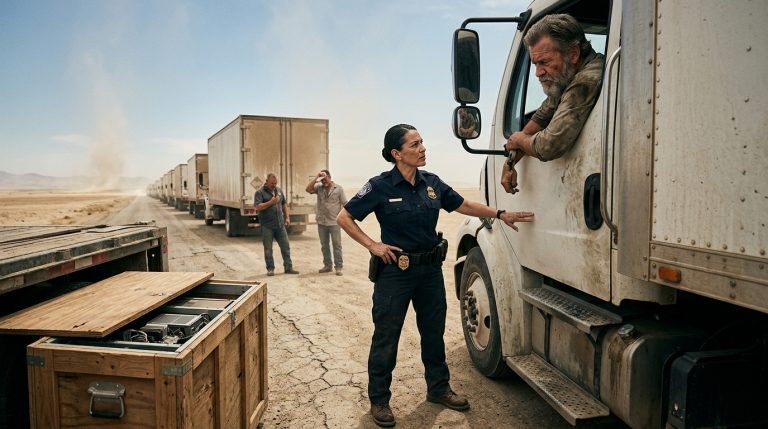
The Weight of the Horizon: A Former Pilot Confronts the Cost of Silence in a Broken World
CHAPTER 1: THE HANGARS SHADOW
The air inside the hangar tasted like oxidized iron and stale memory. It was a sharp, biting cold that settled deep into the chest, the kind of chill that didn’t just touch the skin but rattled the skeleton. Anna stood near the nose gear of a decommissioned airframe, her fingers tracing the jagged, flaking paint of a faded wing emblem. She wasn’t looking for comfort. She was looking for flaws.
Every movement she made was precise, dictated by the economy of survival. She adjusted the strap of her bag—the weight of it was a constant, familiar ache against her shoulder. Inside sat the folded paper, the edges brittle and yellowed, acting as a paperweight for her conscience. She had lived in the gray for five years, building a life out of silence and shadows, and yet, the moment the jet touched down on the tarmac back in the world of the living, the rust had started to flake away.
A heavy boot scraped against the concrete—a deliberate, rhythmic sound.
“You always did prefer the dark, Miller.”
The voice was gravel, smoothed over by years of high-ranking authority. Colonel Daniels didn’t walk; he encroached, his presence occupying the space with an inevitability that made the dust motes dance. Anna didn’t turn around immediately. She let the silence stretch, calculating the distance between her current position and the rear exit, the structural integrity of the shelving units to her left, and the exact reach of the shadows.
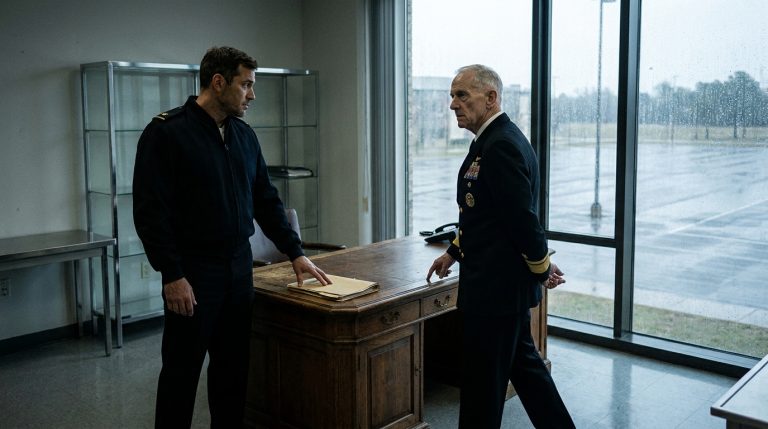
“It’s not dark if you’re used to it, Colonel,” she said, her voice dry, stripped of the cadence of command. She turned slowly. Daniels looked exactly as she remembered—a monolith in a navy blazer, his hair a helmet of silver, his eyes scanning her with the clinical detachment of a man checking inventory.
“The media is calling you a hero,” he remarked, stepping into the dim light. “They’re painting a masterpiece of bravery. It’s a compelling narrative, really. A ghost returning from the dead to save the elite.”
Anna felt the familiar spike of adrenaline, tempered instantly by her own practiced apathy. She knew the game. He didn’t care about her survival; he cared about the integrity of the myth. “You didn’t come here to discuss the press, Colonel.”
“I came because you’re a variable I can no longer track,” he said, stopping five paces away. He didn’t offer a hand. He didn’t offer a greeting. He simply pulled a thin, leather-bound folder from his jacket and held it out. “The air force is prepared to ‘validate’ your return. Full honors, a clean slate, and your old call sign re-registered. It’s a generous offer for a deserter.”
Anna looked at the folder. She didn’t reach for it. Her eyes drifted past him, to the wall of the hangar where a small, overlooked maintenance log was pinned to a rusted board. The page was dated five years ago—the week she had disappeared.
“And what happens to the truth?” she asked, her voice barely audible above the hum of the wind outside.
“The truth is whatever the record states, Anna,” he replied, his voice dropping into a register of quiet, dangerous finality. “And right now, the record states that you are the savior of Flight 12. Don’t make me regret allowing you to keep that status.”
He placed the folder on a nearby oil-stained workbench and turned, walking toward the light. He left the hangar as abruptly as he arrived, but the air remained charged with his intent. Anna didn’t move for a long time. When she finally walked to the bench, she saw not only the folder but a single, metallic shell casing left behind on the concrete floor—a subtle, jagged contradiction to his peaceful offer.
She wasn’t being courted; she was being signaled. And as she picked up the casing, her thumb brushed the edge of the paper in her pocket. It crinkled, a sound like a warning.
CHAPTER 2: THE ECHO OF IRON
The shell casing was cold, a small, hollow weight of brass that bit into Anna’s thumb. It shouldn’t have been there. This hangar had been shuttered for years, a relic of a decommissioned testing ground that the military had scrubbed from the ledgers long before she vanished. A fresh casing meant someone had been standing exactly where she was now, likely watching, waiting for the precise moment to turn the pressure up.
She didn’t drop it. Instead, she slid the casing into the pocket of her hoodie, letting it clink softly against the folded resignation paper. The metal felt like a heartbeat against her thigh, rapid and erratic. Her breath hitched, then smoothed into the measured rhythm of a pilot. She forced her gaze away from the workbench and toward the hangar’s rusted sliding doors, which were jammed a few inches open, revealing a sliver of the desolate tarmac outside.
She stepped toward the gap. The metal floorplates groaned under her weight, the sound grating against the silence of the facility. Every shadow in the corners of the cavernous space seemed to elongate, shifting in her peripheral vision like phantoms of the men she had once worked alongside. A sudden, sharp memory cut through the desaturation of the room: the smell of jet fuel, the blinding glare of a desert sun, and the way her husband’s ring had caught the light before he disappeared into the static of a radio blackout. She squeezed her eyes shut, banishing the ghost of the memory, but the cold of the hangar lingered on her skin.
She reached the doors and pushed. The rusted rollers screamed, a jarring, mechanical protest that echoed across the empty airfield. She slipped through the gap, the sudden transition from the tomb-like interior to the vast, gray expanse of the desert floor hitting her with the force of a physical blow. The air was dry, tasting of iron and dust, and the sky was a bruised, heavy color—the kind of overcast that swallowed sound.
Her car, an nondescript sedan with a faint rattle in the chassis, sat parked a hundred yards away. She kept her pace steady, forcing herself not to look back at the hangar. To run was to concede that she was prey; to walk was to maintain the fiction that she was still a ghost.
As she reached the driver’s side, she paused. Her reflection in the dusty side mirror was a map of everything she had tried to erase. The hoodie was fraying, the sleeves worn thin, but it was her eyes that caught her attention—they were sharp, guarded, and restless. She unlocked the door, the mechanical thunk sounding unnervingly loud in the stillness.
She sat inside, the leather of the seat cracked and cold. She didn’t start the engine immediately. Instead, she leaned back, letting the silence of the car settle around her. She was supposed to be a hero, a savior of the elite, but sitting here in the rusted quiet of a forgotten airfield, she knew the reality was far more dangerous. Daniels wasn’t just offering her a return to the fold; he was baiting a trap, trying to see if she would reach for the past or continue to hide in the cracks.
Her hand moved to the ignition, but she stopped. A glint of something caught the dying light of the afternoon—a small, dark smudge on the dashboard that hadn’t been there when she arrived. She reached out, her finger tracing it. It was wet—a smear of fresh grease. Her pulse spiked. Someone had been inside the car while she was in the hangar.
The realization sat in her chest like lead. They weren’t just watching her; they were marking her.
She turned the key, and the engine roared to life, a rough, sputtering sound that seemed to mock her desire for peace. She shifted into gear, her eyes scanning the rearview mirror, but the desert road behind her was a flat, empty ribbon of gray. The silence of the landscape felt heavy, pregnant with the intent of those who wanted her to return to the sky.
She pulled onto the road, the gravel crunching beneath her tires. She wasn’t driving toward the life they wanted for her. She was driving toward the only truth she had left—the one she had been documenting in the dark, the one that would tear the Night Viper legacy apart. The resignation paper in her pocket felt heavy, a burning weight against her hip. She had to get back to the apartment, to the hidden cache of files beneath the floorboards, before they decided that she was no longer a variable they could manage.
She accelerated, the needle on the dashboard creeping upward, the car vibrating with the strain. The horizon stretched out before her, a line of rusted earth and fading light, and for the first time in five years, the ghost wasn’t running away. She was circling back.
CHAPTER 3: THE APARTMENTS SANCTUARY
The road between the abandoned hangar and the edge of the city was a desolate stretch of cracked asphalt and skeletal power lines. Anna kept the car’s speed steady, not wanting to draw attention, yet every flickering shadow cast by the setting sun against the fence posts felt like a tail. The car’s engine note was a constant, rhythmic rasp, and beneath that, she felt the phantom vibration of the shell casing in her hoodie pocket.
She checked the side mirror every thirty seconds. There were no headlights behind her—not yet. That was worse. Professionals didn’t telegraph their approach with high beams; they stayed in the blind spots, letting the target’s own anxiety do the heavy lifting.
She reached her apartment building just as the last of the light bled from the sky, turning the horizon into a bruised purple smear. The complex was a brutalist block of concrete, rusted at the edges, a place where anonymity was not just a choice but a necessity for its inhabitants. She pulled into the alleyway, the tires crunching over shards of glass and discarded metal, and killed the ignition.
For a long moment, she sat in the dark. The silence of the car felt pressurized, the air thick with the residue of the flight and the encounter with Daniels. She reached into her pocket, her fingers brushing the folded resignation paper. It felt brittle, a fragile piece of evidence that could either save her or see her erased.
She stepped out, the cool night air biting at her skin. Her movements were fluid, automatic—she stayed low, moving through the shadows cast by the dumpsters. She scanned the stairwell entrance. The steel door was slightly ajar, a flaw she hadn’t left behind. Her heart didn’t race; it tightened, locking into a state of cold, tactical readiness. She reached for the small, heavy flashlight clipped to her belt, but didn’t click it on. Instead, she used the ambient light from the streetlamps filtering through the grime of the stairwell windows.
Climbing the stairs was a lesson in physics: avoid the third and fifth steps, which squeaked with the weight of years of neglect. She reached the third floor, her apartment door indistinguishable from the others in the dim light. She paused, listening. There was no sound of movement, no rhythmic breathing behind the barrier, but the air felt moved—the stillness had a different, artificial quality to it, like a room where the atmosphere had been disturbed by a sudden departure.
She inserted her key. It turned with a familiar click, but the door resisted for a fraction of a second, as if held by the seal of a vacuum.
She eased the door open and stepped inside, her back against the frame, sweeping the room with a gaze that identified the exit, the hazards, and the lack of an immediate threat. The apartment was sparse—a single lamp, a low table, and the smell of dry dust and old coffee. It looked exactly as she had left it, yet her perception, sharpened by years of living in the gray, registered a discrepancy. The thin layer of dust on the edge of the radiator was disturbed, a faint, clean line where a finger had traced the metal.
Someone had been here.
She didn’t react with panic. She moved to the center of the room and knelt, her fingers finding the loose floorboard beneath the frayed edge of the rug. She pried it up, the wood groaning, and reached into the darkness beneath. Her hand closed around a hard, plastic-wrapped bundle—her cache. She pulled it out and slid it into the lining of her bag, her heart hammering a slow, steady cadence against her ribs.
If they were searching for the files, they hadn’t found them yet, but they knew she was connected to the hangar. Daniels wasn’t playing a game of subtle threats anymore; he was escalating.
She walked to the window and peeled back the curtain. Across the street, parked in the shadows of a defunct laundromat, sat a dark sedan. It hadn’t been there when she left. She watched it for a long minute, her fingers tracing the tiny metal jet keychain on her bag. The decoy secret she had played with—her resignation—was now secondary to the reality that she was being hunted in her own sanctuary.
She didn’t turn on the light. She sat in the darkness, the resignation paper now tucked inside the cache, the weight of it feeling like a promise of the fire to come. She had spent five years perfecting the art of disappearing, but tonight, the lines of that life were being erased. She would have to move, but not before she understood what they were so desperate to find. She grabbed her notebook, the pages filled with technical schematics that she had been piecing together for years—the schematics of the experimental tech that had cost her husband his life.
The pieces were coming together, but every step toward the truth was narrowing the margin for error. She closed her eyes, and for a moment, the sound of the wind outside sounded like the roar of an F-18. She was no longer a ghost; she was a witness. And witnesses were rarely allowed to survive the final act.
CHAPTER 4: THE CLANDESTINE SUMMIT
The dark sedan across the street hadn’t moved in three hours. It was a fixture in the desaturated landscape, a brooding metallic shape that anchored Anna’s gaze as she sat in the dark of her apartment. She didn’t turn on a single lamp. The glow from the streetlamp outside cast long, skeletal shadows across the floor, turning the dust motes into tiny, suspended particles of history.
She stood up, her joints protesting with a dry, metallic pop. She moved to the secondary lock on her window, her fingers feeling the rough edge of the paint where it had been recently chipped—a sign of forced entry. They had been inside, searching, but they hadn’t touched the cache. That meant they were looking for something else: the resignation paper, or perhaps the schematics she kept hidden in the lining of her flight jacket.
She turned away from the window, her mind cataloging her next move. A meeting with Colonel Daniels was inevitable. If he was escalating, it was because he was afraid that her sudden reappearance in the public eye had destabilized the official narrative of the “Night Viper.”
She slipped into her coat, pulling the hood low. She didn’t take the main exit. Instead, she navigated the fire escape, her boots finding the rusted rungs with practiced, silent precision. The metal was cold and slick with damp air, tasting of iron and decay. She descended, each movement a calculated risk. When she reached the alley, she kept to the shadows of the brickwork, moving with a predator’s economy.
The meeting spot was a decommissioned shipyard, a place of massive, rusted cranes and hulking hulls that looked like the carcasses of prehistoric beasts. It was the only place where the acoustics of the industrial hum could mask a conversation. As she arrived, the smell of salt, oil, and wet earth flooded her senses.
Daniels was already there, leaning against a rusted piling, his silhouette cutting a sharp, authoritative line against the backdrop of a distant harbor light. He looked undisturbed, as if he were waiting for a subordinate, not a ghost.
“You’re late, Anna,” he said, his voice not carrying the warmth of greeting but the weight of an ultimatum.
“I had to ensure I wasn’t being followed,” she replied, stepping into the dim light. She kept her hands inside her coat, near the pouch containing the evidence.
Daniels turned, his eyes narrowing. He looked at her with a mix of assessment and something that almost resembled professional respect. “You have a knack for the dramatic. The plane, the heroics, the vanishing act. You’ve made yourself a liability that the board of directors is finding increasingly difficult to ignore.”
“The board?” Anna asked, her tone sharp. “I thought this was about the Air Force.”
“The Air Force is just a mechanism,” Daniels said, walking a slow, deliberate circle around her. “You saw the schematics in the hangar. You know what happened to your husband. You think you’ve uncovered a conspiracy, but all you’ve done is expose your own fragility.”
Anna kept her focus on his hands. He was calm, but he was standing in a way that left him mobile. She scanned the shipyard. There were no visible guards, but the air felt heavy with the presence of others. She spotted a surveillance camera mounted on a rusted crane—it was fixed, its red status light dead. A discrepancy. They had cut the feed to this sector before she arrived.
“I’m not fragile, Colonel,” she said, her voice steady. “I’m just the only one who knows the tech was never intended for flight. It was a weapon system test. And when it failed, you buried him.”
Daniels stopped his pacing, his expression shifting into a mask of cold, bureaucratic indifference. “History is a narrative, Anna. It requires editing to maintain stability. You are the protagonist of a story that ended five years ago. It’s time you accepted that the past is a locked room.”
He stepped closer, his shadow engulfing hers. He pulled a thick, unsealed envelope from his blazer and held it out. “Inside is a transfer of funds and a passport. The identity is clean, pre-cleared for the border. You leave, you don’t look back, and the legend of the Night Viper remains intact. You refuse, and the truth about your ‘desertion’—a document I have sitting on my desk right now—becomes the only legacy you leave behind.”
Anna looked at the envelope. It was the final move in a game she hadn’t realized she was playing until now. He didn’t want to kill her; he wanted to buy her silence. She felt the shell casing in her pocket, the hard, angular weight a reminder of the threat he had already made.
“What if I don’t want your silence?” she asked.
“Then you’re not a ghost, Anna,” Daniels whispered, his voice dangerously low. “You’re a target.”
He dropped the envelope at her feet and walked away, his heavy boots clicking rhythmically against the concrete until the shipyard swallowed him into the gloom. Anna stood alone, the salt-heavy wind whipping her hair across her face. She reached down and picked up the envelope, her fingers tracing the texture of the thick paper. She didn’t open it. She knew what it contained: a gilded cage or a coffin.
She turned and began the long walk back through the labyrinth of rusted metal, her mind already calculating the next move. She had the schematics, she had the shell casing, and now, she had the proof of the board’s direct involvement. The “Night Viper” might be a myth, but the monster behind it was all too real.
CHAPTER 5: THE DUSTY ARCHIVE
Anna moved through the labyrinth of the shipyard, her boots crunching on the gravel and discarded industrial refuse. The envelope from Daniels was tucked firmly inside her coat, a dead weight against her ribs. She didn’t open it; she knew the contents would be a catalogue of lies and gilded exits. Instead, her focus remained on the cache she had retrieved from her apartment, now secured in the depths of her bag.
The city perimeter was miles away, and the walk was a necessary buffer. She needed the rhythmic exertion to clear the static of Daniels’ voice from her head. Every rust-streaked beam of a crane or jagged shard of scrap metal reminded her of the hangar, the smell of oxidized iron and the crushing weight of five years of forced anonymity. She had walked away from a life of flight, but she realized now that she hadn’t escaped the gravity of what she had left behind.
She arrived at the edge of the industrial zone, where the desaturated landscape of the shipyards gave way to the derelict concrete structures of the decommissioned testing facility mentioned in her notes. This was the place where the records were kept—not the official ones that Daniels curated, but the paper trail that the project’s lead engineers had left behind before the facility was shuttered.
The facility’s perimeter fence was sagging, the chain-link eaten away by rust and time. She slipped through a gap near the old supply gate, her movements practiced. The site was silent, save for the wind whistling through the hollow shells of buildings. She didn’t use a flashlight. She relied on the pale, unforgiving moonlight and the structural memory of her previous reconnaissance.
She reached the main archive building, a low, squat block of concrete that looked more like a bunker than a workspace. The door was reinforced steel, locked with a heavy padlock that had long since surrendered to the elements. She didn’t bother with a pick; she used a specialized shim from her kit, the metal groaning as she forced the mechanism. It clicked with a sound that felt like a gunshot in the oppressive quiet.
Inside, the air was stale, trapped in the concrete tomb for half a decade. She flicked on her light, the beam cutting through a dense curtain of dust. Rows of metal filing cabinets stood like sentinels in the dark, their drawers rusted shut. She began the systematic process of searching. This wasn’t a movie heist; it was a slow, methodical slog. She opened drawer after drawer, her fingers caked in fine, gritty silt.
Hours passed. The beam of her light flickered, the batteries complaining. She found maintenance logs, personnel files, and supply invoices, but nothing related to the experimental flight system that had killed her husband. Then, in the back of a cabinet marked “PROJECT VIOLET,” she found a folder that felt different. The paper wasn’t standard-issue; it was a rougher, thicker stock, and it was stamped with a mark that had been intentionally defaced.
She sat on the floor, the cold concrete seeping through her jeans, and opened the folder. It contained test flight telemetry from the very mission where she had been declared KIA. She spread the pages out, her eyes scanning the data points. The flight parameters were impossible—the system had been designed to override the pilot’s manual input entirely, forcing the jet into a high-G maneuver that no human frame could survive.
The resignation paper from her own pocket seemed to shimmer in the low light. She had quit because she saw the data, because she knew the project was meant to kill. But seeing it here, codified in the official test results, felt like a physical blow. Her hand hovered over the figures. She wasn’t a ghost; she was the survivor of a system designed to treat people as disposable test variables.
A sudden, sharp metallic sound echoed from the front of the facility—a rhythmic, heavy tread. Someone else was here. She stiffened, the folder pressed against her chest. She extinguished her light, the sudden darkness feeling like a shroud. She moved to the side of the room, blending into the deeper shadow of the stacks.
The footsteps grew louder, crunching on the debris of the hallway. They weren’t moving with the stealth of a thief; they were walking with the arrogance of an owner. She listened to the cadence—heavy, precise, and entirely unbothered. She reached into her bag and retrieved the small, jagged piece of metal she had picked up in the hangar. It wasn’t just a shell casing; she looked at it closely in the dark. It was a fragment of a locking pin, the kind used in the ejector seats of the very aircraft that had been decommissioned in the hangar.
The person stopped outside the archive room. Anna held her breath, her eyes fixed on the sliver of light filtering under the door. She wasn’t going to be caught sitting on the floor. She needed to know who was walking through her past.
CHAPTER 6: THE DECOY TRUTH
The sound wasn’t a footstep; it was the metallic thrum of a remote lock engaging, the heavy steel of the archive door shuddering as a magnetic seal bit into place. Anna didn’t wait to see who had bypassed the perimeter. She was already in motion, her body pivoting toward the rear of the room, her eyes scanning for an alternative egress. The beam of her flashlight was dead, leaving her to navigate the architecture of the archive by the faint, filtered moonlight bleeding through the grime-streaked high windows.
She slipped between the rows of rusted filing cabinets, her boots silent on the concrete floor. She had the folder containing the telemetry data tucked securely in her bag. It was the only thing that mattered—the hard evidence that the “Night Viper” mission had been a planned catastrophe, not a combat accident.
A shadow detached itself from the doorway. It was a silhouette, broad-shouldered and deliberate, moving with the cold, practiced grace of an operator. The figure didn’t call out. They didn’t threaten. They simply moved to intercept, a flash of something metallic—a flashlight or a weapon—sweeping the rows where she had been seconds before.
Anna ducked behind a stack of industrial crates, the rusted edges biting into her sleeve. She needed to exit, but the facility’s geography had been altered; the layout she had committed to memory years ago no longer matched the new partition walls that had been welded into place. It was a trap, refined and updated. They hadn’t just secured the building; they had turned it into a kill box.
Then, the facility’s emergency lights flared to life—a deep, strobing crimson that washed the archive in a visceral, blood-tinted light. A piercing alarm began to pulse, its rhythm syncopated, jarring. She wasn’t just being hunted; she was being flushed out.
She sprinted. The movement felt violent, the air in the archive whipping past her face. She reached a vent cover she had scouted during her previous reconnaissance, but as she reached for it, she realized the screws had been welded shut. The “decoy” plan she had envisioned—a clean exit through the maintenance ducts—was gone.
She spun, finding herself face-to-face with the intruder. He was dressed in tactical matte-black, his face obscured by a low-profile visor. He didn’t speak. He reached into his vest, producing a pair of flex-cuffs, his intent clear: detain, not eliminate. He wasn’t one of Daniels’ direct muscle; he was a corporate shadow, a cleaner for the board.
Anna didn’t hesitate. She threw her bag—the dead weight of her entire history—at him. It was a clumsy, desperate gesture, but it forced him to flinch, his arm snapping up to deflect the impact. She capitalized on the second of hesitation, driving her shoulder into his midsection and using his own momentum to throw him against a shelf of heavy logbooks. The impact was deafening, a shower of paper and rust-flaked metal cascading onto the floor.
She didn’t stay to see if he was down. She scrambled toward the back wall, finding a service panel that had been left exposed by a recent leak. She ripped the corroded metal away, her fingers bleeding as the sharp edges tore through her gloves, and squeezed into the crawlspace behind the wall. It was tight, smelling of damp earth and rot, but it was an exit.
As she shimmied through the claustrophobic space, she could hear him scrambling behind her, his voice crackling into a radio. “Target has breached the inner perimeter. Initiate full lockdown.”
She pushed forward, the concrete floor scraping against her jacket. The telemetry folder felt like it was made of lead. She had been naive to think she could just walk in and out. The “decoy” secret—the idea that she could simply expose them through official channels—was shattered. The archive wasn’t meant to be searched; it was meant to be a lure.
She reached the exit point, a small, exterior grate hidden by overgrown brush. She kicked it out, the rusted hinges giving way with a metallic scream, and tumbled out into the cold, midnight air of the testing ground. She didn’t pause to breathe. She scrambled to her feet and sprinted into the dark, the sound of boots and shouting voices already echoing from the building she had just vacated.
She had the evidence, but she had burned her cover. The board wasn’t just hiding a weapon system; they were protecting an empire. She reached the tree line, the darkness of the woods offering the first real shelter of the night, and collapsed for a fleeting second, gasping for air.
Her hand went to her pocket. The resignation paper was still there. It felt heavy, a reminder that the path ahead was no longer about truth or justice—it was about survival. She looked back at the facility, now illuminated by floodlights, and saw the silhouettes of men fanning out into the brush. They were tracking her. She looked at the telemetry data in her bag, then at the forest ahead. The game had changed. The target was no longer a ghost; she was the architect of the final, lethal move.
CHAPTER 7: THE LEVERAGE
The forest was a dark, tangled network of pine and dry rot, a landscape of vertical shadows that offered little comfort. Anna moved through the undergrowth, her breathing ragged, every snap of a twig sounding like a gunshot in the oppressive silence of the night. Behind her, the facility was a beacon of crimson alarm lights, the faint, rhythmic pulse of the siren drifting through the trees. She wasn’t just running anymore; she was managing the distance, using the terrain to break the line of sight of her pursuers.
She clutched the bag to her side, the telemetry folder protected by the thickness of her coat. She couldn’t head back to the apartment; it was compromised. She needed to reach a contact—someone who wouldn’t ask questions, someone who had been left behind by the same system that had discarded her.
She emerged from the woods near a secondary maintenance road, a ribbon of cracked gray concrete that wound through the valley. Her boots were caked in mud, and her muscles throbbed with the dull, persistent ache of tactical exhaustion. She didn’t stop. She checked her watch; the time was closing in on 03:00. If she didn’t get the telemetry data into the hands of a neutral party, she would be erased before sunrise.
She reached a derelict gas station, the pumps rusted and skeletal, and slipped inside the kiosk. The interior smelled of spilled oil and ancient dust. She pulled the folder out, her fingers trembling slightly—not from fear, but from the adrenaline crash that was beginning to take hold. She flipped through the pages, her gaze locking onto a specific document: a signature block for the project’s lead supervisor. It wasn’t Colonel Daniels’ signature. It was the digital fingerprint of the Board of Directors’ own liaison.
The realization sat in her gut like a stone. Daniels wasn’t the architect; he was the janitor. He was the one paid to clean up the messes that the Board made in their pursuit of next-generation weaponization. She wasn’t fighting a military conspiracy; she was fighting a corporate entity that owned the laws of the sky.
A sound caught her attention—a soft, metallic thud from outside.
She extinguished the small penlight she’d been using and pressed her back against the wall. Outside, a vehicle slowed down. No headlights. It rolled past the gas station, the engine’s idle too quiet, too refined to be an ordinary civilian car. It stopped fifty yards up the road.
They weren’t just searching for her; they were surrounding the entire sector. She had been tracked. She looked at the telemetry data, then at the folder containing her never-submitted resignation. She had to shift the momentum. She pulled out a small, portable burner phone she kept for emergencies—the only link to her past she hadn’t destroyed. She didn’t call a contact. She dialed the number for a local news outlet’s tip line, the one that famously handled “leaked” corporate malfeasance.
She knew she couldn’t dump the data—it was too large and too encrypted to send in a single transmission—but she could send the summary. She began the upload, the signal bar on the screen flickering, straining against the interference of the facility’s jammers.
“Come on,” she whispered, her thumb hovering over the screen.
The uploading bar crawled: 20%… 40%… 60%…
The sound of footsteps crunched on the gravel outside—multiple sets, slow and heavy. They were fanning out around the kiosk. She wasn’t going to get the whole file out. She moved to the window, the glass frosted with grime, and looked out. Two shadows were moving toward the door, tactical lights sweeping the dark interior.
She checked the upload progress: 85%.
She reached into her bag, pulling out the shell casing she had kept—the piece of evidence from the hangar. She wrapped it in a piece of paper, scribbled a location on it, and wedged it into the crevice between the wall and the floorboards. If they captured her, the evidence she left behind might not be the telemetry, but it would be enough to point the next person toward the hangar.
The door kicked open.
“Don’t move!” a voice commanded, sharp and professional.
Anna didn’t look at them. She kept her eyes on the phone screen. 98%… 99%…
“Upload complete.”
She tossed the phone onto the floor, the screen cracking against the concrete, and slowly raised her hands. She was cornered, she was exhausted, and she was entirely out of options. But as the dark-clad men rushed her, pinning her to the cold, oil-stained floor, a dark, thin smile touched her lips. The truth was out of her hands now. The “Night Viper” was gone, but the storm she had unleashed was just beginning.
CHAPTER 8: THE PRICE OF ENDURANCE
The interior of the transport van smelled of stale disinfectant and recycled air. It was a space designed for transition—a windowless, sound-dampened mobile cell that felt less like a vehicle and more like a tomb on wheels. Anna sat on a narrow metal bench, her hands cuffed behind her back. The steel biting into her wrists wasn’t standard-issue; it was a heavy, proprietary corporate lock, reinforced and unyielding.
She could hear the muffled, rhythmic hum of the highway beneath the chassis. Two men sat in the front partition, their voices a low, unintelligible murmur. They weren’t police. They weren’t government. They were the Board’s private security detail, the men who existed in the gaps of the law.
Anna didn’t struggle. She kept her posture slumped, her breathing slow and controlled. She needed them to believe she was defeated, a broken variable in their equation. But beneath the facade of submission, her mind was a whirlwind of tactical geometry. She felt the texture of the van floor, the vibration of the engine, the subtle shifts in speed that indicated curves in the road—she was mapping their route, even in the dark.
The van jolted as it hit a pothole, the suspension groaning in protest. One of the men in the front turned, his silhouette illuminated by the glow of a dashboard monitor. “Keep her quiet,” he muttered, his voice a flat, hollow tone.
Anna remained silent, but her eyes were fixed on the small, recessed light fixture above her head. It was a simple, enclosed bulb, but the casing was loose. She had noticed it when they first tossed her inside. It was a structural vulnerability, a tiny, overlooked piece of engineering in a room that was otherwise sealed.
She waited. She knew the route would take them through the valley crossing, a stretch of road that was frequently buffeted by crosswinds. As the van hit the curve, the suspension swayed, a predictable lean that she had been timing. She shifted her weight, slamming her shoulder into the side panel with a precisely calibrated burst of force. The van lurched, the tires scrubbing the asphalt.
The man in the passenger seat barked an oath, grabbing the dashboard to stabilize. “Watch it!”
The driver hit the brakes, the vehicle fishtailing slightly as it slowed. The distraction was momentary, but it was enough. Anna didn’t use the momentum to attack; she used it to hook her heels under the edge of the metal bench and leverage her body weight toward the ceiling. With a sharp, sudden kick, she struck the light fixture. The glass shattered, the sound muffled by the van’s padding, but the casing cracked, the wire sparking and shorting against the metal frame.
The interior plunged into darkness as the main electrical circuit surged and died.
The van plunged into a sudden, chaotic weave. In the dark, the sound of their confusion was music—a sudden, sharp realization that the “broken” asset was no longer restrained by their rules. Anna didn’t wait for them to draw weapons. She slammed her cuffed hands against the loose metal paneling she had been scouting, the sharp edges of the interior trim catching the metal of the cuffs.
She wasn’t trying to break the locks; she was trying to force the cuffs to snag, to create a leverage point where she could use the van’s internal structure to twist the mechanism open. It was a violent, desperate move that tore at her skin, the friction burning her wrists, but as the van swerved to stay on the road, she felt the lock’s internal pin yield. It didn’t pop open, but it shifted, a millimeter of clearance that gave her the freedom to move her hands from behind her back to the front.
She was still restrained, but she was armed with the ability to act.
The driver brought the van to a screeching, gravel-spitting halt on the shoulder of the highway. The rear door latch began to click.
“Check the prisoner!” one of them shouted, the sound of a heavy door opening revealing the rushing roar of the night wind.
Anna didn’t wait. She curled into the floorboards, her muscles coiled, ready to spring. She was done playing the witness. She was the ghost that had decided to haunt them, and as the back door swung open, revealing the silhouette of the first guard, she lunged. The price of her survival had been high, and tonight, she was going to make sure the Board paid the interest in full.
CHAPTER 9: THE SHIFT
The guard swung, but Anna was already a blur of motion. She pivoted on her heel, slamming her cuffed hands into the man’s temple. He crumpled, his visor cracking against the van’s floor. She didn’t wait for his partner—a man she now recognized as the Board’s lead operative—to react. She grabbed the fallen man’s sidearm, the cold weight of the weapon familiar and grounding, and rolled out of the van into the dark gravel of the highway shoulder.
The lead operative stepped out, his weapon leveled. “It’s over, Miller. You’re a ghost. Act like one.”
“The files are out,” Anna said, her voice steady, stripping away the ghost she had been for five years. “The telemetry from Project Violet. Every anomaly, every forced override. It’s sitting in the inbox of every major outlet from here to the capital.”
The operative paused, the barrel of his gun wavering just a fraction. It was the crack in his professional armor she needed. In that micro-second of hesitation, he was no longer an agent of a Board; he was a man realizing his payroll had just vanished.
“You’re lying,” he hissed, but he glanced at his own radio.
“Check your feed,” she countered.
He didn’t need to. The sudden, shrill screech of an emergency broadcast signal erupting from his radio confirmed it. The truth of the Night Viper was no longer hers to hold; it was the world’s to witness. He lowered his weapon, his expression not of defeat, but of calculation. He looked at the wreckage of the van, then at Anna, realizing the mission had shifted from capture to survival. He turned and walked into the darkness of the woods, his allegiance shifting with the tide of the evidence.
Anna stood alone on the shoulder of the road. The adrenaline began to recede, leaving behind a profound, hollow ache in her bones. She reached into her pocket and pulled out the resignation paper—the document she had never signed. She looked at it for the final time, then tore it into pieces, letting the wind scatter the remnants across the asphalt. The ghost was dead.
The denouement was quiet, a stark contrast to the violence of the last few hours. She walked to the van, her hands shaking as she pulled a small tool from the guard’s kit to finally undo the cuffs. The metal clicked open, the sensation of freedom stinging her wrists. She moved to the driver’s seat, the engine still idling, and placed her hand on the dash. She found a small, personal object tucked into the console—a photo of a family, tucked away by the driver. She left it untouched.
She drove for hours, heading away from the industrial zones and the shipyards, moving toward the coast. The sun began to bleed over the horizon, turning the desaturated sky into a soft, bruised gold. She found a small, seaside town where the salt air smelled of rot and renewal. She parked the van near the docks, far from the reach of the Board’s eyes.
She walked onto the wooden pier, the boards creaking under her weight. She pulled the small metal jet keychain from her bag—the last physical tether to the Night Viper—and held it between her thumb and forefinger. She looked out at the vast, endless horizon, the sky clear and open. With a steady, deliberate motion, she dropped it into the dark, churning water below.
She watched it sink until it was gone, leaving only ripples on the surface. She reached up and touched the ring on her finger—the one she had worn through the mission, through the years of silence, and through the flight that had brought her back to the world. She didn’t take it off. Instead, she turned back toward the town, toward a life that wasn’t built on secrets or shadows. Her arc wasn’t complete because she had won; it was complete because she had finally stopped running. For the first time in five years, the weight of the horizon didn’t feel like a burden—it felt like a start. She walked into the morning light, her steps measured, her face unhidden.